Cordless VoIP Phones for Business: When You Need Mobility (2026 Guide)
Cordless VoIP phones are designed for businesses where employees are not tied to a desk. In environments such as warehouses, retail stores, healthcare facilities, and service operations, mobility plays a key role in maintaining efficient communication.
This guide explains when cordless VoIP phones make sense, how they work, and what to consider before deploying them in your business.
What Are Cordless VoIP Phones?
Cordless VoIP phones use wireless technology to connect to your network while still delivering voice communication over IP. There are two primary types:
- DECT (Digital Enhanced Cordless Telecommunications), which uses a dedicated base station connected to your network
- Wi-Fi VoIP phones, which connect directly to your wireless network
Both options allow users to move freely while staying connected to the business phone system.
When Cordless VoIP Phones Make Sense
Cordless VoIP phones are most useful in mobility-driven environments where employees need to move throughout a facility while staying reachable.
Common use cases include:
- Warehouses and distribution centers
- Retail stores
- Hospitality environments
- Healthcare and service operations
In these situations, desk phones can slow down communication and lead to missed calls.
They are also useful in flexible workspaces where employees are not assigned permanent desks. A cordless handset allows a user to remain reachable regardless of location within the building.
DECT vs Wi-Fi Cordless VoIP Phones
DECT phones rely on a base station connected to your network. They operate on a dedicated frequency, which reduces interference and improves call stability. Battery life is typically longer, making them well-suited for continuous use.
A typical DECT setup can be seen here:
Yealink W59R DECT Phone Bundle with W70 Base – Cordless SIP
Wi-Fi VoIP phones connect directly to your existing wireless network. This removes the need for a base station but makes performance dependent on network quality.
An example of a Wi-Fi VoIP handset:
Grandstream W825 Cordless Wi-Fi IP Phone, Dual-Band HD Voice
Choosing between DECT and Wi-Fi depends largely on your environment. DECT is often preferred in larger facilities where reliability is critical, while Wi-Fi phones are more suitable when a strong wireless network is already in place.
Rugged Cordless Phones for Demanding Environments
In certain industries, standard devices may not hold up under daily conditions. Rugged cordless phones are designed for environments where exposure to dust, moisture, or physical impact is common.
These devices are often used in:
- Manufacturing facilities
- Outdoor service operations
- Logistics and transportation
Examples include:
Snom M56 DECT Rugged Handset with IP67 & Alarm Button
Grandstream GS-DP735 Rugged DECT Handset with 65-Hour Talk Time
Rugged handsets are built with durability in mind, helping reduce device failure in demanding conditions.
Infrastructure Requirements
Before deploying cordless VoIP phones, it is important to evaluate your network and physical environment.
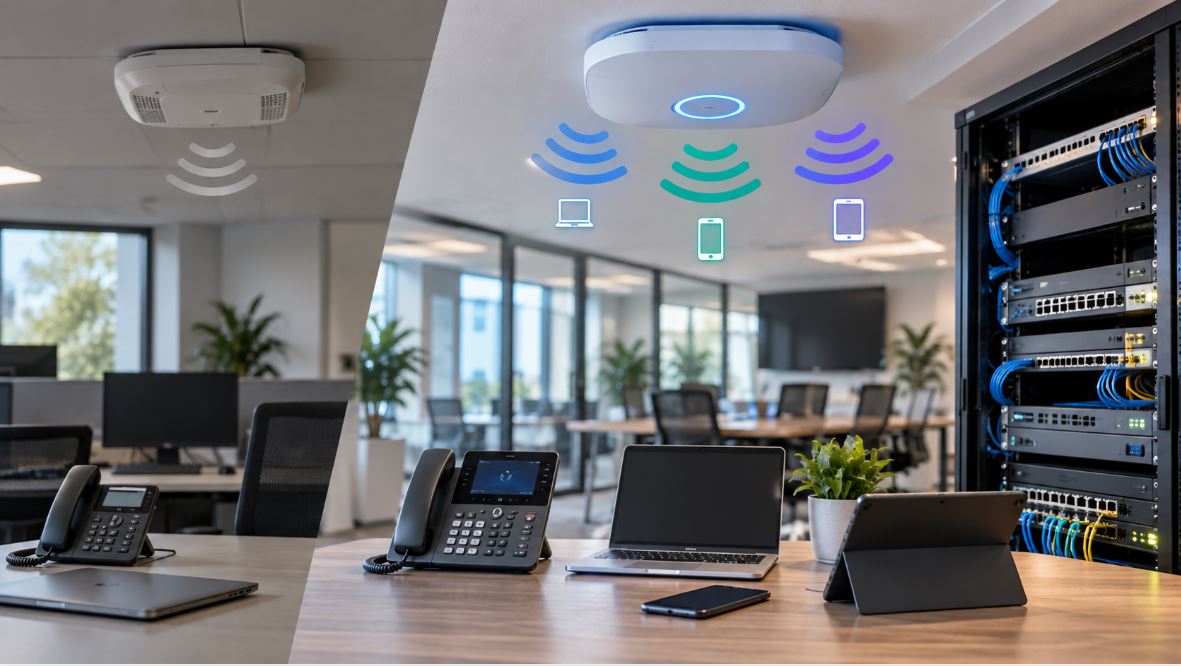
Coverage planning is essential. DECT systems require base stations positioned to provide consistent signal throughout the facility. Larger areas may require multiple base stations to avoid dead zones.
Wi-Fi phones depend entirely on your wireless network. If coverage is inconsistent or weak in certain areas, call quality may be affected.
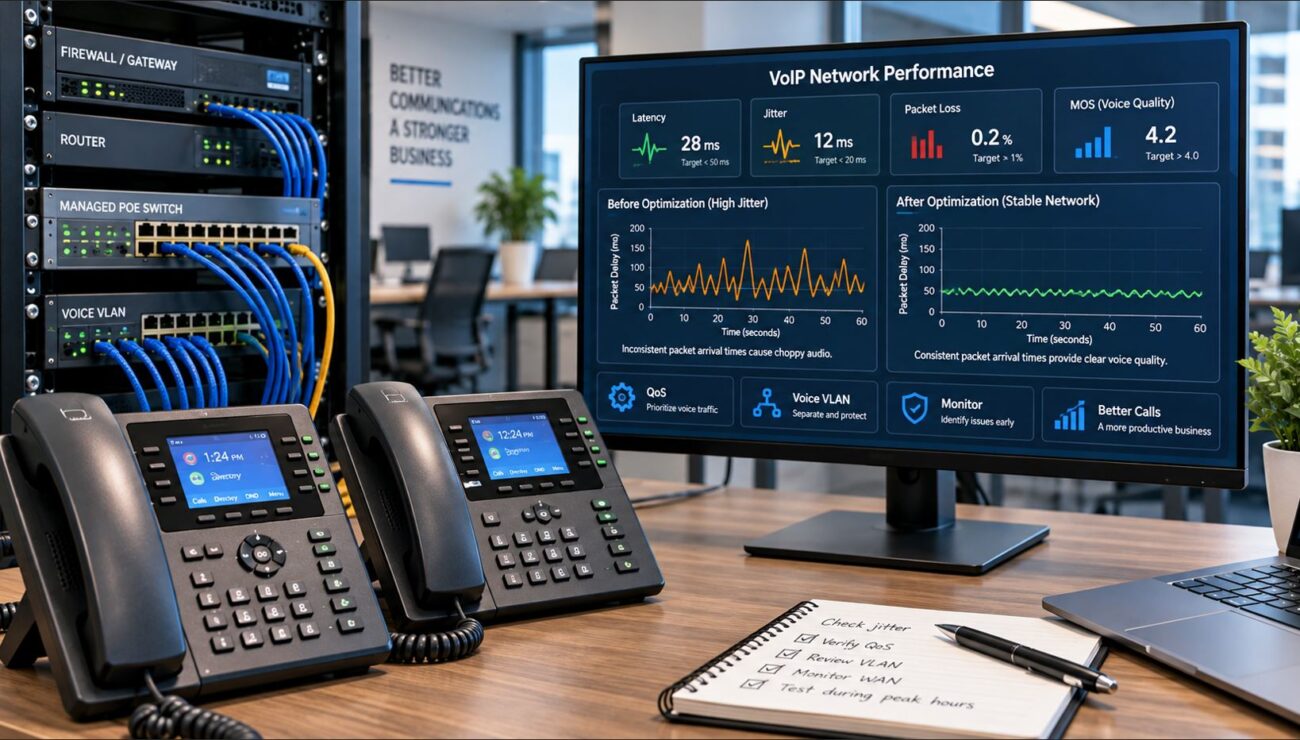
Your network should support SIP communication and include Quality of Service (QoS) settings to prioritize voice traffic. Without proper configuration, even high-quality devices may experience dropped calls or audio issues.
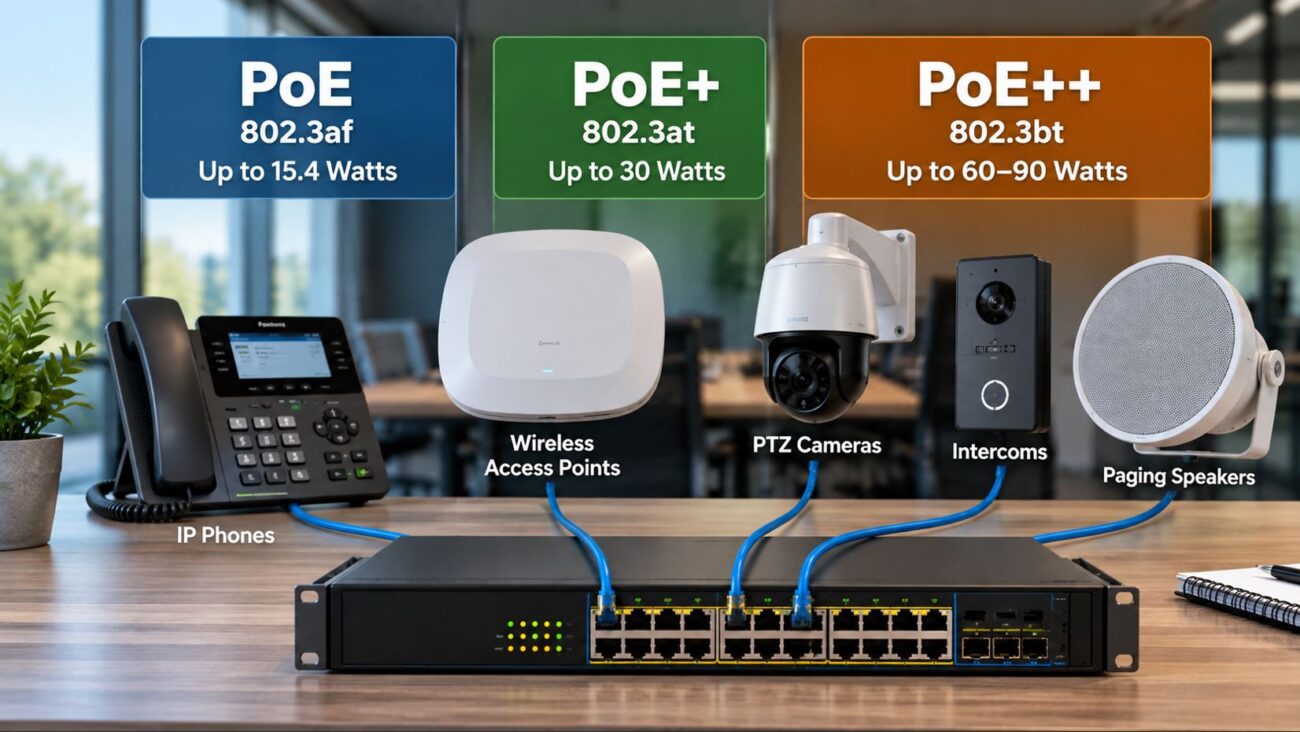
Power is another consideration. DECT base stations often use Power over Ethernet (PoE), while handsets rely on charging docks and battery management.
Compatibility Considerations
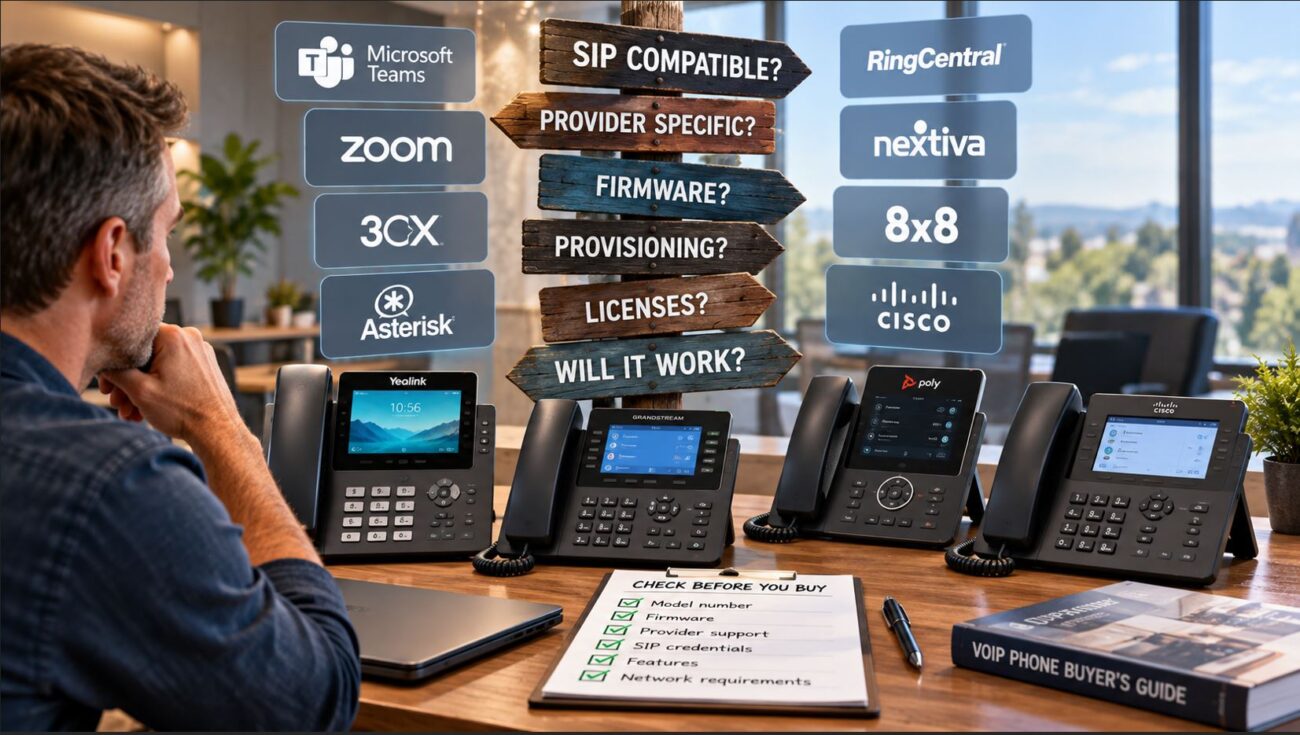
Cordless VoIP phones must be compatible with your existing phone system.
Key factors to verify include:
- SIP support
- PBX compatibility
- Firmware support and updates
For example, a base station like:
Cisco DECT Single-Cell Base Station – 10 SIP Lines, 10/100 Mbps
may be used in structured deployments that require centralized management.
Ensuring compatibility before purchasing helps avoid configuration issues later.
Limitations of Cordless VoIP Phones
While cordless VoIP phones provide flexibility, they are not ideal for every situation.
DECT systems require planning and installation of base stations. Wi-Fi phones depend heavily on network performance. Battery life must be monitored, especially in high-use environments.
Range limitations may require additional hardware, and some advanced features available on desk phones may not be present on cordless devices.
Understanding these limitations helps ensure the right expectations are set before deployment.
How Cordless VoIP Phones Fit Into Business Communication
Cordless VoIP phones are one part of a complete communication system. They work alongside IP PBX systems, network infrastructure, desk phones, and mobile applications.
They are most effective when integrated into a well-designed network that supports voice communication across all devices.
Businesses that need assistance with planning and deployment can work with providers such as:
Axion Communications
to ensure proper system design and configuration.
Practical Tips for Choosing Cordless VoIP Phones
Evaluate how mobile your workforce is before selecting a solution. Choose DECT systems when reliability and range are priorities. Consider Wi-Fi phones if your network already provides strong coverage.
For demanding environments, rugged models can reduce long-term maintenance issues. Testing coverage before full deployment helps identify potential gaps.
Planning for future growth is also important, especially if your team or facility is expected to expand.
Conclusion
Cordless VoIP phones provide a practical solution for businesses that require mobility. They allow employees to remain connected without being tied to a desk, improving responsiveness and internal communication.
The right choice depends on your environment, network capabilities, and user needs. By evaluating these factors carefully, businesses can implement a cordless VoIP solution that supports reliable communication without unnecessary complexity.
FAQ Section
What are cordless VoIP phones used for in business?
Cordless VoIP phones are used in environments where employees need to move while staying connected. They are commonly found in warehouses, retail stores, healthcare facilities, and service industries. These devices help reduce missed calls and improve communication efficiency across teams.
What is the difference between DECT and Wi-Fi VoIP phones?
DECT phones use a base station and operate on a dedicated frequency, which provides stable connections and reduced interference. Wi-Fi VoIP phones connect to existing wireless networks and depend on coverage quality. DECT is often preferred for reliability, while Wi-Fi offers flexibility.
Are cordless VoIP phones reliable for small businesses?
Yes, cordless VoIP phones can be reliable if the network is properly configured. DECT systems are generally more stable, while Wi-Fi phones require strong wireless coverage. Planning and testing are important to ensure consistent performance.
How far can a cordless VoIP phone reach?
Range depends on the system being used. DECT phones typically provide wider coverage and can support larger areas with additional base stations. Wi-Fi phones are limited by wireless network coverage and access point placement.
Do cordless VoIP phones require internet access?
Yes, cordless VoIP phones rely on internet connectivity to transmit voice data. They connect through a network to an IP PBX or VoIP provider. A stable connection is essential for maintaining call quality.
Can cordless VoIP phones work with any PBX system?
Most cordless VoIP phones support SIP, allowing them to work with many PBX systems. However, compatibility should always be confirmed before deployment to ensure proper functionality.
Are rugged cordless VoIP phones necessary?
Rugged phones are not necessary for all businesses but are useful in environments where devices are exposed to harsh conditions. They are designed to withstand impacts, dust, and moisture, making them suitable for industrial use.
How many handsets can a DECT base support?
The number of supported handsets varies by model. Some base stations support multiple handsets, while larger deployments may require additional bases. Planning capacity ahead of time helps ensure scalability.
Do cordless VoIP phones have good battery life?
Battery life depends on the model and usage. DECT phones typically offer longer battery life compared to Wi-Fi phones. Charging stations and spare batteries can help maintain continuous operation.
Are cordless VoIP phones secure?
Cordless VoIP phones can be secure when properly configured. DECT systems use encrypted communication, while Wi-Fi phones rely on network security protocols. Keeping firmware updated and securing the network are important steps.





One thought on “Cordless VoIP Phones for Business”
Informative