7 Hunting Electronics That Make Managing Your Hunting Property Easier in 2026

7 Hunting Electronics That Make Managing Your Hunting Property Easier in 2026
Managing hunting property involves much more than showing up when hunting season begins. Property owners and hunters may spend months monitoring wildlife movement, maintaining feeding locations, checking access points, evaluating potential stand locations, and keeping equipment operating across acres of rural land.
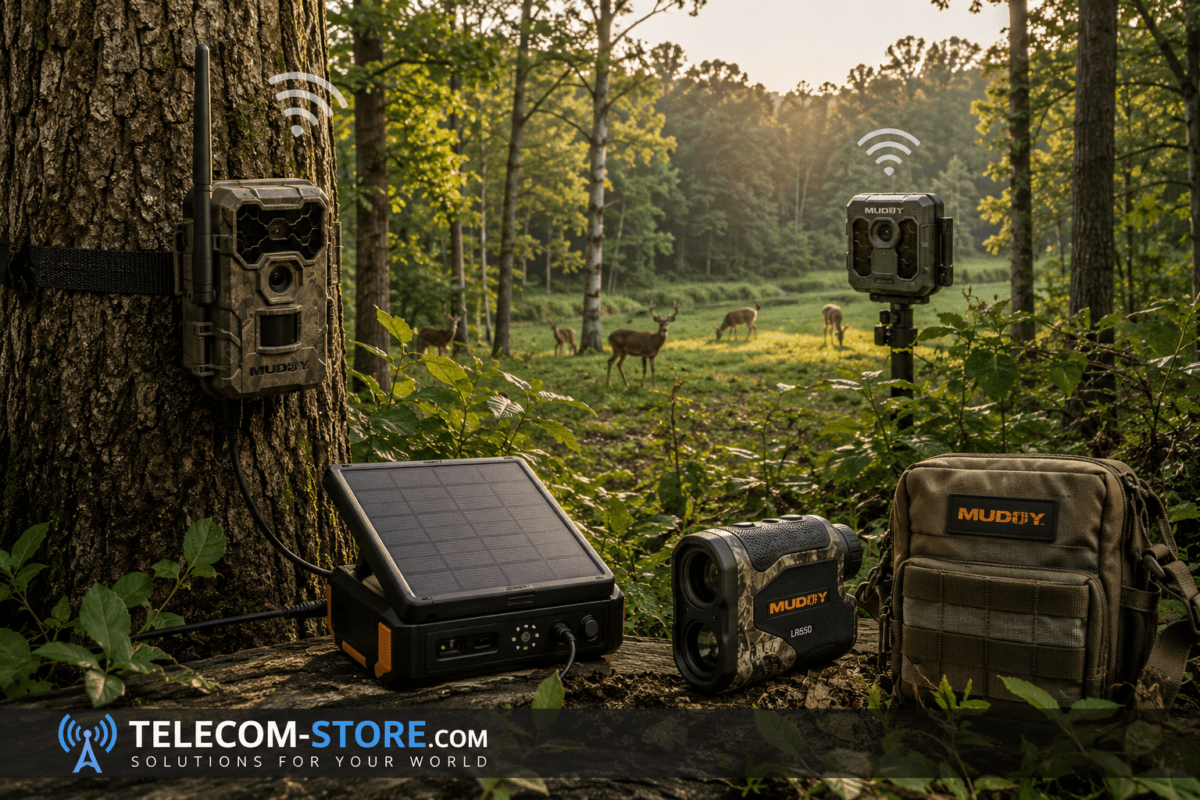
Modern hunting electronics can make many of those jobs easier. Cellular trail cameras can reduce unnecessary trips into hunting areas, programmable feeders can automate feeding schedules where legal, and solar power can extend the operating time of remote electronics. Electronic game calls and outdoor wireless networks can add even more capability to a well-planned property.
Here are seven types of hunting electronics worth considering when outfitting a hunting property in 2026.
1. Cellular Trail Cameras
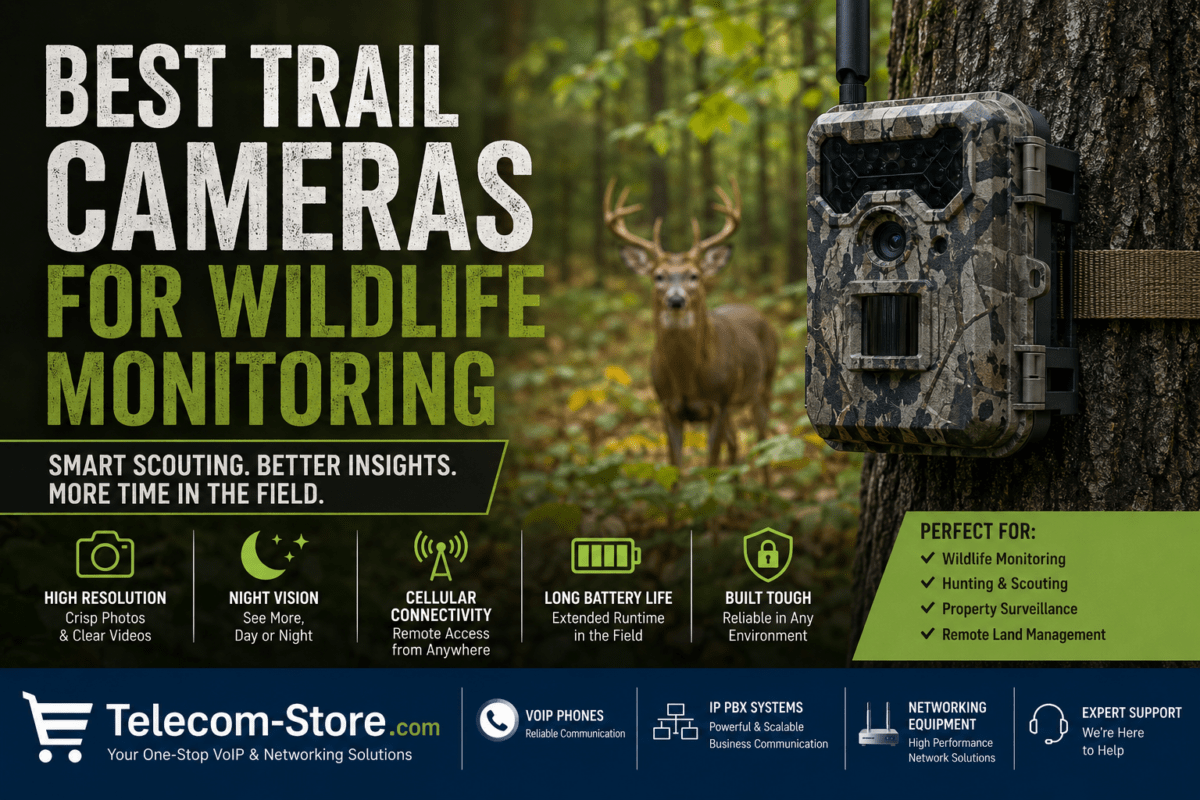
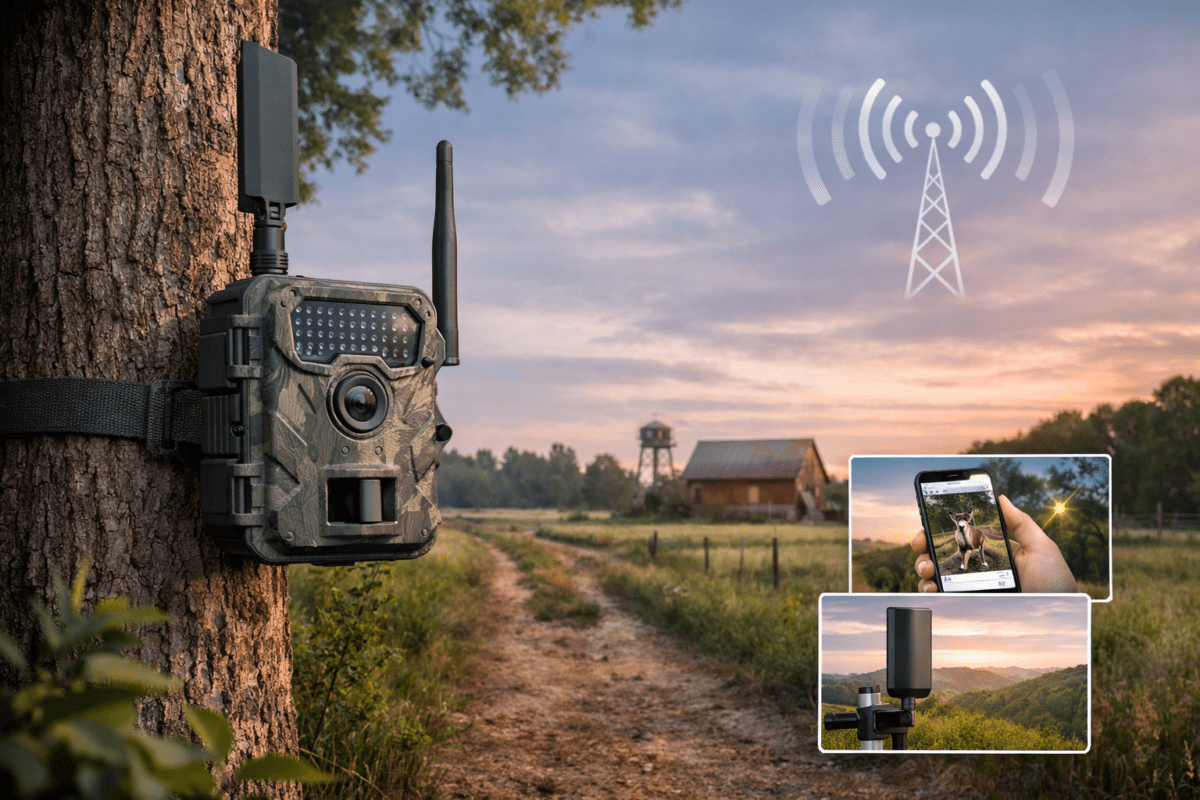
Trail cameras have been used for years to monitor wildlife, but cellular connectivity has significantly changed how hunters can use them.
Instead of traveling to the camera and removing an SD card, compatible cellular cameras can transmit images remotely when adequate cellular service is available. That can be especially useful on larger properties where cameras may be located far from a house, cabin, road, or parking area.
Remote access can also reduce the number of times you walk through an area simply to check a camera. For hunters trying to minimize unnecessary disturbance around frequently traveled game trails, bedding areas, or feeding locations, that can be a major advantage.
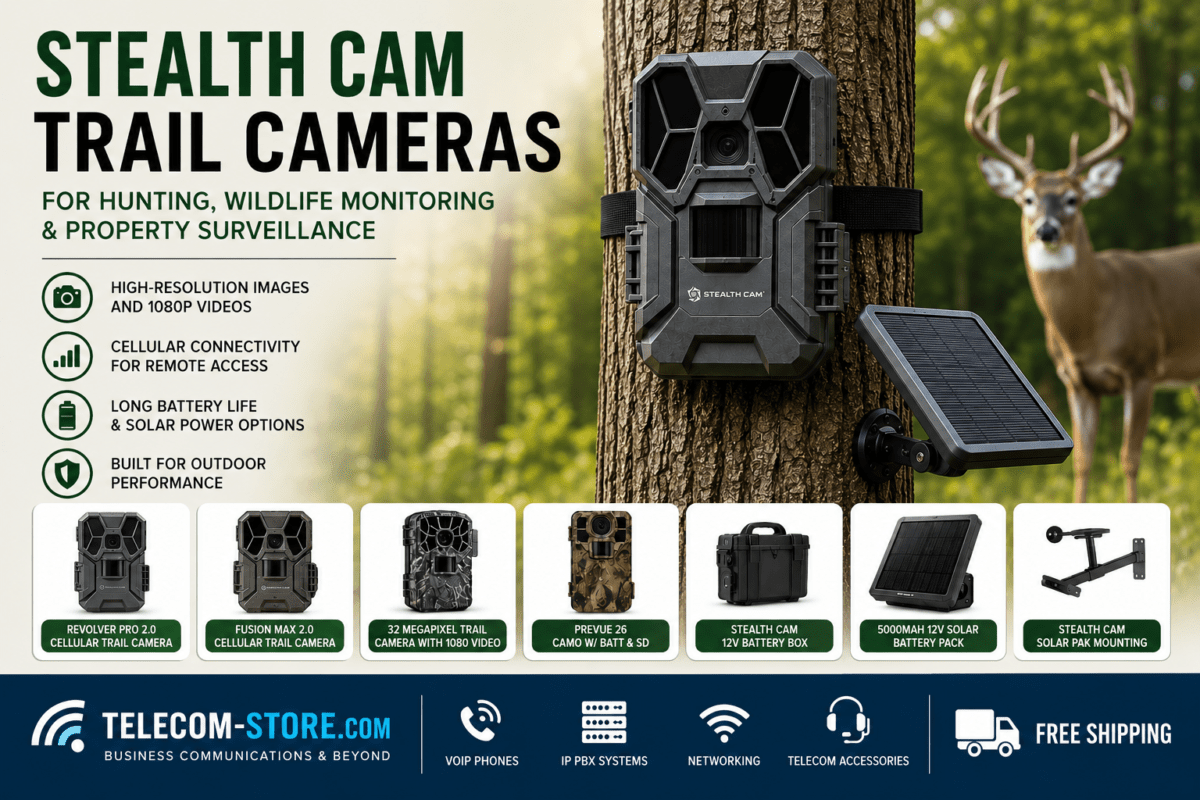
One example available from Telecom-Store.com is the StealthCam Revolver Pro 2.0 Cellular Trail Camera. It supports 40MP photo settings, 1440 QHD video with audio, a 100-foot detection and flash range, built-in GPS, 32GB of internal memory and compatibility with the Command PRO app.
The Revolver Pro 2.0 also supports external 12V power, which can be useful when designing a longer-term remote monitoring installation.
Where Cellular Trail Cameras Make Sense
- Game trails and travel corridors
- Feeding areas
- Property entrances and gates
- Remote food plots
- Hunting leases
- Cabins and equipment areas
- Locations that are inconvenient to check frequently
Before purchasing a cellular camera, verify cellular coverage at the actual installation location. A feature-rich cellular camera provides little remote benefit if the location cannot establish a reliable connection.
For a deeper look at this technology, see our guide to Stealth Cam trail cameras for hunting and property monitoring.
2. Traditional Digital Trail Cameras
Cellular technology is convenient, but not every camera needs a cellular connection.
Traditional SD-card trail cameras can still be an excellent choice for locations that are easy to reach. They can also avoid cellular service requirements and recurring connectivity costs.
For example, a camera located near a driveway, cabin, frequently visited feeder, or easily accessible trail may not need remote transmission at all.
The decision between cellular and traditional cameras should therefore be based on how the property is actually managed rather than simply choosing the camera with the longest feature list.
| Camera Type | Best Use | Main Advantage | Consideration |
|---|---|---|---|
| Cellular Trail Camera | Remote locations | Remote image access | Requires cellular coverage and service |
| SD-Card Trail Camera | Accessible locations | Simple operation | Requires physical camera visits |
A mixed camera system often makes the most sense. Cellular cameras can cover remote or important locations while conventional cameras monitor areas you already visit regularly.
3. Programmable Electronic Game Feeders
Electronic game feeders can automate another time-consuming property-management task.
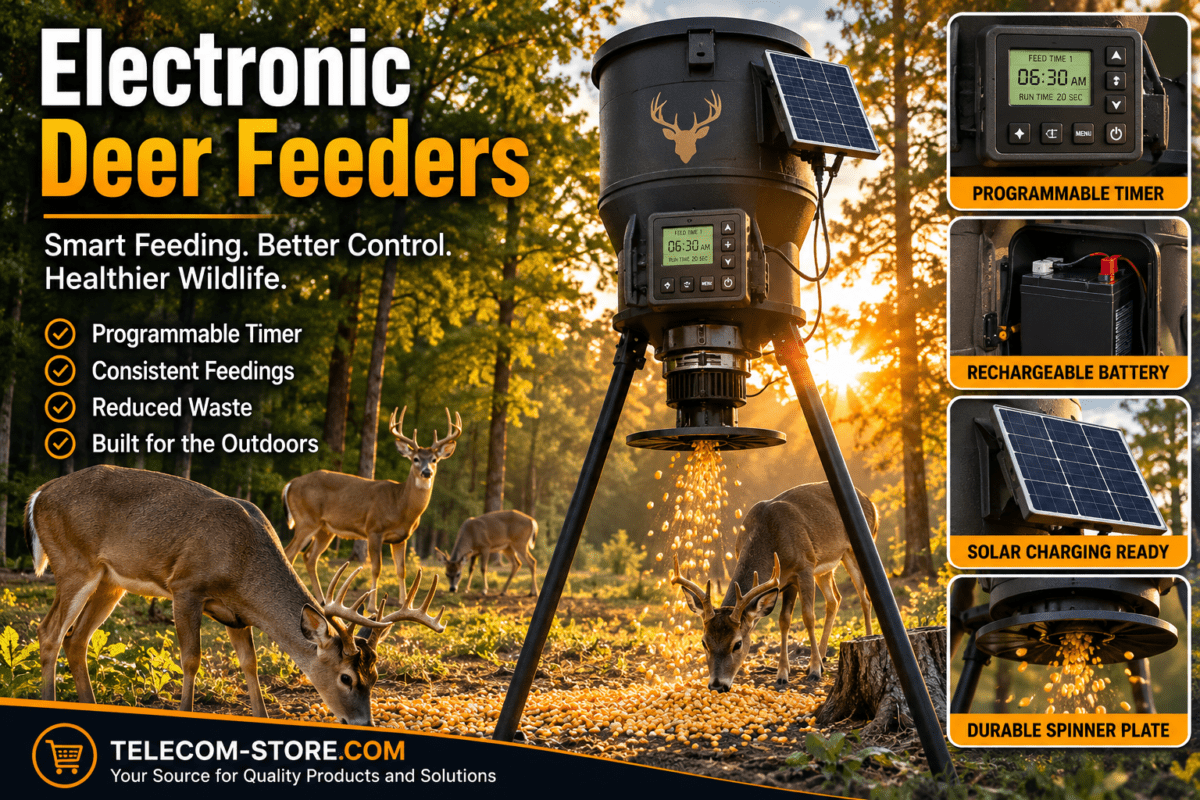
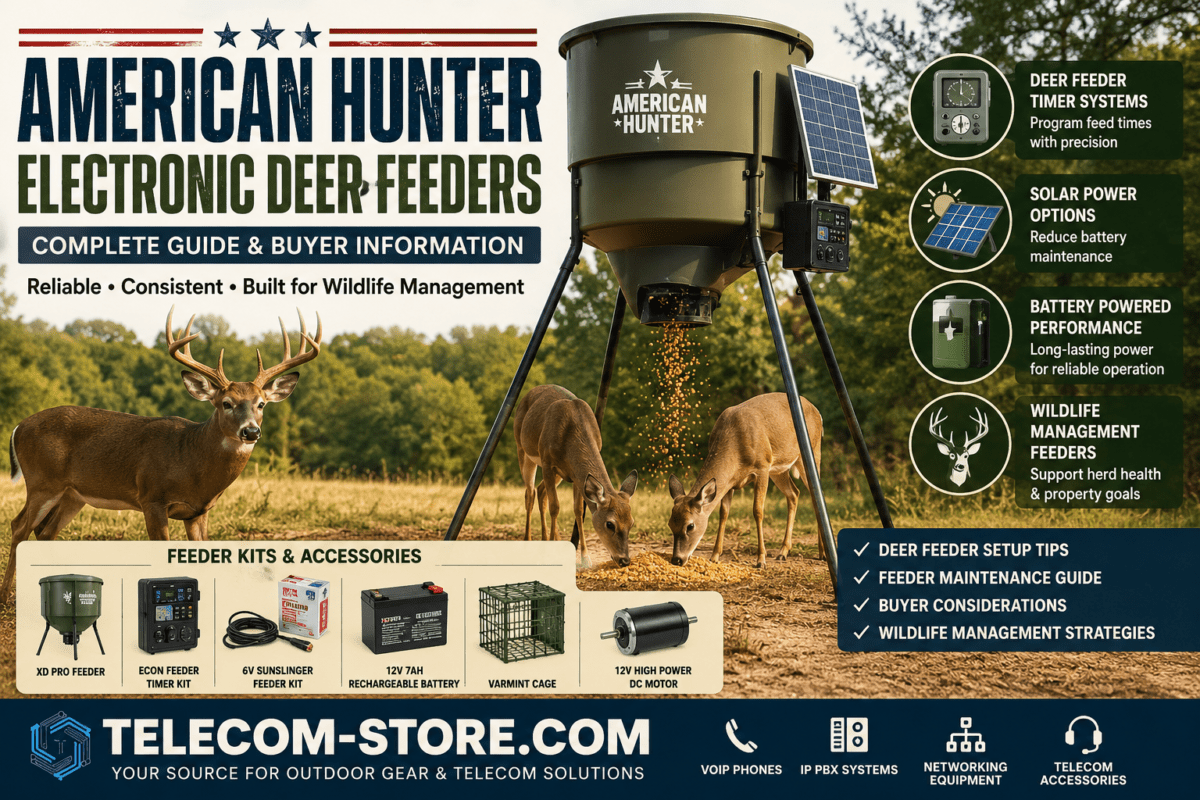
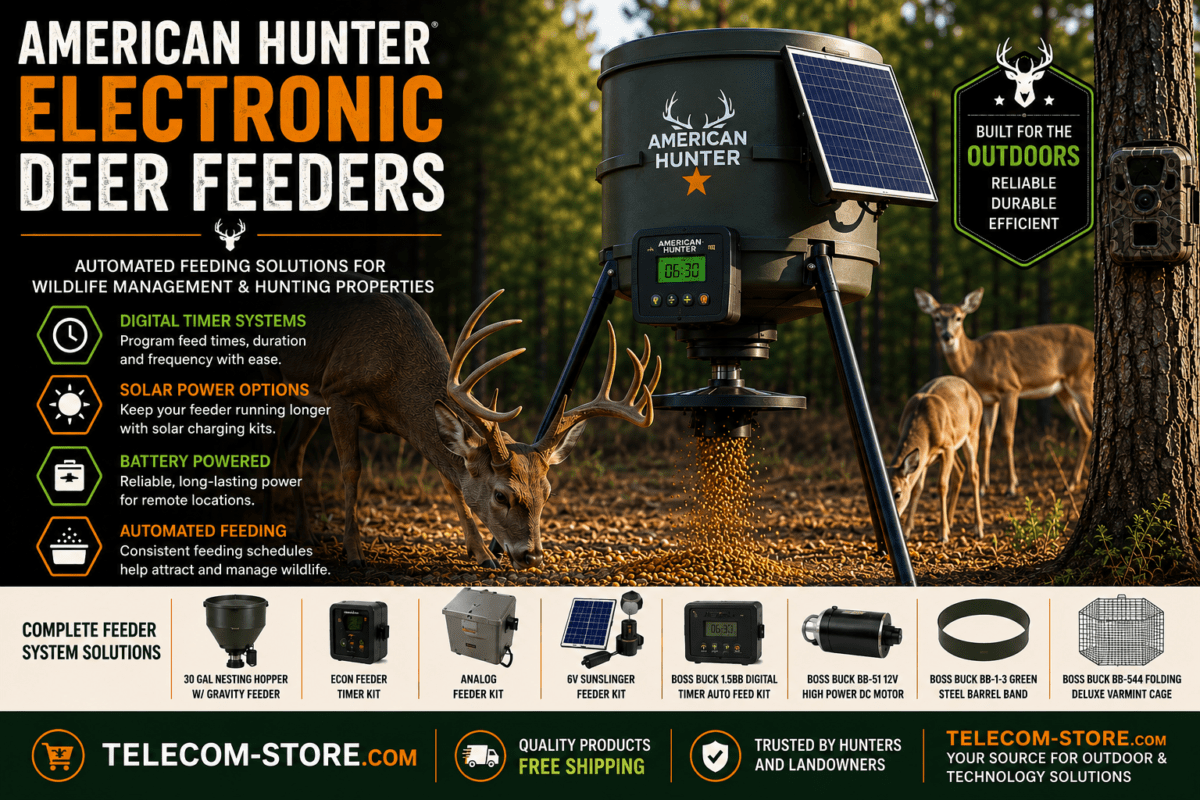
Instead of manually distributing feed, programmable feeder systems can dispense feed according to scheduled times and durations. Depending on the equipment, systems may incorporate digital timers, electric motors, rechargeable batteries, solar charging and weather-resistant components.
Consistent operation is particularly useful when the objective is wildlife management rather than simply attracting animals immediately before a hunt.
Telecom-Store.com carries outdoor feeder equipment, including electronic and motorized feeder components. Our guide to electronic game feeders for wildlife management explains the technology and deployment considerations in greater detail.
Before Installing a Feeder
Consider several practical issues:
- Local hunting and wildlife regulations
- Feeder capacity
- Battery requirements
- Timer programmability
- Weather exposure
- Animal interference
- How frequently the feeder must be refilled
Feeding and baiting regulations vary considerably by location and species. Always check current state and local wildlife regulations before using electronic feeders for hunting purposes.
4. Solar Panels and External Power Systems
Power management is one of the most important considerations for electronics installed deep on a hunting property.
Every trip made solely to replace batteries consumes time and creates additional activity around the installation site.
Compatible solar panels, rechargeable battery systems and external battery boxes can extend operating time for equipment such as trail cameras and feeders.
Telecom-Store.com’s outdoor equipment selection includes items such as Stealth Cam battery and solar-related accessories that can be incorporated into compatible installations.
Solar power works best when the panel receives sufficient sunlight. Heavy tree canopy can significantly reduce charging performance, so panel placement may be just as important as camera or feeder placement.
A Better Remote-Power Strategy
For frequently triggered cameras or equipment operating in difficult-to-access locations, consider the complete power system rather than simply the device itself.
That means evaluating:
- Average power consumption
- Battery capacity
- Expected trigger frequency
- Cellular transmission frequency
- Available sunlight
- Winter temperatures
- Distance from convenient access
The farther the equipment is from your normal route through the property, the more valuable extended battery life becomes.
5. Electronic Game Calls
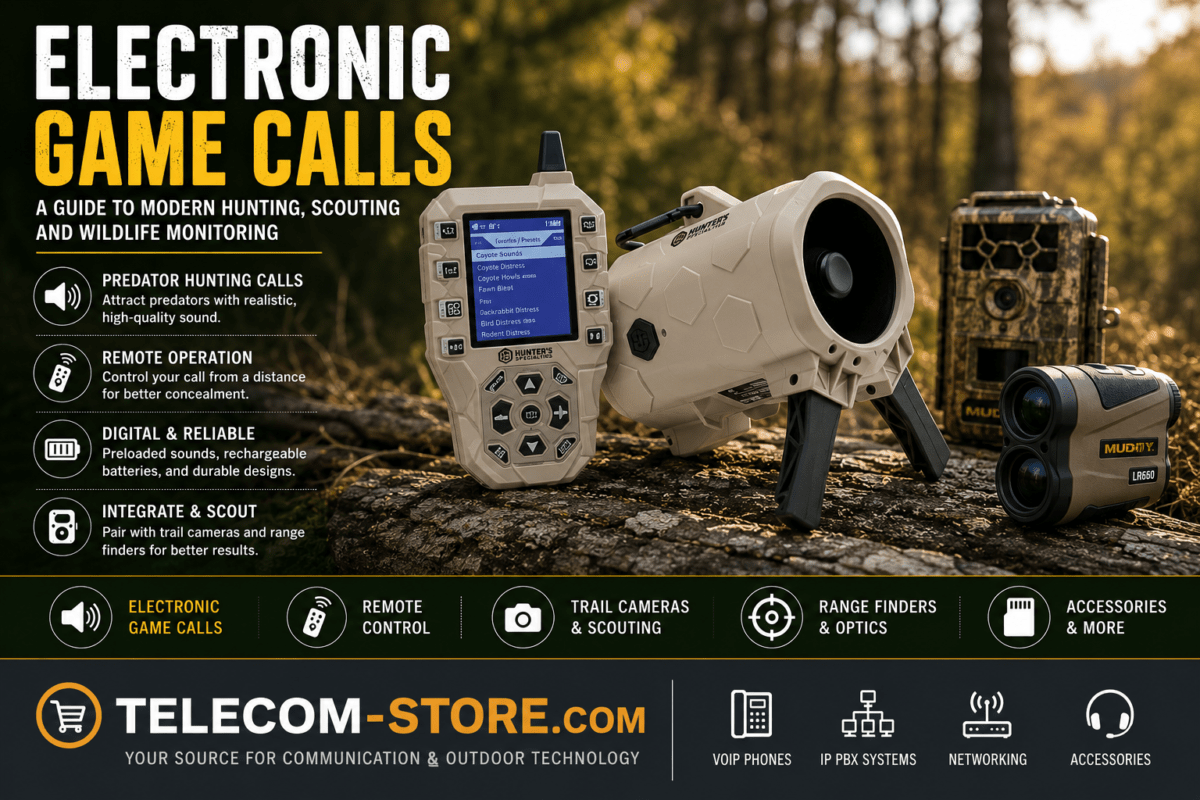
Electronic game calls combine stored wildlife sounds, amplified speakers and remote control to provide another useful tool for certain hunting applications.
The Western Rivers Mantis Pro 100 Electronic Caller, for example, uses a 4-inch reflex loudspeaker and stores 100 sounds. It includes a removable remote control, and Telecom-Store.com’s current product specifications list remote operation at up to 300 yards under suitable conditions.
Remote operation allows the sound source to be positioned away from the hunter. Depending on the hunting situation, that can help separate the caller’s location from the hunter’s position.
Electronic callers can be useful for applications such as predator hunting and wildlife observation, but their legality varies by species, season and jurisdiction.
Read our guide to electronic game calls for modern hunting setups for additional deployment considerations.
Important: Always verify current hunting regulations before using an electronic caller. Some states or seasons restrict electronic calling devices for particular species.
6. Electronic Hearing Protection and Communication Equipment
Electronic hearing protection has become another important category of hunting technology.
Unlike basic passive earmuffs, electronic hearing protection can be designed to reduce hazardous impulse noise while allowing the user to remain aware of lower-level environmental sounds.
Communication accessories can add another capability when hunting or working on property with other people.
Telecom-Store.com currently carries outdoor communication equipment including the Walker’s Game Ear BT Noise Blocking Blue Tooth Shooting Ear Muffs.
.
For property owners, communication equipment can be useful beyond hunting itself. Cutting trails, filling feeders, repairing fences, moving stands and maintaining remote property frequently involves people working some distance apart.
Think Beyond Hunting Season
When choosing outdoor communication equipment, consider whether it can also support routine property work. Equipment that serves multiple purposes throughout the year can provide more value than gear used only a few days each season.
7. Outdoor Wi-Fi and Wireless Bridges
This is where hunting-property electronics begin to overlap with professional networking technology.
Large properties may have internet service at a house or cabin but no connectivity at a barn, gate, workshop or other distant structure.
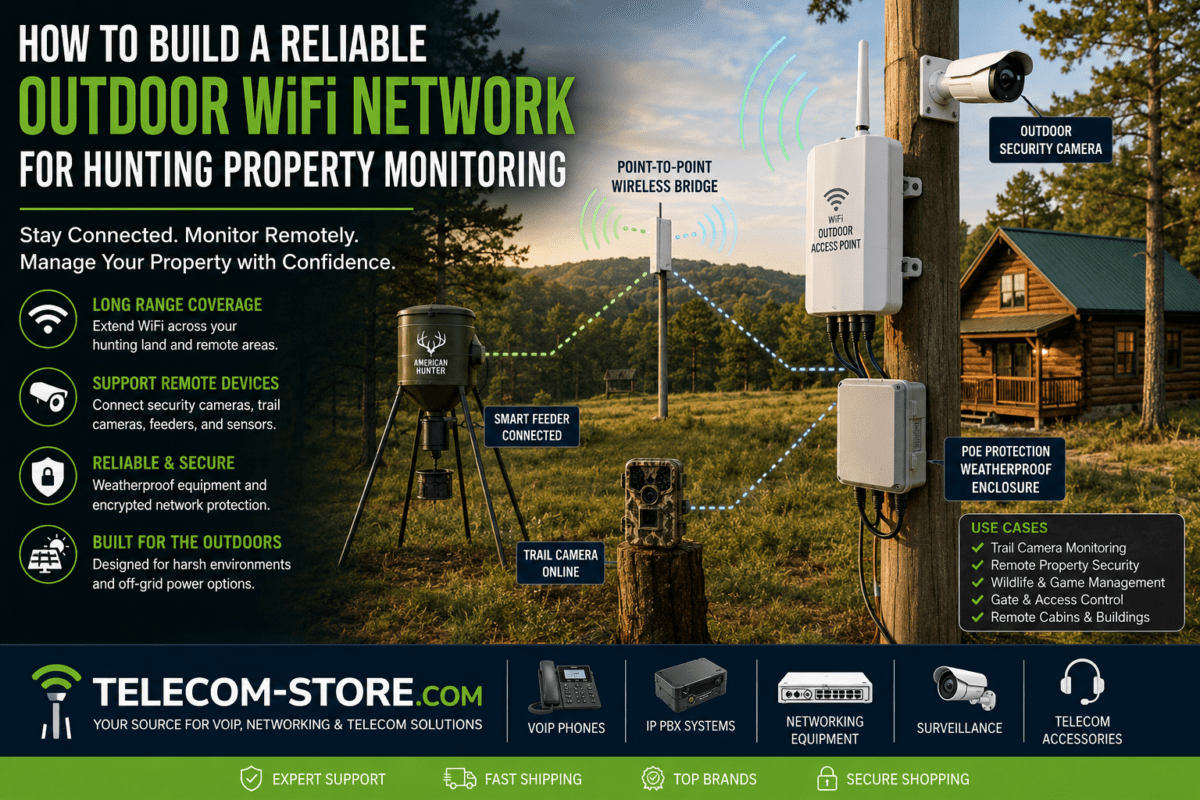
Outdoor access points and point-to-point wireless bridges can potentially extend network connectivity between buildings or other locations when the terrain, distance and line of sight are suitable.
That network can support compatible equipment such as:
- IP security cameras
- Remote cabin connectivity
- Outdoor access points
- Network-connected monitoring equipment
- Computers and tablets
- Other IP-based devices
Our guide to outdoor Wi-Fi for hunting property monitoring explains how outdoor wireless networking can be used across rural properties.
Wireless networking does require more planning than installing a standalone trail camera. Distance, trees, terrain, mounting height, power availability and line of sight can all affect performance.
How These Hunting Electronics Work Together
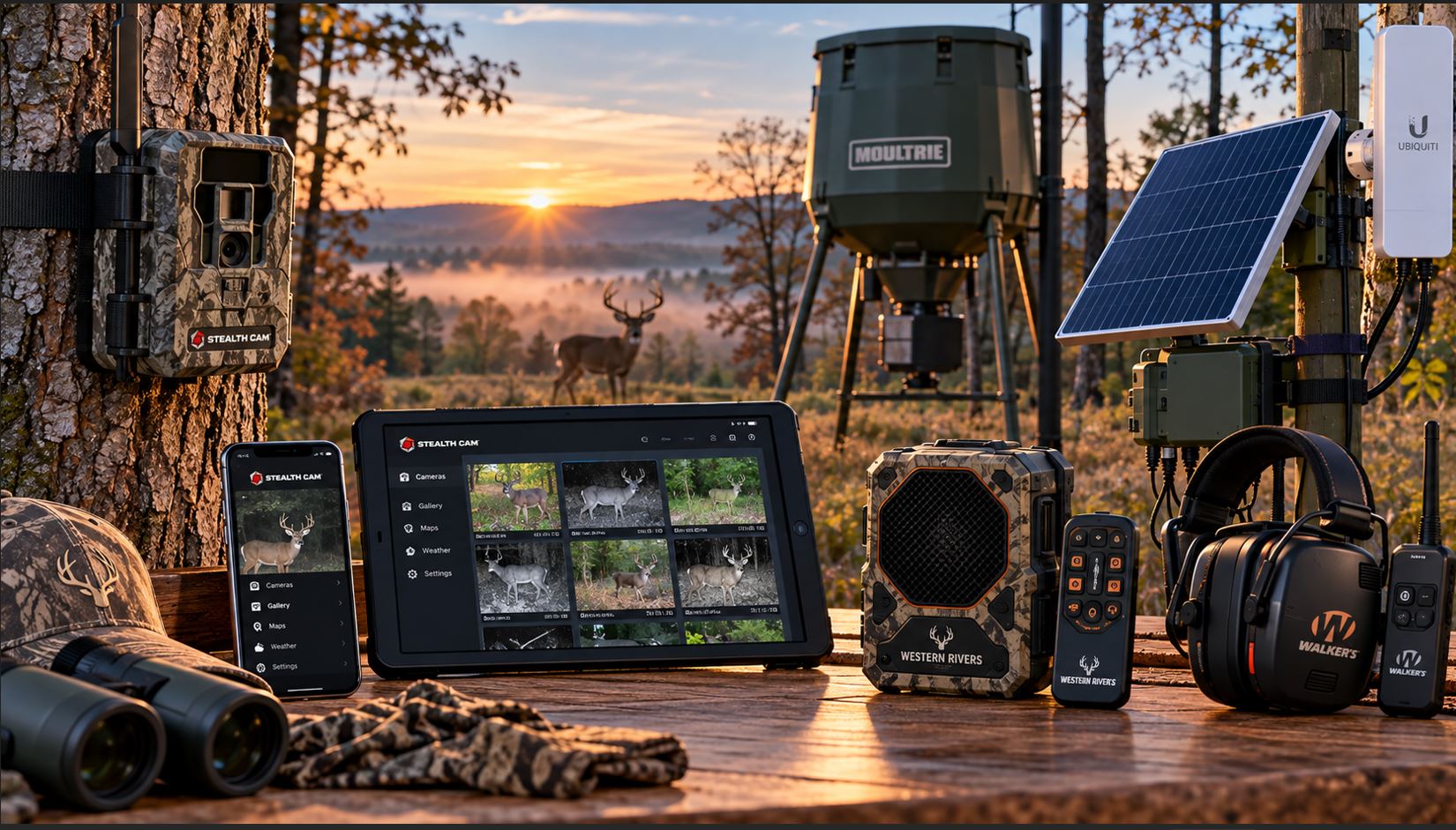
The biggest advantage comes from thinking of hunting electronics as a system rather than a collection of unrelated gadgets.
| Technology | Primary Purpose | Property Management Benefit |
|---|---|---|
| Cellular Trail Camera | Remote wildlife monitoring | Reduces unnecessary camera visits |
| SD Trail Camera | Local wildlife monitoring | Simple monitoring without cellular service |
| Electronic Feeder | Scheduled feed distribution | Automates feeding routines where permitted |
| Solar/External Power | Extended equipment operation | Reduces battery-maintenance trips |
| Electronic Game Call | Remote sound playback | Allows flexible caller placement where legal |
| Electronic Hearing/Communication | Hearing protection and communications | Supports hunters and property work crews |
| Outdoor Wireless Network | Extend network connectivity | Connects remote structures and IP equipment |
Example: Building a Connected Hunting Property
Consider a property with a cabin near the road and hunting areas farther into the woods.
A cellular trail camera could monitor a remote food plot without requiring daily trips. A second conventional camera could monitor a trail near the cabin where checking an SD card is easy.
A programmable feeder could maintain a consistent schedule where feeding is legal, while a compatible solar system could reduce battery maintenance.
If the property contains another building within a suitable wireless path of the cabin, a point-to-point network could potentially extend connectivity to that location.
The result is not necessarily a completely automated hunting property. Instead, technology reduces repetitive tasks and provides more information between physical visits.
What to Consider Before Buying Hunting Electronics
Buying the most advanced device is not always the best strategy. Start with the problem you are trying to solve.
- Need fewer camera-checking trips? Consider cellular trail cameras.
- Need predictable feeding schedules? Evaluate programmable feeders where legal.
- Tired of replacing batteries? Investigate compatible solar and external power options.
- Need remote calling capability? Consider an electronic game caller where regulations permit.
- Need communication between hunters or workers? Look at compatible outdoor communication equipment.
- Need connectivity at another building? Investigate outdoor access points or point-to-point wireless networking.
Compatibility matters as well. Check voltage, connectors, mounting requirements, network availability, cellular coverage and manufacturer compatibility before purchasing accessories for existing equipment.
Frequently Asked Questions About Hunting Electronics
What hunting electronics are most useful for managing property?
Cellular trail cameras are among the most useful because they allow compatible cameras to send images remotely when cellular coverage is available. Electronic feeders, solar power systems and outdoor networking can also reduce routine property-maintenance work.
Are cellular trail cameras better than regular trail cameras?
Not necessarily. Cellular cameras are particularly useful at remote locations, while conventional SD-card cameras can be more practical at locations you visit regularly. Many properties can benefit from using both.
Can solar panels power trail cameras?
Some trail cameras support compatible external solar or battery systems. Always verify the camera’s voltage, connector and manufacturer requirements before connecting an external power source.
Can Wi-Fi cover an entire hunting property?
Usually not with a single access point. Large rural properties may require outdoor access points, point-to-point wireless links or other network infrastructure. Trees, hills, distance and power availability can substantially affect coverage.
Are electronic game calls legal for hunting?
Rules vary by state, species and hunting season. Check current wildlife regulations for the location and species before using an electronic caller while hunting.
Are electronic game feeders legal?
Feeding and baiting regulations also vary by jurisdiction, species and season. Hunters should verify current state and local regulations before installing or operating a feeder for hunting purposes.
Final Thoughts
Modern hunting electronics can do much more than take pictures of deer.
When chosen carefully, trail cameras, electronic feeders, remote power systems, game calls, communication equipment and outdoor networking can work together to make a hunting property easier to monitor and maintain.
The key is choosing technology that solves a real problem on your property. A cellular camera makes sense when you want to avoid repeated trips into a remote area. Solar power becomes valuable when battery maintenance is difficult. Outdoor networking becomes useful when important locations need reliable IP connectivity.
Explore the outdoor products available from Telecom-Store.com to find trail cameras, hunting electronics, outdoor equipment and accessories for your property.