What to Know Before Choosing a Trail Camera for Wildlife Monitoring
If you’re buying a trail camera for wildlife, hunting property scouting, or remote security, the right selection can make all the difference in visibility, efficiency, and long-term results. Here’s what business buyers, land managers, and hunters should consider up front:
- Decide if you want remote image access (cellular/wireless) or are able to check SD cards in person
- Check signal coverage on your property—rural carriers sometimes differ by area
- Determine your mounting needs: will you need to place cameras in trees, along fields, or at gate access points?
- Consider battery life—accessibility for battery replacement is crucial on large or remote land
- Lock and theft prevention is important for installations on public or open property
Below you’ll find a quick comparison of the main types of trail cameras and their best uses.
Trail Camera Comparison Table
| Camera Type |
Best Use |
Connectivity |
Power |
Security |
Example |
| Standard SD-Card |
Accessible property; local hunting; high image retention needed |
Local/Physical (SD card) |
AA/Lithium/Solar |
Lock box/cable slot |
32MP Trail Camera |
| Cellular Trail Camera |
Remote lands, business monitoring, trouble spots |
LTE/Cellular (App/Cloud) |
AA/Lithium/Optional Solar |
Lock box, cable, app alerts |
Muddy MTRX2 Dual Carrier |
| Wireless/Cloud |
Frequent updates, multi-location use, group access |
WiFi/Cloud, App |
Typically AC/External, or large battery bank |
Alerts, optional lock accessories |
Muddy MTGTRK Dual Carrier |
| Compact/Entry Model |
Basic wildlife observation; temporary setups |
SD-Card, some wireless models |
Alkaline/Basic solar |
Minimal, basic lock |
Prevue 26 Camo |
Understanding Trail Cameras for Wildlife Monitoring
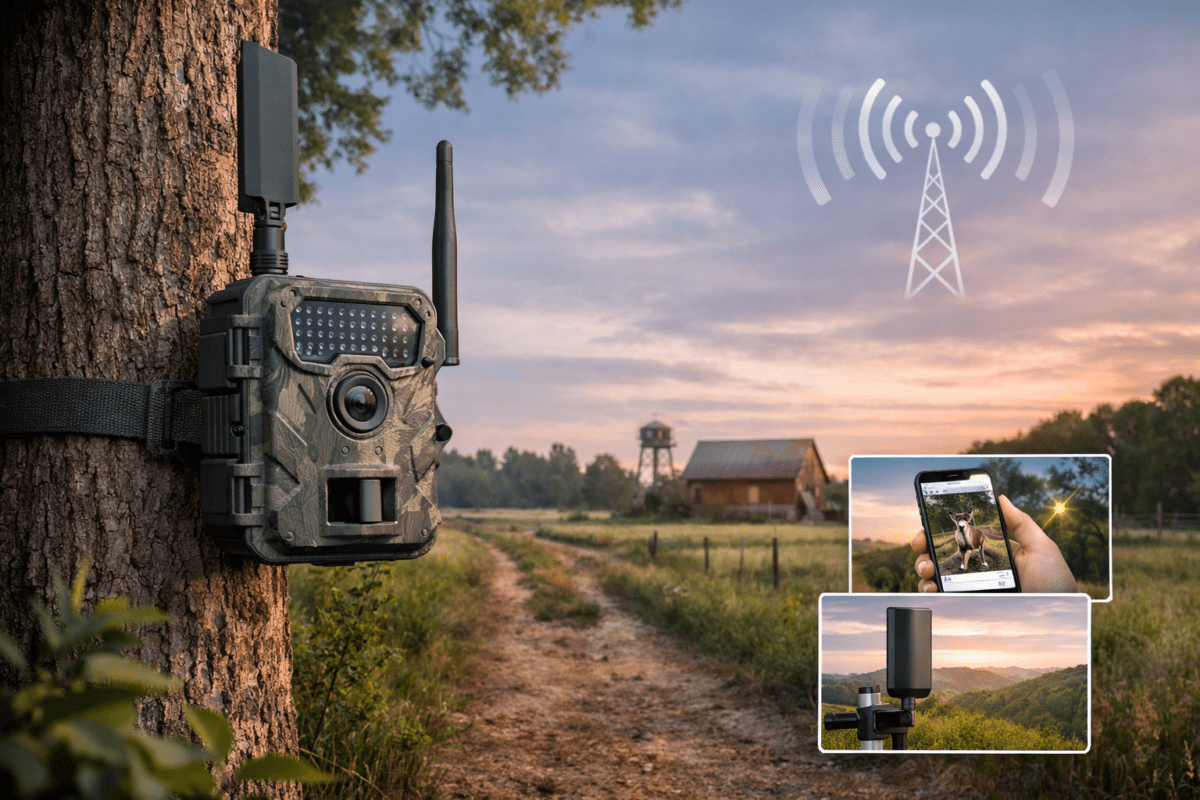
Trail cameras are outdoor units designed to capture photos and video of passing wildlife or activity. Today’s models offer motion-activated triggers, time-lapse scheduling, and in many cases, LTE/cellular or WiFi connectivity to deliver alerts directly to your mobile device or cloud dashboard. They’re used for everything from large acreage hunting property management to livestock and gate security monitoring on business land.
- Decide if you’ll pull SD cards yourself, or need cellular/wireless transmission—this shapes your camera choice and cost expectations.
- Modern options reduce the need for site visits and minimize human scent disturbance for better wildlife activity data.
Choosing Between Cellular and Standard Trail Camera Models
Standard Trail Cameras
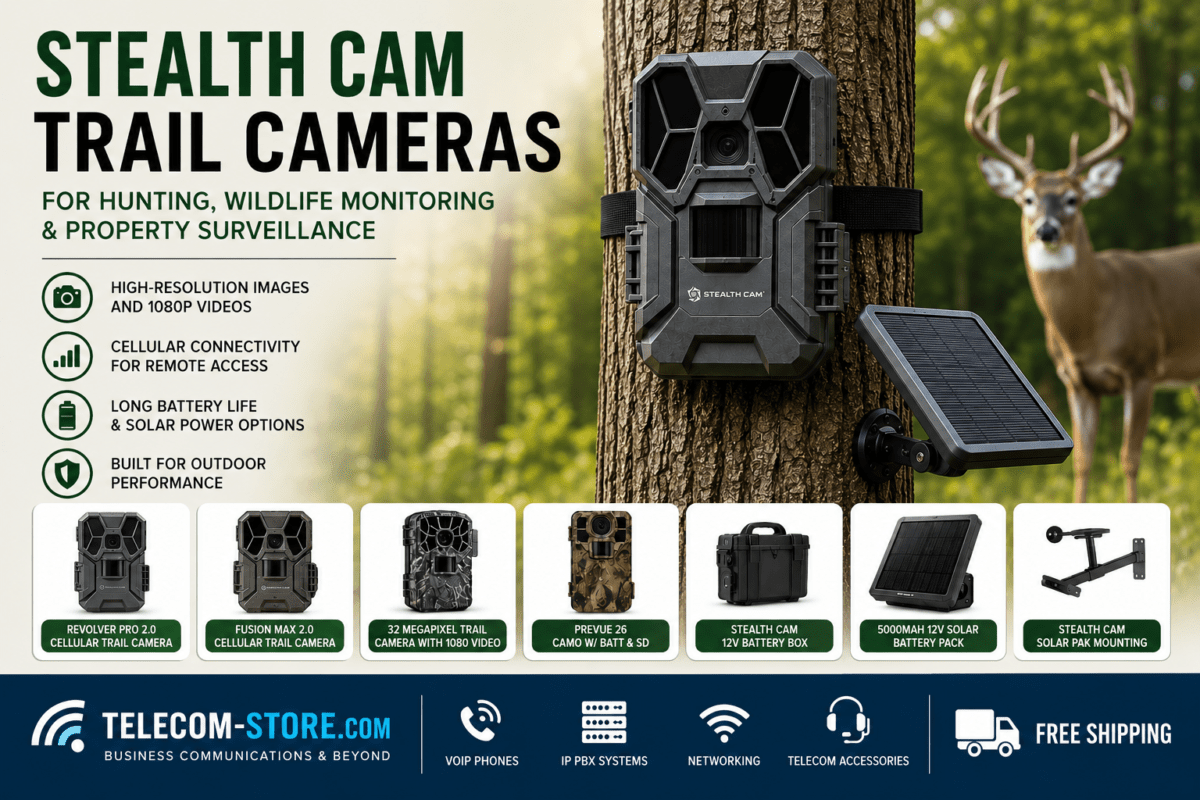
Standard SD card cameras are cost-effective and dependable for areas you visit regularly. They keep images on the memory card, making them best for small hunting land, pond monitoring, or frequent-access sites. For a versatile and high-res option, see the 32 Megapixel Trail Camera With 1080 Video.
Cellular Trail Cameras
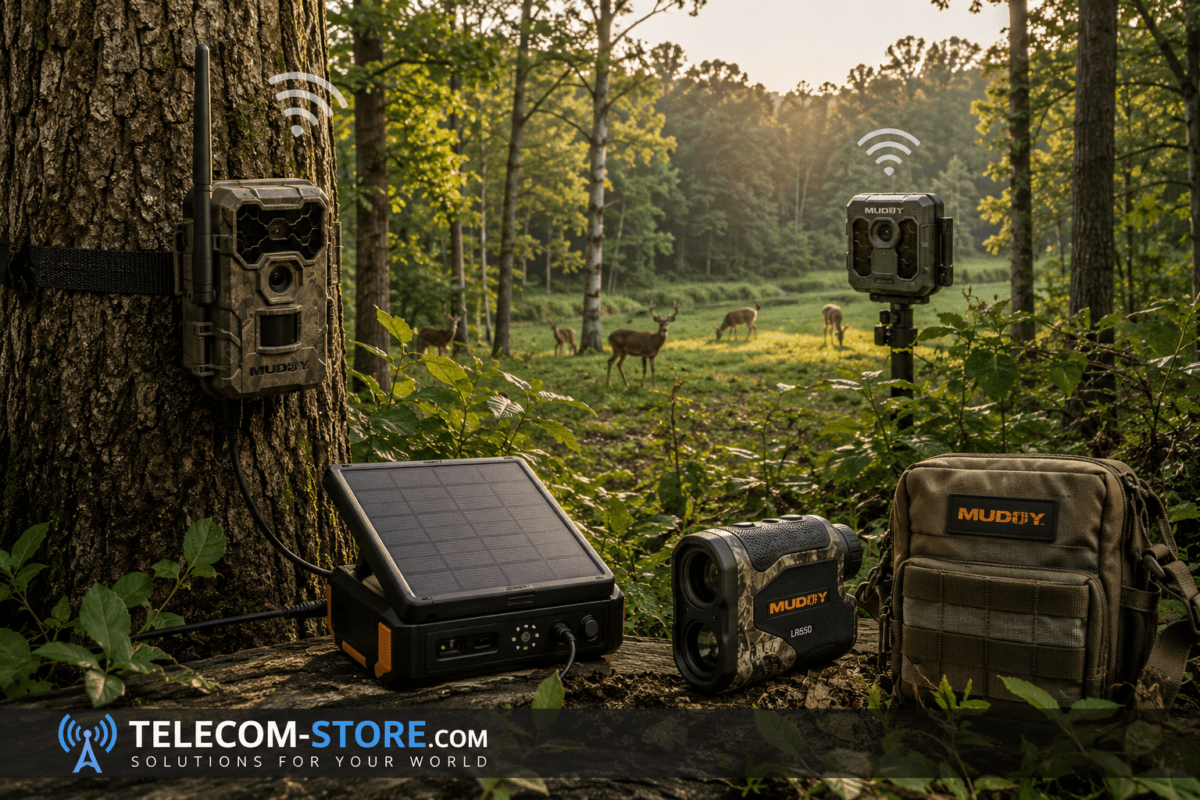
Cellular trail cameras like the Muddy MTRX2 Dual Carrier Cellular Trail Camera send images over LTE/4G to your phone or cloud storage instantly. These are recommended for monitoring distant property, business security lines, or locations where access is a challenge. Always verify that your target site has adequate cell signal—and check both major carriers for dual-carrier models.
Keep in mind that cellular models incur monthly data subscription fees, and image transmission can drain batteries faster than local models.
Night Vision Performance: What Really Matters
Most wildlife move at dawn, dusk, or overnight. The best trail cameras come with no-glow or low-glow LEDs:
- No glow: Infrared flash invisible to humans and animals; preferred for security and minimal disturbance.
- Low glow: Emits a faint red; fine for general wildlife work if theft isn’t a concern.
Evaluate range, clarity in both video and stills, and trigger speed for night shots.
Wireless Trail Cameras: Going Remote with Cloud Monitoring
Wireless and cloud-enabled cameras are game changers for large-scale business and research operations. With cellular/wireless transmission, these models can:
- Help you watch remote spots without continuous field visits
- Alert you instantly to trespassers, equipment movement, or gate access
- Reduce spooking wildlife in hunting areas
Try the Muddy MTGTRK Dual Carrier 24MP Cellular Trail Camera for settings with unpredictable mobile coverage.
Managing Battery Life for Long-Term Monitoring
Power is a leading pain-point for any remote setup. Frequent battery swaps are not feasible for big acreage, so consider:
- Lithium AA batteries for low temp performance and longevity
- External battery packs for high-traffic or cellular cameras
- Solar charging add-ons for year-round or off-grid installs
Plan field visits around battery life and keep replacement access simple for minimal disturbance. Frequent image transmission (cellular/cloud) always shortens battery lifespan compared to SD-only models.
Best Practices for Camera Placement & Mounting
Camera placement is as important as the model: wrong position = missed photos or trigger failures. Mount cameras near animal trails, food sources, scrape lines, or field funnels. Adjust height and angle to match likely wildlife movement.
Using adjustable mounts improves your chances for clear images—and helps avoid leaves or grass from triggering false captures. Consider the HME Products G Adjustable 360 Degree Trail Camera Holder for precise directional setup.
Security Accessories: Lock & Theft Prevention
Outdoor and remote land cameras are targets for theft. Secure your investment with steel lock cables or lock boxes—see the HME Products TCCL Stainless Steel Trail Camera Lock. Concealed positioning and elevated mounts (out of normal sightlines) add another layer of protection.
Using Camera Arms and Elevated Mounts
Elevated camera mounts provide:
- Wider view of open fields or food plots
- Reduced risk of animal or human tampering
- More accurate detection of movement patterns
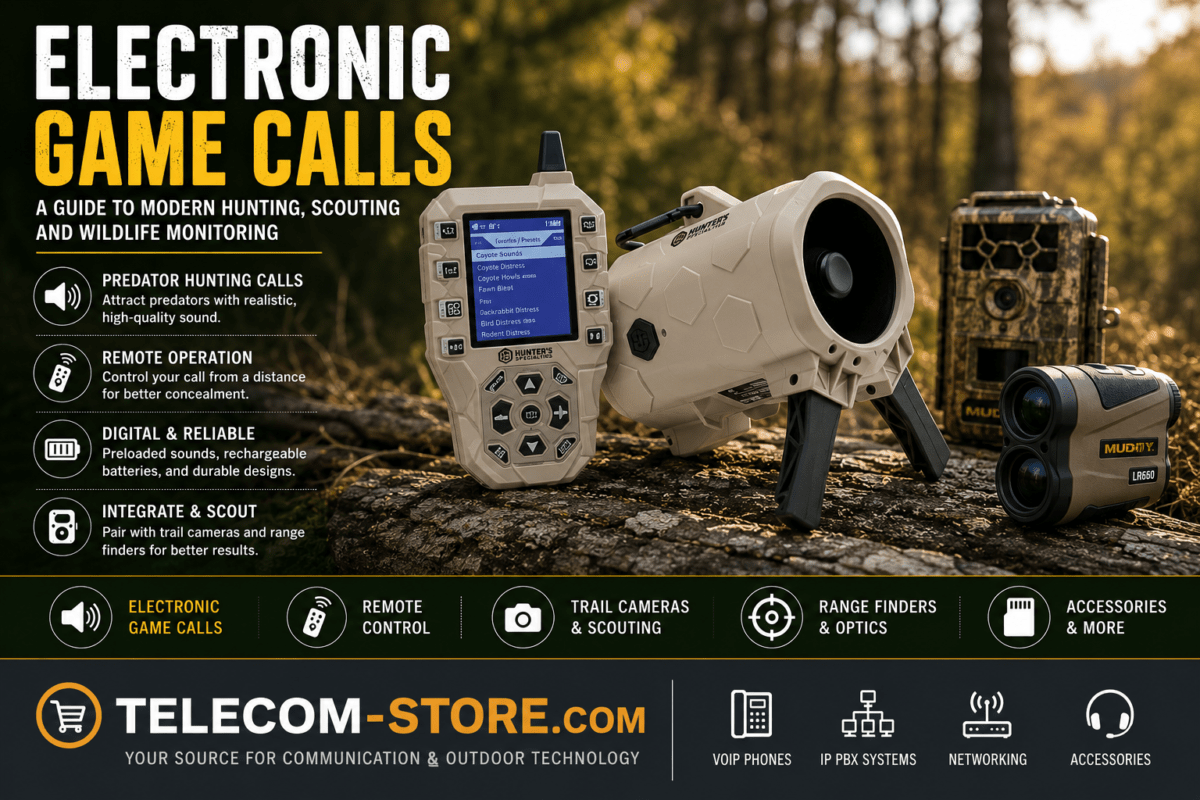
Both the Muddy MCA200 Quiet Pivot Camera Arm and Muddy MCA100 Lightweight Adjustable Camera Arm are flexible for trees or posts, and suit advanced observation setups—especially for research or long-term security surveys.
Selecting the Right Camera Resolution
Megapixels are not the whole story. Many buyers focus on the highest number, but sensor quality, night image consistency, and trigger speed all matter. The Prevue 26 Camo with Battery and SD is a reliable choice if you need a turnkey solution for rapid deployment—especially for basic observation.
Field use shows that some 12-20MP cameras outperform higher-rated models on clarity due to better sensors and night vision tuning. Always review actual field images before purchase if possible.
Connectivity and Remote Monitoring Infrastructure
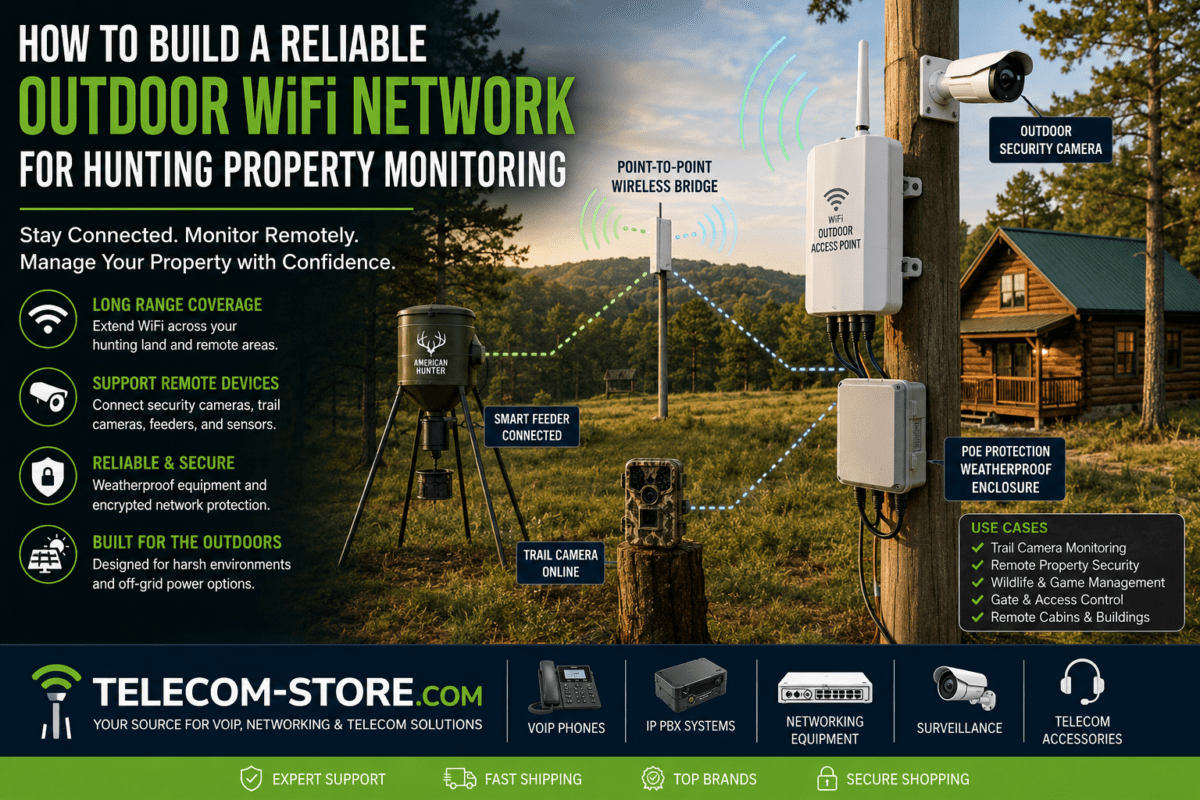
Cellular trail cams depend on reliable LTE or 4G connections. For some remote or low-signal sites, external antennas, booster accessories, or a PoE network switch with wireless infrastructure may be needed at nearby buildings or access points.
Most major brands offer app-based management; check compatibility with your mobile OS before purchase. For additional networking needs, Telecom-Store.com offers a wide range of communication and network hardware.
Common Mistakes When Setting Up Trail Cameras
- Mounting cameras too high/low or facing heavy foliage (causes missed triggers or blurs)
- Forgetting to check or format SD cards before use
- Placing cameras within obvious sightlines without theft prevention
- Neglecting to test signal coverage for cellular/wireless models
- Allowing batteries to drain without backup plans on long-term deployments
- Not updating firmware or registering camera with the manufacturer/app (can block alerts)
Set up in a test location before final placement, and use time-lapse or snapshot mode in addition to video if your land sees heavy sun/shade transitions.
FAQ Section
What are the best trail cameras for wildlife monitoring?
The best option depends on your goals. For accessible locations, a high-res SD card camera is affordable and effective. For business, remote land, or hands-off applications, invest in a dual-carrier cellular model to ensure reliable coverage. Entry models work for casual or temporary observation.
Are cellular trail cameras worth it for hunting?
Yes, especially if minimizing human scent or travel is a priority. Cellular cameras automate updates and reduce disturbance, so you get more natural wildlife behavior and less labor in the field.
How do wireless trail cameras work?
These cameras transmit video and photos over carrier networks to an app or cloud portal, allowing for real-time or near-real-time remote monitoring—ideal for both business and private land use.
What is the difference between no glow and low glow trail cameras?
No glow models emit near-infrared flash invisible to the eye, reducing the risk of spooking wildlife or alerting trespassers. Low glow emits a small amount of visible red, which is acceptable where theft is not a concern.
How long do trail camera batteries last?
Lithium batteries can run for months in standard camera setups. For cellular or high-traffic sites, expect a few weeks to a couple of months per set—always factor in environmental factors like temperature and usage patterns. Solar kits or battery banks are useful for reducing maintenance on large acreage.
Where should trail cameras be placed for deer monitoring?
Ideal spots are along well-beaten trails, funnel points between bedding and feeding areas, along field edges, or near water sources. The correct height is roughly waist-high (for deer), angled slightly downward to cover both ground and animal level.
Do trail cameras need internet access?
Only cellular or WiFi-enabled models need carrier or internet connectivity to transmit data. SD-only cameras work without any internet access and are best for simple local storage.
Final Buyer Tips and Next Steps
Before you invest:
- Map out your property and consider coverage, access, and security for each camera
- Test cellular or wireless signal for each planned camera location—signal boosters can sometimes help marginal sites
- Choose battery type and format for seasonal needs (lithium for cold, solar for off-grid)
- Secure valuable cameras with steel locks and conceal them as needed
The best long-term monitoring results come from well-placed cameras, reliable power management, and a straightforward method for reviewing photos and videos—whether that’s an SD card swap, app notification, or cloud portal. Explore current trail camera solutions and mounting accessories at Telecom-Store.com.