Cisco Unified Communications Phones
Business communication systems continue evolving as organizations adopt cloud collaboration platforms, hybrid work environments, and IP-based voice infrastructure. Cisco unified communications phones remain widely used in offices, enterprise deployments, remote work environments, and VoIP communication systems because they support scalable business voice communication and SIP integration.
Modern Cisco VoIP phones for business often integrate with:
- Hosted PBX systems
- Cisco Unified Communications Manager (CUCM)
- SIP-based VoIP platforms
- Microsoft Teams environments
- Zoom collaboration systems
- Enterprise networking infrastructure
Organizations deploying Cisco business communication systems commonly use IP desk phones, conference devices, wireless handsets, and video collaboration endpoints to support internal and external communication.
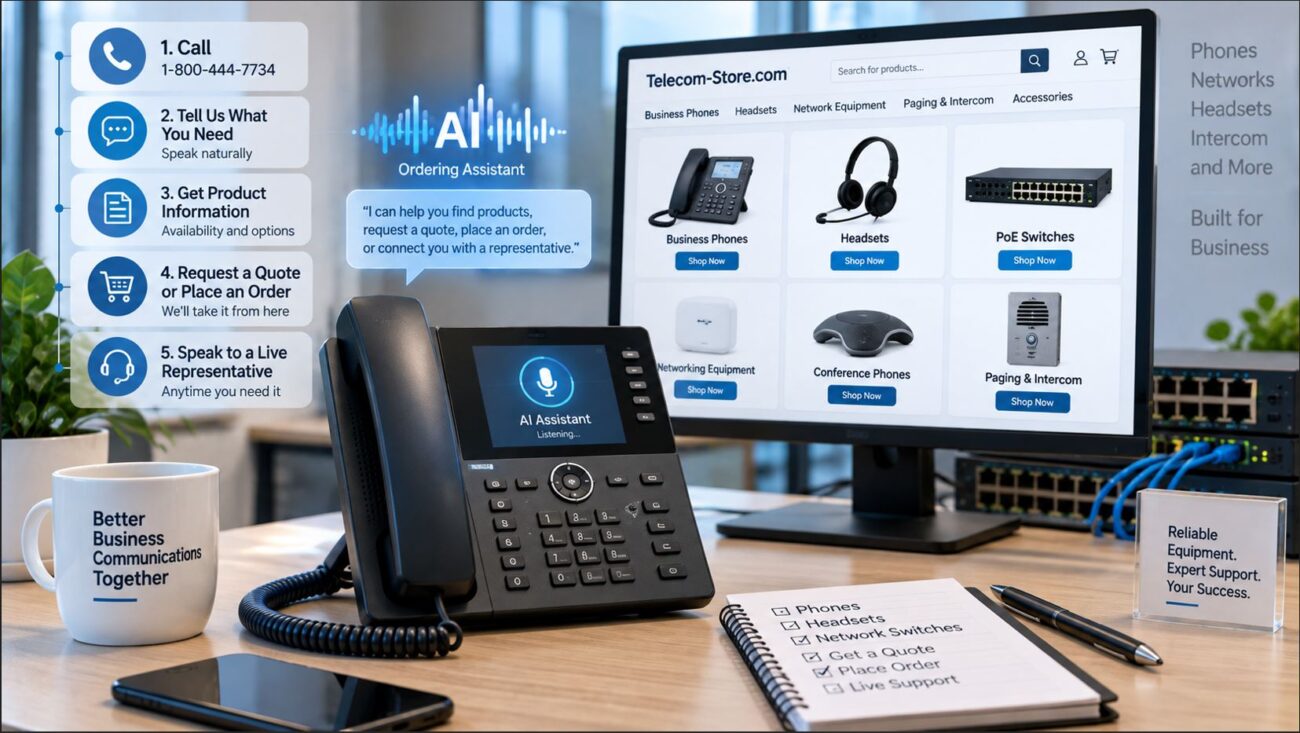
Businesses searching for VoIP phones, IP PBX systems, and telecom hardware can browse equipment at:
Telecom-Store.com
Understanding Cisco Unified Communications Phones
Cisco unified communications phones are IP-based communication devices designed for enterprise and business voice communication.
Unlike traditional analog desk phones, Cisco IP phones communicate over Ethernet networks using VoIP protocols such as SIP.
Cisco business phones are commonly deployed in:
- Corporate offices
- Healthcare facilities
- Educational institutions
- Government organizations
- Contact centers
- Remote office environments
Many Cisco VoIP phones support:
- HD voice audio
- SIP registration
- Gigabit Ethernet switching
- PoE connectivity
- Bluetooth integration
- Video collaboration
- Wireless handset support
Cisco unified communications systems are often integrated into larger network environments alongside:
- Managed switches
- Voice VLANs
- QoS policies
- Unified collaboration platforms
Cisco IP Phone Systems and VoIP Infrastructure
A Cisco IP phone system typically includes:
- IP desk phones
- SIP registration
- Network switching
- Call control platforms
- VoIP routing infrastructure
Modern deployments may use:
- Cisco Unified Communications Manager
- Hosted PBX providers
- Cloud VoIP services
- Hybrid communication environments
Businesses deploying Cisco phones should ensure proper:
- Ethernet connectivity
- Power availability
- QoS configuration
- Network bandwidth
One example of a modern Cisco business desk phone includes:
Touchscreen VoIP phones may support:
- Simplified call management
- Contact directories
- Collaboration tools
- SIP communication workflows
Cisco VoIP Phones for Business Environments
Cisco business communication systems are commonly used across a variety of workplace environments.
Different business environments may require:
- Entry-level desk phones
- Executive video phones
- Wireless VoIP handsets
- Shared workspace phones
- Conference room endpoints
One example of a Cisco business IP phone includes:
Color display IP phones may help improve:
- User navigation
- Directory management
- Call visibility
- Collaboration workflows
Organizations often standardize Cisco phones across multiple office locations to simplify:
- Provisioning
- Firmware management
- SIP configuration
- User training
Cisco Phones for Microsoft Teams
Many businesses now use Microsoft Teams alongside VoIP infrastructure and SIP desk phones.
Cisco phones for Microsoft Teams may support:
- SIP interoperability
- Teams calling integration
- Hybrid collaboration workflows
- Voice and video communication
Organizations deploying Teams environments often combine:
- Teams Rooms
- VoIP desk phones
- SIP conference systems
- Wireless headsets
to support flexible communication across office and remote environments.
Businesses working with enterprise collaboration deployments may also use providers such as: Axion Communications
However, businesses should verify:
- Teams compatibility
- SIP registration support
- Firmware requirements
- Licensing considerations
before deployment.
Cisco Phones for Zoom Collaboration
Zoom collaboration environments increasingly rely on VoIP endpoints and conference-capable devices.
Cisco phones for Zoom environments may support:
- SIP communication
- Speakerphone functionality
- Video conferencing integration
- USB or Bluetooth connectivity
One example of a Cisco collaboration device includes:
Video-enabled business phones can help support:
- Remote meetings
- Hybrid collaboration
- Executive communication
- Video conferencing workflows
However, businesses should evaluate:
- Camera requirements
- Network bandwidth
- Video quality expectations
- Collaboration platform compatibility
before deploying video-enabled VoIP devices.
Cisco Wireless VoIP Phones and Mobility
Some business environments require employee mobility rather than fixed desk locations.
Cisco wireless VoIP phones may support:
- DECT communication
- Bluetooth connectivity
- Cordless operation
- Mobile office environments
One example includes:
Wireless VoIP handsets are commonly used in:
- Warehouses
- Healthcare facilities
- Hospitality operations
- Manufacturing environments
- Large office campuses
Wireless communication systems may help:
- Improve mobility
- Reduce missed calls
- Support roaming employees
- Simplify communication workflows
Coverage quality depends heavily on:
- Wireless infrastructure
- Facility layout
- RF interference
- Base station placement
PoE and Network Infrastructure Requirements
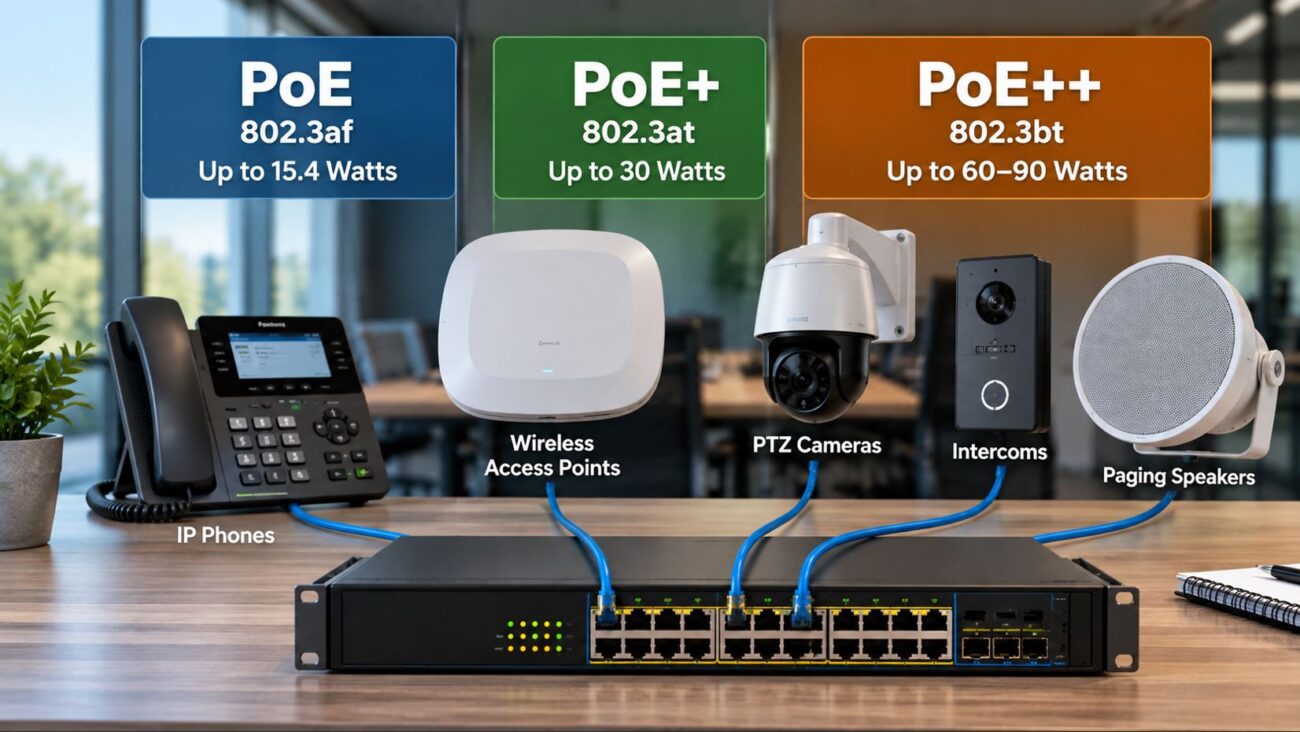
Most Cisco unified communications phones support Power over Ethernet (PoE).
PoE allows:
- Power delivery
- Network connectivity
through a single Ethernet cable.
Benefits of PoE deployments include:
- Simplified cabling
- Centralized power management
- Easier phone relocation
- Reduced power adapter usage
One example of a PoE-capable business VoIP phone includes:
Businesses deploying PoE Cisco phones should ensure:
- PoE-capable switches
- Proper VLAN configuration
- QoS prioritization
- Adequate switching capacity
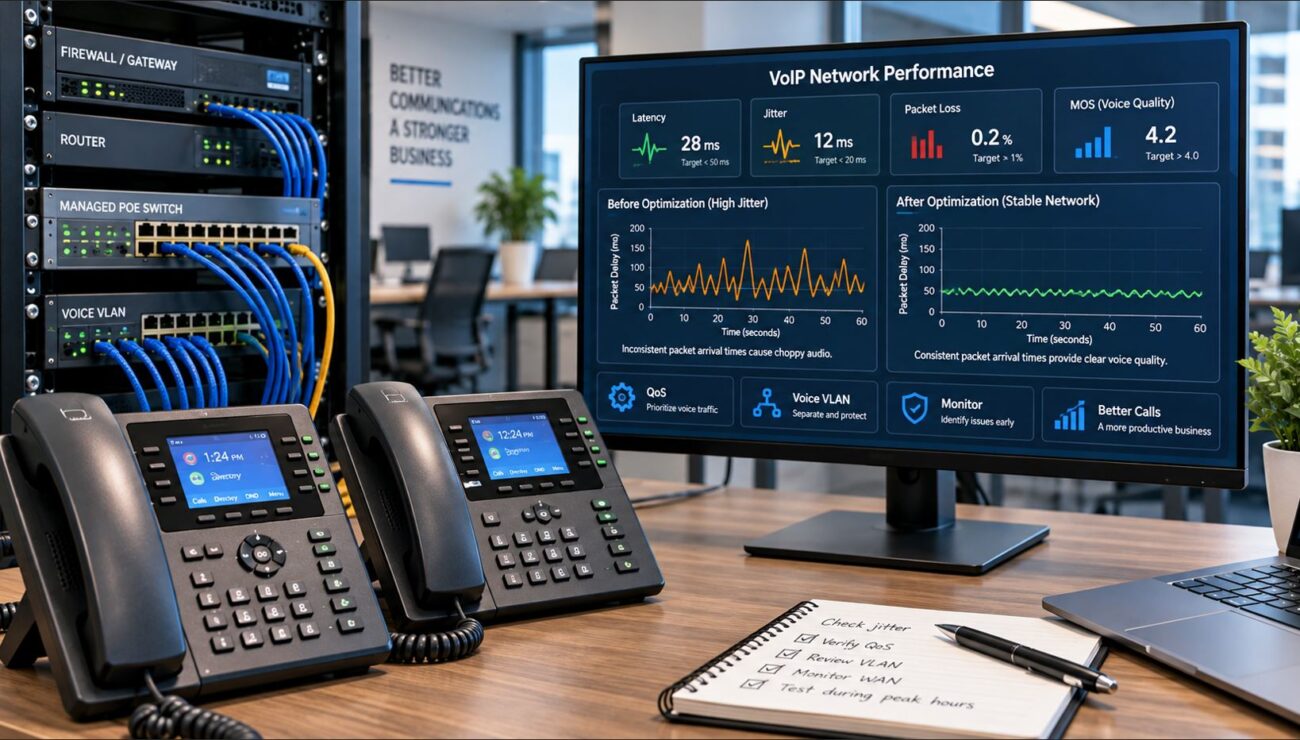
Voice traffic may experience:
- jitter
- latency
- packet loss
if network infrastructure is poorly configured.
Entry-Level and Professional Cisco IP Phones
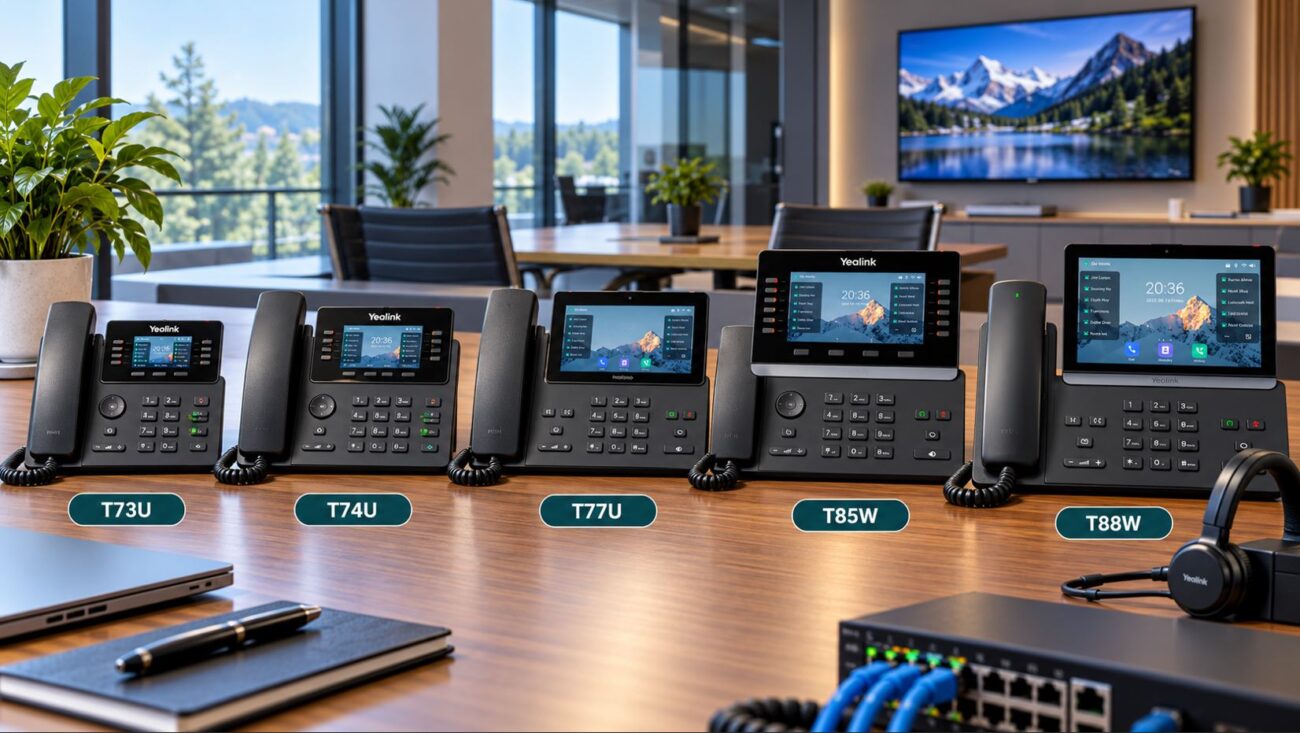
Cisco business communication systems often include both entry-level and advanced VoIP devices.
An example of a more basic office phone includes:
Dual-line SIP phones are commonly used in:
- Reception areas
- Shared workspaces
- Small businesses
- Administrative offices
Another professional office option includes:
Professional IP desk phones may support:
- Larger displays
- Additional line appearances
- Advanced SIP features
- Gigabit Ethernet connectivity
Businesses should evaluate:
- User requirements
- Call volume
- Collaboration needs
- Expansion plans
before standardizing phone hardware.
Compatibility Considerations Before Deployment
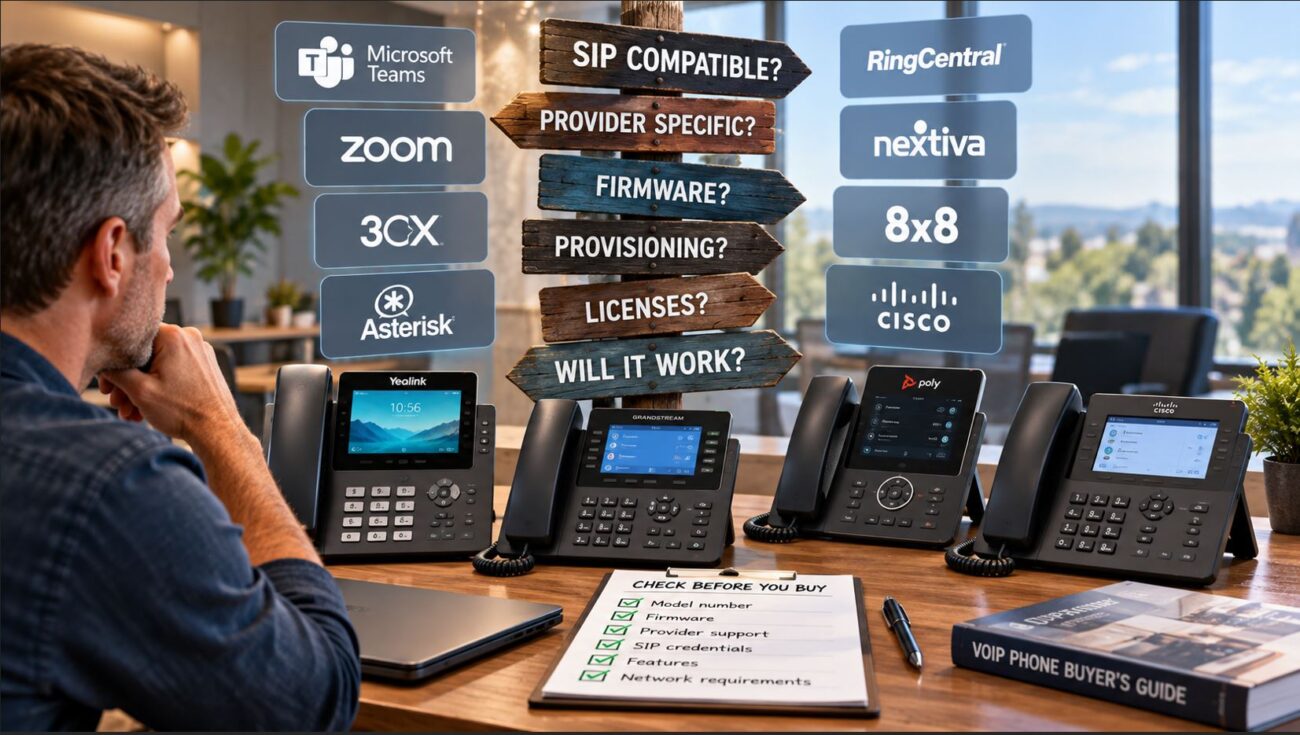
Before purchasing Cisco unified communications phones, businesses should evaluate several compatibility factors.
SIP Platform Support
Not all Cisco phones support every:
- Hosted PBX provider
- SIP platform
- Cloud communication service
Some devices may require:
- Firmware adjustments
- Provisioning changes
- Licensing support
Network Infrastructure
Cisco VoIP systems rely heavily on:
- Stable Ethernet infrastructure
- Managed switches
- Voice VLANs
- QoS policies
Improper network configuration can affect:
- Audio quality
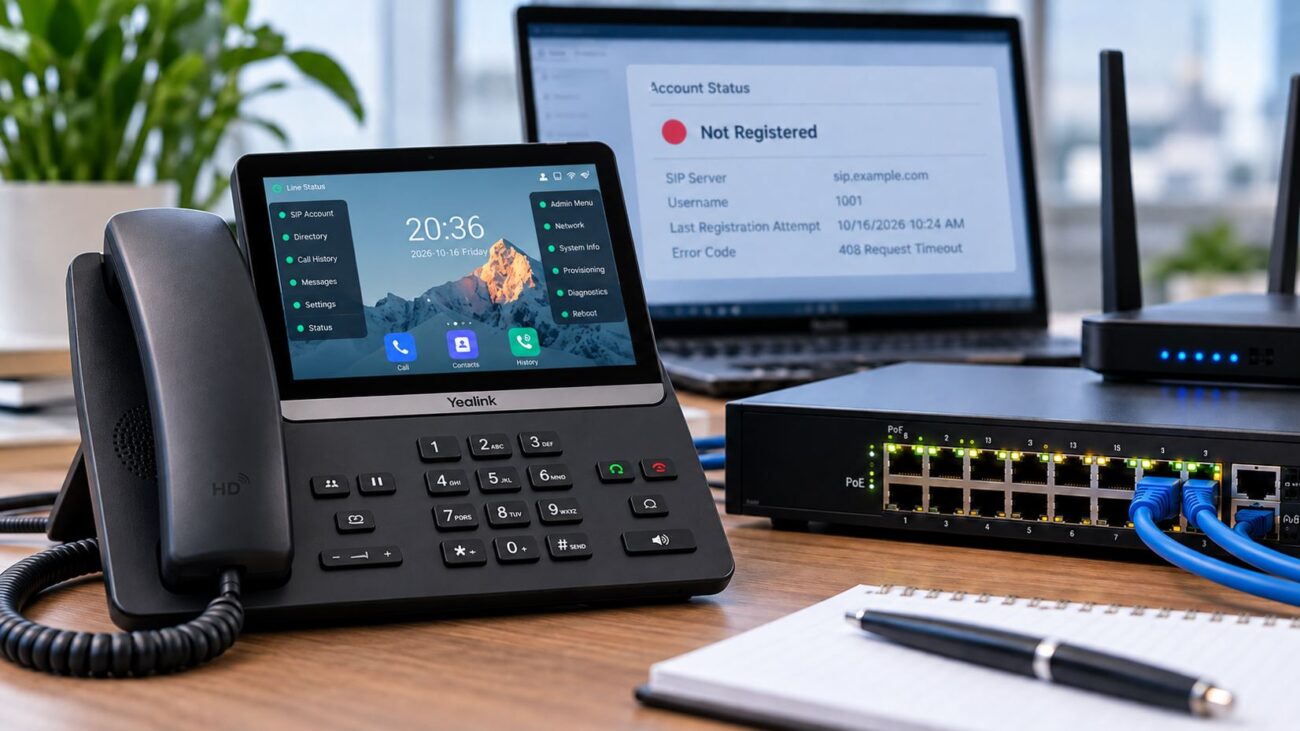
- Registration stability
- Call reliability
Collaboration Platform Integration
Organizations using:
- Microsoft Teams
- Zoom
- Webex
should verify compatibility before deployment.
Not all Cisco IP phones provide native support for every collaboration environment.
Power Requirements
PoE deployments simplify installation but require:
- Compatible network switches
- Proper power budgeting
- Cabling verification
Common Limitations of Cisco VoIP Phones
Although Cisco phones are widely deployed, there are practical considerations businesses should evaluate.
Licensing Complexity
Some enterprise Cisco environments require:
- Licensing
- Firmware management
- Advanced provisioning
Network Dependency
VoIP systems depend heavily on:
- Reliable internet connectivity
- Proper QoS configuration
- Stable switching infrastructure
Feature Variability
Different Cisco phone models support different:
- Collaboration features
- SIP capabilities
- Display interfaces
- Wireless options
Cost Considerations
Enterprise communication deployments may require:
- Infrastructure upgrades
- PoE switching
- SIP licensing
- Network management resources
Cisco Unified Communications and Hybrid Work
Hybrid work environments continue increasing demand for:
- SIP desk phones
- Wireless communication
- Collaboration platforms
- Video-enabled VoIP systems
Cisco unified communications phones remain common in businesses requiring:
- Scalable VoIP infrastructure
- Enterprise communication systems
- Secure networking integration
- Collaboration platform support
Organizations deploying VoIP communication hardware can browse:
- Cisco business phones
- SIP conference systems
- VoIP accessories
- Networking equipment
Conclusion
Cisco unified communications phones continue supporting enterprise VoIP communication, hybrid collaboration, SIP deployments, and business voice infrastructure across a wide range of industries.
Cisco business communication systems may include:
- SIP desk phones
- Video collaboration devices
- Wireless VoIP handsets
- PoE-enabled IP phones
- Hosted PBX integrations
Before deployment, organizations should evaluate:
- SIP compatibility
- Collaboration platform integration
- PoE infrastructure
- Wireless coverage
- Network QoS requirements
- Expansion plans
Careful planning and proper network configuration can help improve long-term communication reliability and collaboration performance.
FAQ Section
What are Cisco unified communications phones?
Cisco unified communications phones are IP-based business communication devices designed for VoIP calling, SIP integration, and enterprise collaboration environments.
Do Cisco VoIP phones work with hosted PBX systems?
Many Cisco VoIP phones support SIP registration and can integrate with hosted PBX providers, although compatibility may vary depending on firmware and platform requirements.
Are Cisco phones compatible with Microsoft Teams?
Some Cisco phones support Microsoft Teams integration or SIP interoperability. Businesses should verify Teams compatibility and licensing requirements before deployment.
Can Cisco phones work with Zoom meetings?
Certain Cisco collaboration phones and conference devices support Zoom communication environments through SIP integration, conferencing features, or video collaboration capabilities.
What is PoE on Cisco IP phones?
Power over Ethernet (PoE) allows Cisco IP phones to receive both power and network connectivity through a single Ethernet cable connected to a compatible PoE switch.
Are Cisco wireless VoIP phones available?
Yes. Cisco offers wireless VoIP communication devices including DECT and Bluetooth-enabled handsets designed for mobile business environments.
What network requirements do Cisco VoIP phones need?
Cisco VoIP phones typically require Ethernet connectivity, SIP registration, internet access for hosted systems, QoS prioritization, and properly configured switching infrastructure.
What should businesses consider before buying Cisco IP phones?
Businesses should evaluate SIP compatibility, collaboration platform integration, PoE availability, user requirements, wireless coverage, and network infrastructure before deployment.