Choosing the Right Wheelock Call Alert System for Your Facility
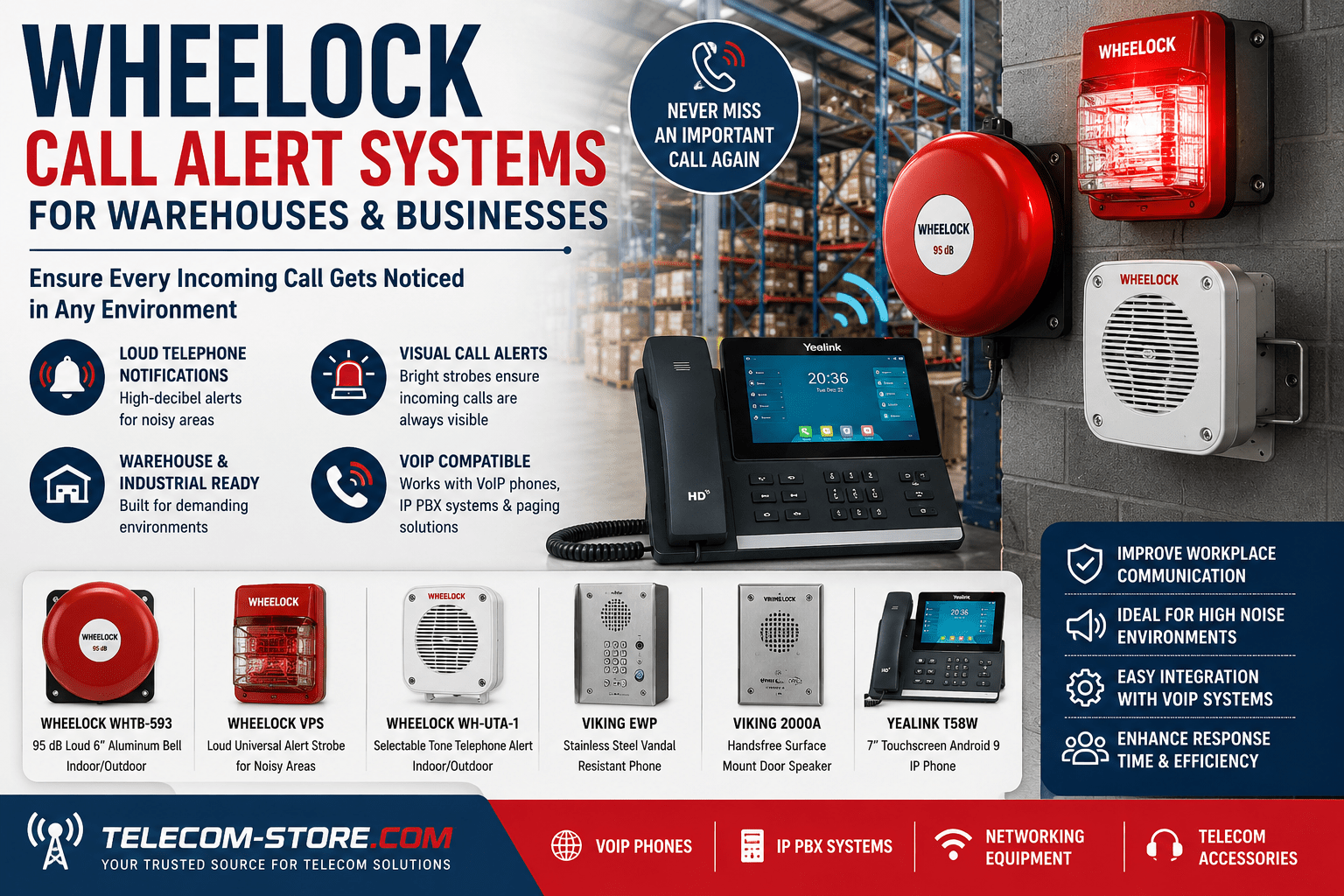
If you work in a warehouse, plant, or any industrial space, missed calls can mean missed deadlines, lost orders, or slower emergency response. Standard phone ringers often get drowned out by machinery or background noise. Wheelock call alert systems help by providing clear, attention-getting notification in these environments — using loud bells, strobe lights, or tone generators integrated with your existing phone or paging system.
At-a-Glance: Compare Notification Types for Business Environments
| Device Type |
Notification |
Best For |
Works With |
| Strobe Lights |
Flashing visual alert |
Noisy areas, where hearing protection is used |
Analog/VoIP phones, IP PBX, Paging Systems |
| Loud Bells |
High decibel ringer |
Large warehouses, shipping/receiving |
Analog systems, SIP adapters, IP PBX |
| Tone Generators |
Selectable tones/sirens |
Manufacturing, distribution, offices with existing alerts |
Analog lines or VoIP adapter |
| Paging Speakers |
Voice and tone alerts |
Facilities with PA needs |
Paging Controllers, VoIP/SIP devices |
Key Benefits and Uses
Wheelock alert devices are ideal when:
- The standard phone ring is not heard over equipment or HVAC noise
- Employees wear ear protection
- Multiple departments need to be notified (shipping, production, office)
- Visitors, deliveries, or emergency notifications require quick staff response
Common deployments:
Warehouses, manufacturing lines, distribution centers, auto service bays, loading docks, machine shops, outdoor work zones.
How Wheelock Alert Devices Work
Wheelock call alert systems plug directly into your phone or paging system, activating an alert (flash, ring, or tone) when an incoming call or page is detected. Integrations are possible with most analog lines and with VoIP (using SIP-compatible adapters or interfaces). VoIP phones and IP PBX platforms can usually support these notifications with the correct connection hardware.
Buyer Tips & What to Check Before You Buy
- Confirm the noise levels in your facility (dBA ratings for bells matter)
- Decide if you need audio, visual, or both types of alerts
- Check if you need outdoor-rated devices (weatherproof models)
- Verify compatibility: analog, IP PBX, SIP, paging system? Talk to your IT/phone provider if unsure
- Consider wiring & power supply needs for multi-device coverage
- Follow local safety requirements for alarm/notification devices
Need help with planning or compatibility? Browse paging and notification systems or ask our team for a walkthrough.
Common Mistakes to Avoid
- Choosing too small or quiet an alert for your noise environment
- Ignoring coverage gaps – use several strobes or bells where needed
- Forgetting about VoIP or IP PBX compatibility when updating your phone system
- Using indoor devices for outdoor locations (check device rating)
Practical Scenarios & Typical Devices
- Warehouse shipping dock: Install a loud bell and a strobe connected to the phone.
- Manufacturing line: Use visual strobe alerts to notify staff wearing ear protection.
- Receiving or front desk: Combine tone generator with a strobe for clear, multi-sensory alerts.
See proven devices like the Wheelock VPS Loud Universal Alert Strobe for noisy areas, or the Wheelock WHTB bells for high-volume alerts.
Integration with VoIP and Paging Systems
Modern businesses regularly combine Wheelock devices with VoIP phones, IP PBX systems, or overhead paging equipment. If your phone system is SIP-based, check for compatible adapters to connect traditional alert hardware. For analog lines, direct connection is usually possible.
FAQs: Wheelock Call Alert Systems
What is a Wheelock call alert system? A Wheelock call alert system is a set of devices that provide visual and audible notifications for incoming phone calls, pages, or alarms, often used in loud workplaces where a standard phone ring cannot be heard.
Can Wheelock alerts be integrated with VoIP phone systems?
Yes, most Wheelock call alert devices can be connected via SIP adapters, paging interfaces, or analog gateways. Always verify compatibility with your specific IP PBX or VoIP platform.
What types of alerts can I use in a warehouse?
Warehouses often combine loud bells, strobe lights, horns, or paging speakers to make sure everyone hears or sees incoming call notifications. Visual alerts are especially effective when workers wear hearing protection.
Do I need different equipment for indoor and outdoor installation?
Yes, some Wheelock devices are rated for outdoor use and can handle weather changes, while others are designed only for indoor areas. Always check the device’s environment rating before installation.
What should I consider before choosing a call alert system?
Consider the areas of coverage, background noise levels, whether you need visual or audio notification (or both), system compatibility (VoIP, analog, IP PBX), and local safety or compliance rules.
Can one call alert system cover multiple departments?
Yes, you can use multiple alert devices connected to your phone or paging system to cover shipping, receiving, production, and office areas across your facility.
If you need to cover a wide area, work in loud environments, or want to integrate alerts with VoIP or modern phone systems, Wheelock call alert devices are a proven solution. Plan placement carefully, check compatibility, and contact us for guidance on the best fit for your operation.