Cisco IP DECT Phones: A Practical Solution for Wireless Business Mobility
Looking for a way to keep your team connected while they walk the warehouse floor, manage hospital rounds, or move across a busy retail store? Cisco IP DECT phones make wireless business calling reliable and scalable—and they’re still a top choice for offices that value mobility but don’t want to compromise on voice quality or system compatibility.
Should you choose Cisco DECT? If your staff need to move around a building and staying reachable is critical, a Cisco DECT solution is often a better fit than Wi-Fi-only phones. DECT delivers dedicated wireless coverage for voice, avoids Wi-Fi congestion, and integrates with most SIP-based phone systems and IP PBXs. Below, you’ll find real-world tips, what to check before you buy, and how to build a reliable office phone setup.
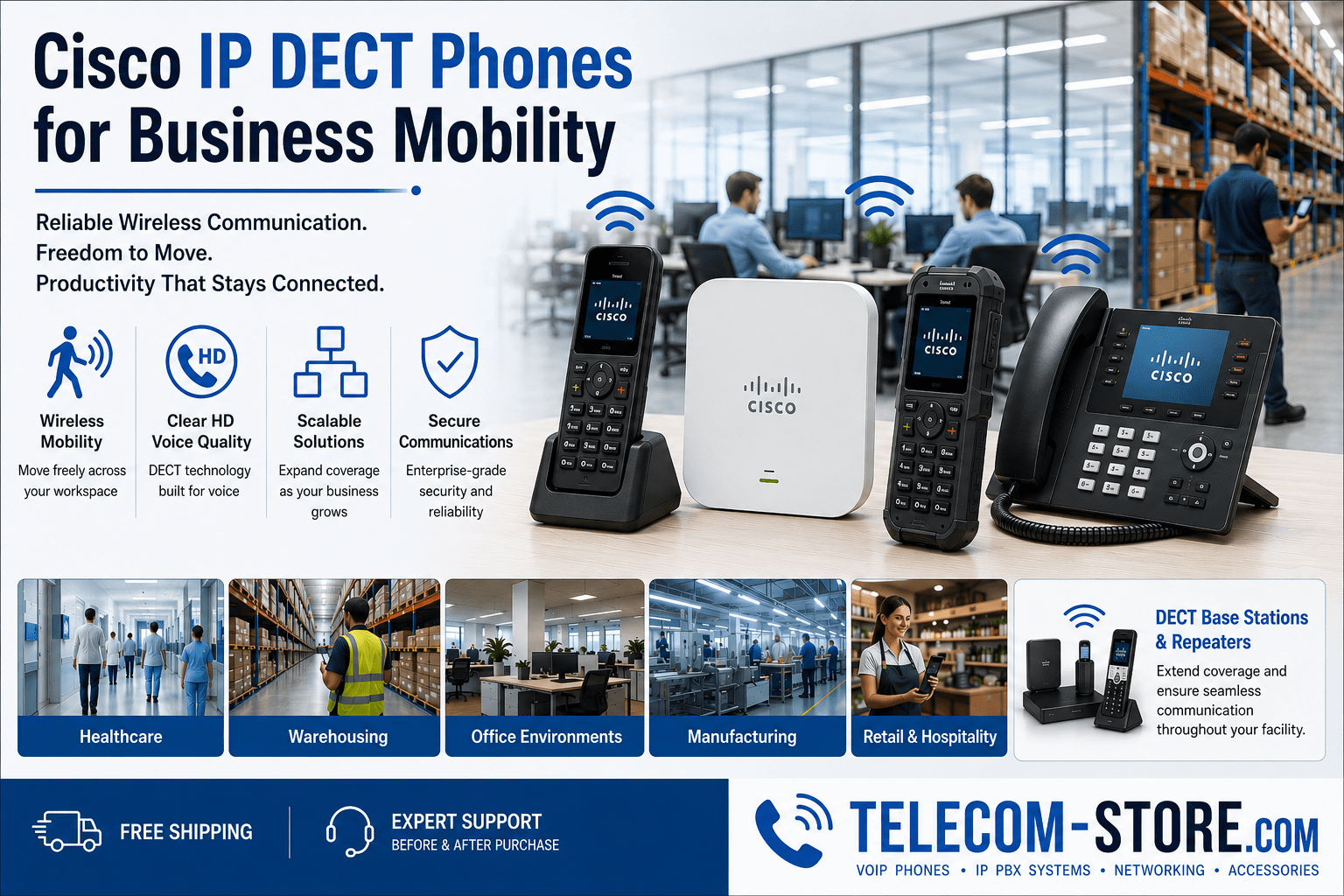
Cisco IP DECT at a Glance: Wireless Phone System Options
| Solution |
Best For |
Key Features |
Common Environments |
| Bluetooth LE DECT Handset |
Office, campus, flexible users |
Wireless mobility, Bluetooth accessory pairing, HD audio |
Offices, schools, clinics |
| Rugged IP DECT Handset |
Industrial, warehouse, tough use |
Rugged build, 2-line SIP, drop resistance |
Manufacturing, logistics, outdoor work |
| DECT Base Station (Business) |
Mid-to-large businesses |
Multi-handset support, SIP integration |
Large offices, multi-floor facilities |
| DECT Base Station (Small Business) |
Small teams, branch sites |
10 SIP lines, simple setup, expands as needed |
Retail, SMB offices, startups |
| DECT Repeater |
Expanding coverage |
Extends wireless zone, easy placement |
Warehouses, healthcare, large offices |
Why Choose Cisco IP DECT for Your Business?
Traditional desk phones work well for static roles, but if your team is on the move, missed calls and voice dropouts become a problem. Cisco DECT systems—combining wireless handsets, DECT base stations, and repeaters—let organizations cover wide areas so employees always have a working phone wherever their job takes them. These solutions:
- Support multi-floor or campus-wide roaming
- Work with SIP phone systems and popular IP PBXs
- Mix and match cordless handsets and desk phones for flexibility
- Provide predictable voice quality compared to Wi-Fi phones
- Scale up easily as staff or space grows
How Cisco DECT Technology Works
Cisco DECT handsets communicate via dedicated DECT wireless frequencies with a base station. That base station then connects to your network and IP PBX or cloud phone system using SIP. DECT repeaters are available for larger or more challenging sites, such as warehouses with lots of shelving or medical campuses with thick walls.
Unlike home cordless phones, Cisco DECT is designed for business needs—like multiple users, secure calls, centralized management, and wider coverage zones. For most models, you can add more handsets or base stations as your communication needs grow.
Who Should Use Cisco IP DECT Phones?
If you manage a business where employees move across large spaces but still need reliable voice communication, Cisco DECT is worth considering. These sectors often see the biggest ROI:
- Healthcare: Doctors and nurses covering multiple rooms
- Warehousing & Manufacturing: Employees moving between production lines or storage areas
- Retail: Store managers and staff covering sales floors and backrooms
- Education: Faculty and administrators who travel between buildings and classrooms
- Field operations: Maintenance, security, or logistics teams
Key Cisco DECT Models and Where to Get Them
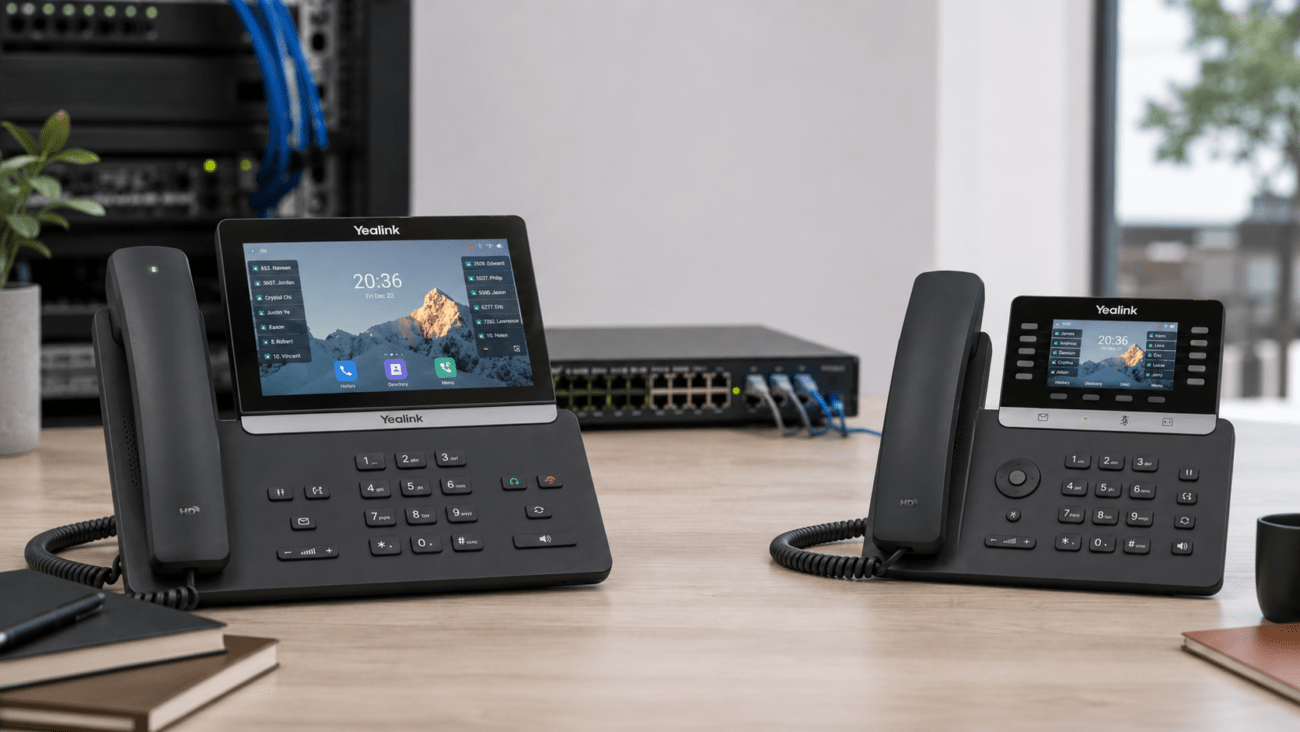
You can combine wireless and desk phones within most business SIP systems, for example linking your DECT handsets with Cisco VoIP desk phones and leveraging your IP PBX system for unified communications.
Practical Deployment: What to Check Before Buying Cisco DECT
- SIP Compatibility: Make sure your phone system supports SIP registration for new handsets/base stations.
- Base Station Capacity: Review how many handsets/calls each base supports. This helps in larger deployments.
- Coverage Planning: Concrete and metal structures may require multiple base stations or repeaters. Do a site survey if needed.
- Growth: Choose a solution that lets you add handsets or base stations as headcount or floor space increases.
- Accessory Integration: Bluetooth LE handsets are a good pick if you’ll need wireless headset support.
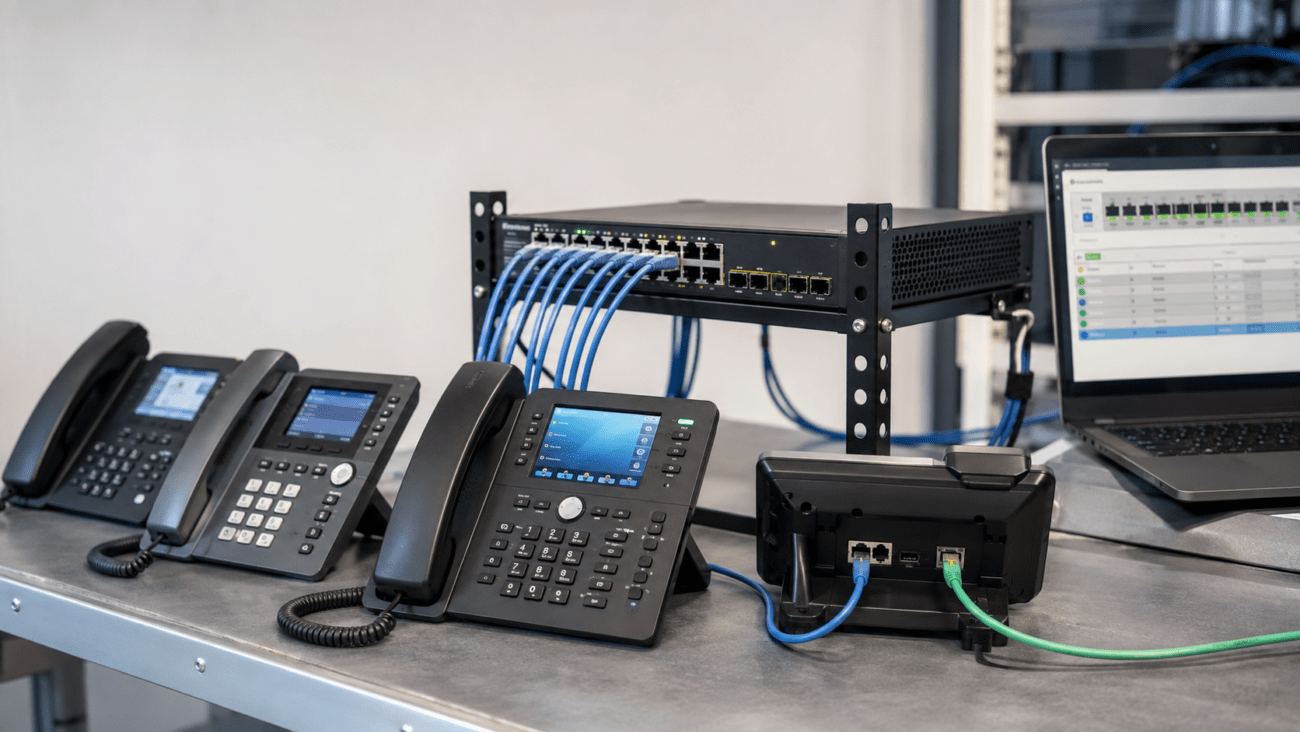
For new deployments, combining DECT with new PoE switches can further streamline installation, delivering both power and network to base stations with a single cable.
Potential Limitations and Mistakes to Avoid
- Underestimating coverage needs—plan for dead spots and test signal strength across your site.
- Mixing incompatible handset/DECT models—not all accessories work with every base station.
- Neglecting management—plan for device monitoring and firmware updates, especially if you deploy many handsets.
Alternatives and Expanding Your Business Communication Setup
If your organization includes both field/mobile and desk-based employees, deploying Cisco DECT for mobile roles alongside standard desk phones provides a balanced approach. Other options—like paging systems for alerts or conference phones for group meetings—further round out a complete communications suite.
FAQ: Cisco IP DECT Phones
- What types of businesses benefit most from Cisco DECT phones?
- Warehouses, healthcare facilities, manufacturing, retail, and education organizations use Cisco DECT phones to provide staff with wireless mobility and dependable communication across large buildings or multi-floor sites.
- How does a Cisco DECT phone system differ from Wi-Fi phones?
- Cisco DECT systems use dedicated wireless frequencies specifically for voice. This typically provides more consistent call quality and predictable coverage than Wi-Fi phones, which often compete with other network traffic.
- Can I mix Cisco DECT handsets and desk phones on the same phone system?
- Yes, you can combine DECT wireless handsets for mobile workers and Cisco VoIP desk phones for staff at fixed locations—provided your IP PBX or phone system supports SIP devices.
- What should I check before purchasing Cisco DECT phones?
- Check that your phone system or cloud PBX supports SIP, verify base station capacity for handsets and calls, assess your site for wireless coverage needs, and plan for future expansion if headcount or floor space is likely to increase.
- Are Cisco DECT phones easy to expand if my business grows?
- Most Cisco DECT systems let you add handsets, base stations, and DECT repeaters as you need more coverage or to support more users.
Need to compare models or ask for help? Our team can assist with deployment tips and model selection for DECT systems, VoIP phones, and complete office phone deployments.