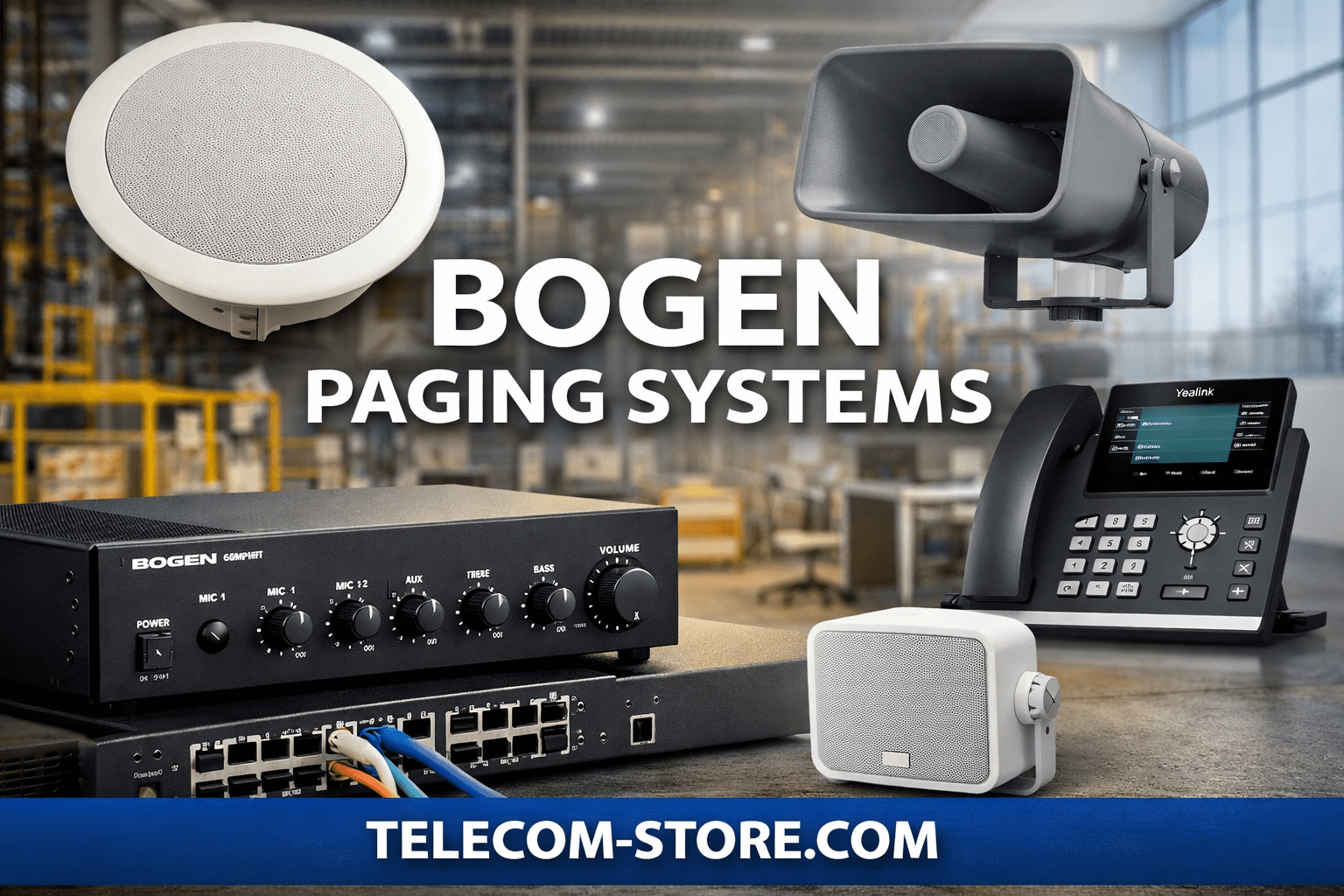
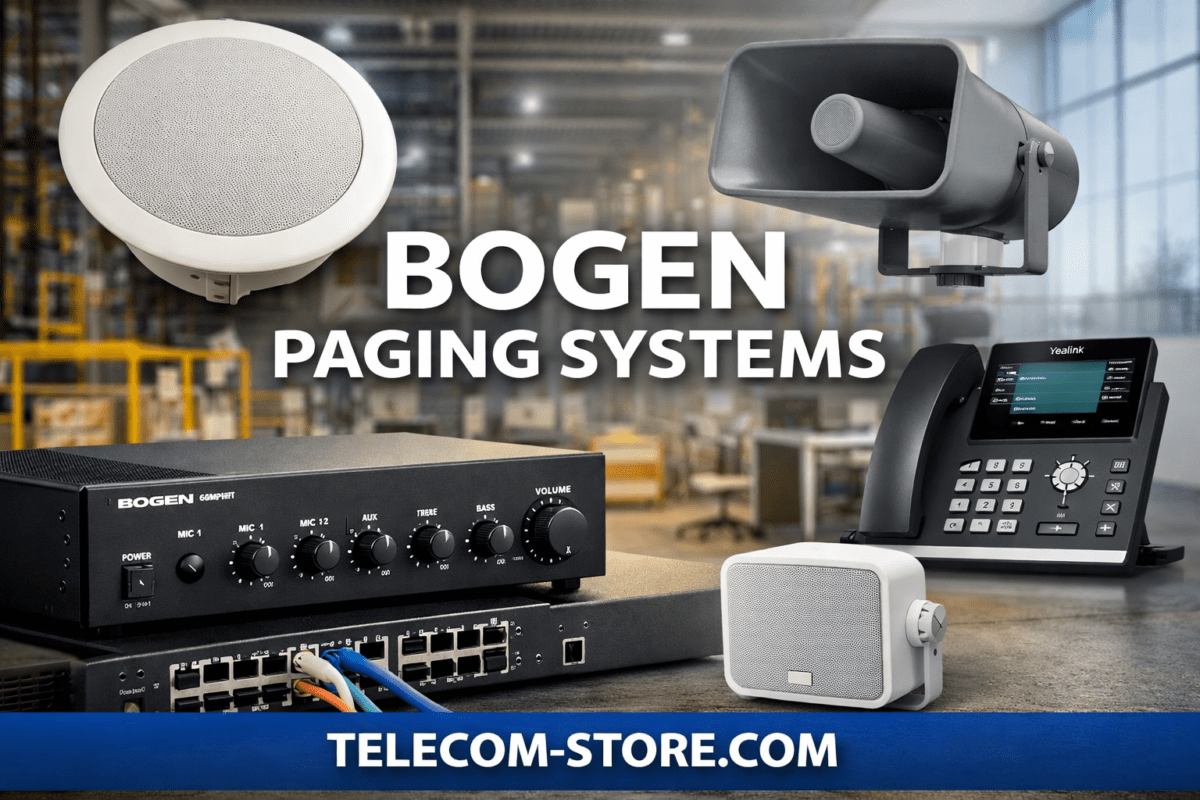
Effective communication is essential for small business operations. Whether managing a warehouse, retail space, or office environment, paging systems remain a practical solution for delivering real-time announcements. Bogen paging systems are widely used due to their reliability, scalability, and compatibility with modern VoIP and network infrastructure.
This guide explains how Bogen systems work, how they integrate with networks, and what to consider when deploying them in a small business setting.
What Are Bogen Paging Systems?
Bogen paging systems are analog audio distribution systems designed to broadcast voice announcements and tones across multiple zones. They are commonly used in:
Offices and corporate buildings
Warehouses and manufacturing facilities
Schools and healthcare environments
Retail stores
These systems typically operate on 70V or 25V audio distribution, which allows multiple speakers to be connected over long distances without significant signal loss.
Why Small Businesses Still Use Paging Systems
Despite the growth of IP-based communication, paging systems remain relevant due to their simplicity and reliability.
Key advantages:
Immediate communication across large spaces
No dependency on individual devices
Consistent sound quality across zones
Low maintenance requirements
For small businesses, this translates to fewer missed messages and improved operational efficiency.
Core Components of a Bogen Paging System
A typical setup includes several key components:
1. Amplifier
The amplifier powers the entire system and determines how many speakers can be supported.
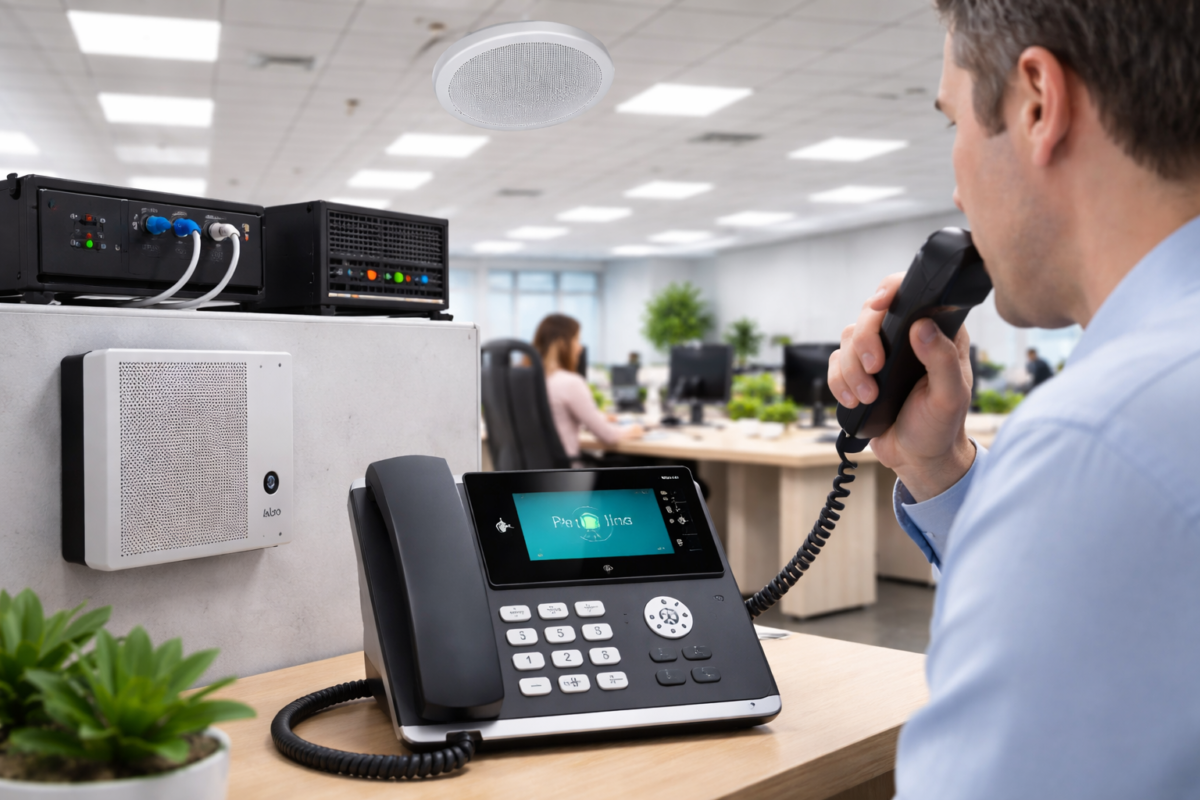
This allows businesses to unify voice communication and paging systems.
Practical Conclusion
Bogen paging systems continue to serve as a dependable solution for small business communication. Their straightforward design, combined with reliable sound distribution, makes them suitable for a wide range of environments.
When paired with VoIP systems and properly selected speakers, these systems can deliver consistent performance without requiring complex network configurations. Businesses should focus on proper planning, equipment compatibility, and realistic expectations when deploying a paging system.
FAQ Section
What are Bogen paging systems used for in small businesses?
Bogen paging systems are used to broadcast announcements across offices, warehouses, and retail environments. They provide a centralized way to communicate with employees or customers without relying on individual devices.
How do Bogen paging systems connect to VoIP networks?
They connect using a paging adapter that converts SIP-based VoIP calls into analog audio signals. This allows IP phones and PBX systems to trigger paging announcements.
What type of speakers work with Bogen paging systems?
Bogen systems typically use 70V or 25V speakers, including ceiling speakers, horn speakers, and outdoor-rated models depending on the environment and coverage requirements.
How many speakers can a 60-watt amplifier support?
The number depends on the wattage tap of each speaker. For example, ten 6-watt speakers would fully utilize a 60-watt amplifier.
Are Bogen paging systems suitable for outdoor use?
Yes, when paired with weather-resistant speakers. Outdoor installations require speakers designed to handle environmental conditions such as moisture and temperature changes.
What affects sound quality in paging systems?
Sound quality depends on speaker placement, amplifier power, and background noise levels. Proper design ensures clear and consistent audio output.
Can I expand a Bogen paging system later?
Yes, systems can be expanded by adding speakers or upgrading the amplifier, provided the total wattage capacity is not exceeded.
Do Bogen paging systems require internet connectivity?
No, the core system is analog and does not require internet. However, VoIP integration for paging triggers may rely on a network connection.