The Day Our Phones Went Down (And What It Taught Us)
Every business relies on communication. Whether it’s customer calls, internal coordination, or vendor relationships, a working phone system is expected to be constant.
Until it isn’t.
This is a practical account of a business phone system outage, what caused it, and what it taught us about designing a more reliable communication system.
When the Phone System Went Down
It started as a normal day.
Then the first sign appeared:
“Are the phones down?”
At first, it seemed isolated. A single desk phone showed no registration. Within minutes, it became clear the issue was broader:
- Calls were not connecting
- Incoming calls were not ringing
- Internal extensions stopped working
In a short period, the office experienced a complete communication system outage.
Immediate Impact on the Business
The effects of a phone system down scenario are immediate and noticeable:
- Missed customer calls
- Delayed responses
- Confusion among staff
Even short outages can disrupt operations. Without a reliable system, businesses lose visibility into incoming communication.
Diagnosing the VoIP System Failure
The initial assumption was a provider issue. However, further checks showed the internet connection was still active.
This pointed to a VoIP system failure within the local network.
Key observations included:
- Phones powered on but not connected
- Network traffic spikes
- Delayed response from internal systems
The issue was traced back to the internal network rather than the service provider.
Root Cause: Infrastructure Weakness
The outage highlighted a combination of issues:
1. No Backup Power
A brief power fluctuation affected network equipment. Without battery backup, devices rebooted unexpectedly.
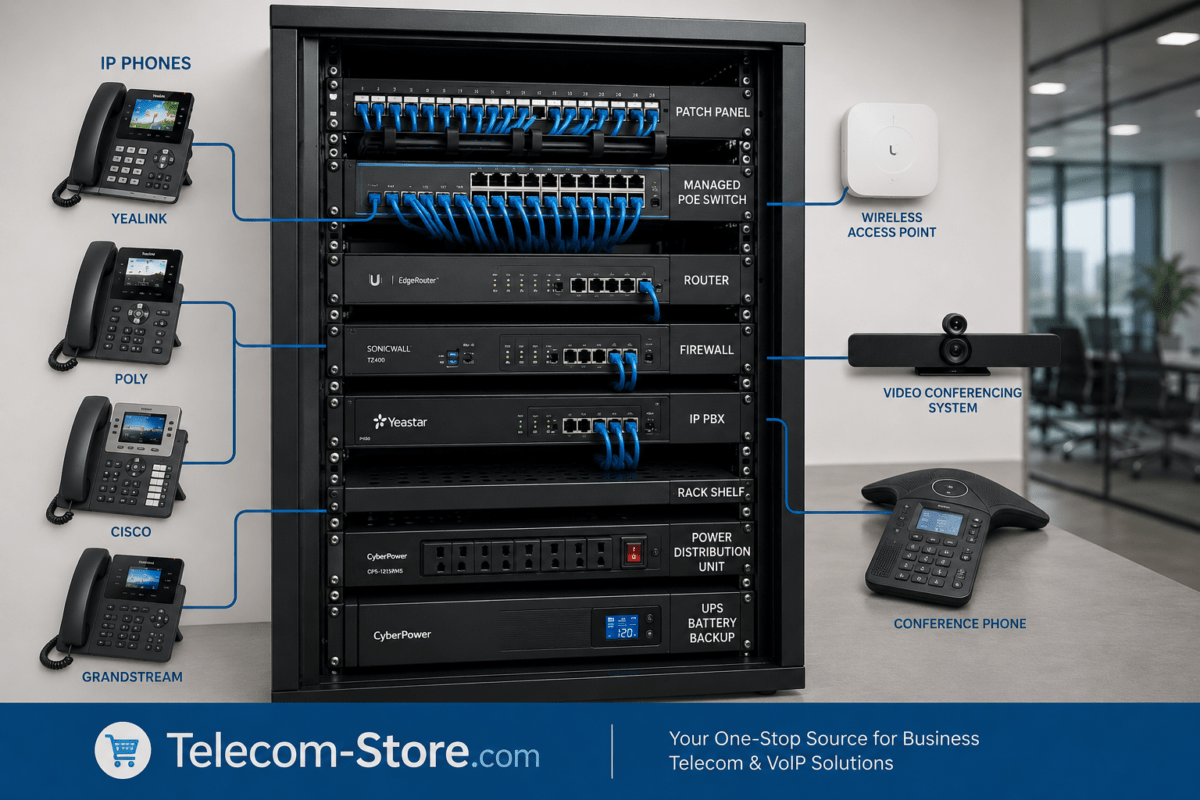
A UPS solution such as:
Orion Office Pro 1000VA LCD UPS 600W Tower Power Backup
or
ENTRUST LG Series 1350VA UPS with AVR – 810W Power Backup
helps maintain uptime during short outages.
2. Single Point of Failure
All phones depended on a single network path. When one component failed, the entire system went offline.
3. Lack of Network Segmentation
Voice traffic was not separated from data traffic. This created congestion and delayed recovery.
What Fixed the Problem
Resolving the outage required addressing multiple layers of the system.
Stabilizing Power
Adding UPS protection ensured critical equipment remained online during fluctuations.
Improving Network Infrastructure
Upgrading to a more capable switch such as:
Ubiquiti 48-Port Gigabit PoE Layer 2/3 Switch USW-PRO-48-POE
provided better traffic management and reliability.
Adding Redundancy
A backup communication path was introduced using cellular failover.
A device like:
Yeastar 4-Port 4G LTE Gateway for US Cellular Networks
can maintain communication when primary internet connections fail.
Lessons Learned from the Outage
Reliability Requires Planning
Phone systems depend on multiple components working together:
- Network
- Power
- Connectivity
Each must be considered when designing a system.
VoIP Systems Are Only as Strong as the Network
VoIP issues in business environments are often related to infrastructure rather than the phones themselves.
Downtime Has Real Consequences
Even a short outage can affect:
- Customer experience
- Internal productivity
- Business operations
Choosing the Right Equipment
Reliable communication depends on appropriate hardware.
Modern VoIP phones such as:
are designed for business environments and integrate with network-based systems.
Compatibility Considerations
When upgrading or designing a system, consider:
- Network compatibility
- Power requirements (PoE vs external adapters)
- Integration with existing infrastructure
Ensuring compatibility reduces deployment issues and improves long-term stability.
Setup Requirements for Reliable VoIP
A stable VoIP system requires:
- Reliable internet connection
- Managed network infrastructure
- Proper QoS configuration
- Backup power solutions
Each element contributes to consistent performance.
Limitations to Be Aware Of
While VoIP systems offer flexibility, they depend on:
- Network performance
- Power availability
- Proper configuration
Without these, outages can occur.
Working with a Professional Provider
For businesses that want to avoid outages, working with a provider can simplify system design.
A company such as:
Axion Communications
can assist with planning, implementation, and ongoing support.
Practical Steps to Prevent Future Outages
- Implement backup power solutions
- Add network redundancy
- Separate voice and data traffic
- Use managed switches
- Monitor network performance
These steps reduce the likelihood of a business phone outage.
Conclusion
A business phone system outage is often the result of multiple small issues rather than a single failure.
This experience reinforced the importance of proper planning, reliable infrastructure, and redundancy. By addressing these areas, businesses can improve communication reliability and reduce the risk of downtime.
FAQ Section
What causes a business phone system outage?
A business phone system outage can be caused by power loss, network failure, or misconfigured VoIP systems. Identifying the root cause helps prevent future disruptions.
Why are my office phones not working?
Office phones may stop working due to network connectivity issues, VoIP configuration problems, or power interruptions.
How can I prevent VoIP system failure?
Preventing VoIP system failure involves proper network design, using backup power, and implementing redundancy solutions.
What should I do when my phone system goes down?
Check internet connectivity, restart network equipment, and verify system configurations to identify the issue.
Do VoIP systems require backup power?
Yes, VoIP systems depend on powered network equipment, so backup power helps maintain operation during outages.
How does network design affect VoIP reliability?
Poor network design can cause congestion and delays, while proper design improves performance and stability.
Can a UPS prevent phone outages?
A UPS can keep network devices powered during short outages, helping maintain phone system functionality.
Are VoIP systems reliable for business use?
VoIP systems are reliable when supported by stable networks, proper configuration, and redundancy measures.