Which SIP Audio Speaker is Right for Your Business Paging?
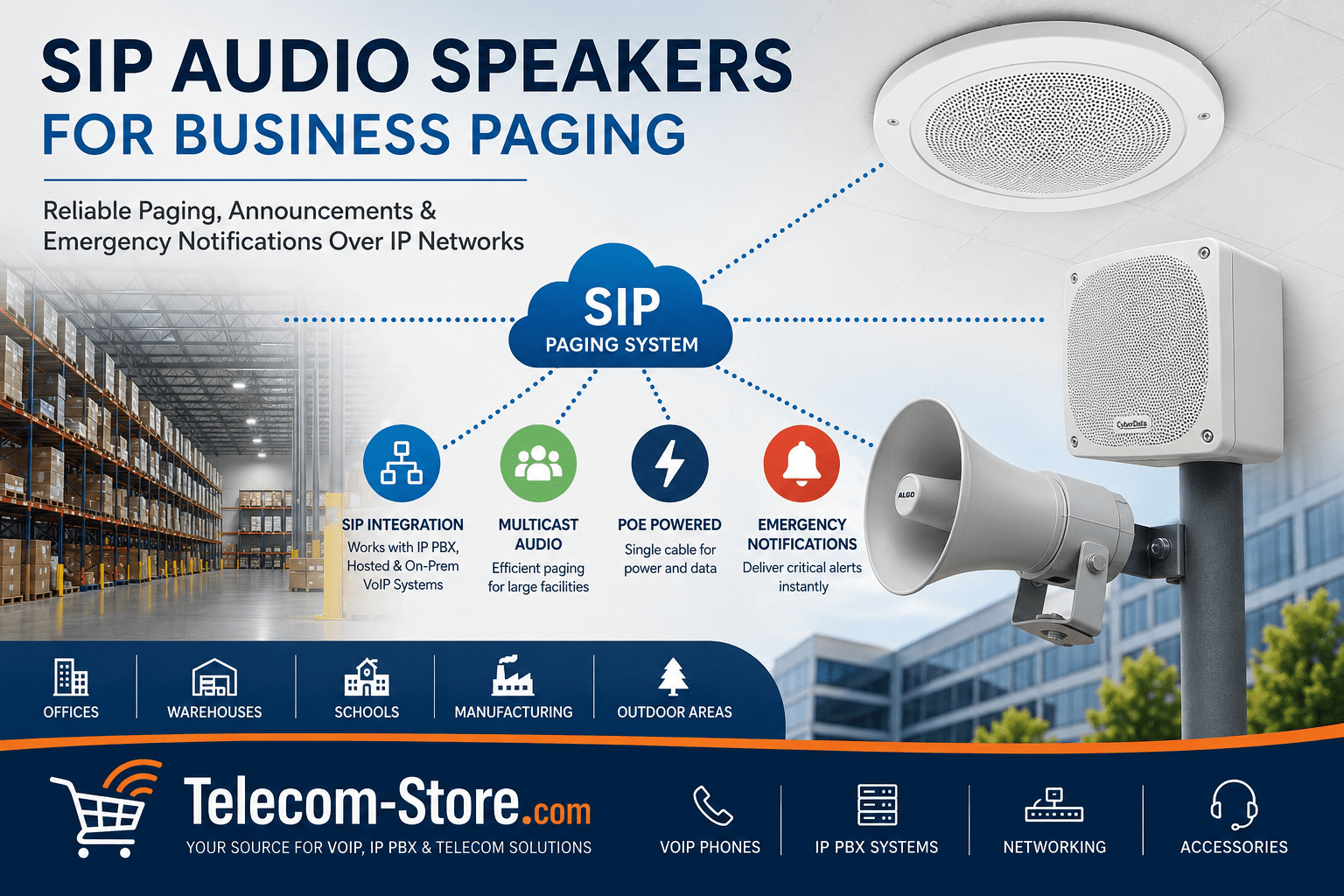
For business IT managers comparing paging solutions, SIP audio speakers help move your announcements and emergency notifications onto your existing network. These speakers register as SIP devices – just like VoIP phones – letting you manage facility-wide audio paging from your IP PBX, VoIP server, or unified communications platform.
Unsure which type to consider? Here’s a comparison table to match common deployments with the right SIP audio speaker:
| Speaker Type |
Best for |
Mount Placement |
Power Supply |
Common Environments |
| SIP Ceiling Speaker |
Office floors, classrooms |
In-ceiling |
PoE |
Offices, schools, hospitals |
| SIP Wall/Surface Speaker |
Hallways, warehouses |
Wall/surface |
PoE/
external |
Warehouses, corridors |
| SIP Horn Speaker |
Outdoor, noisy areas |
Wall/pole |
PoE |
Loading docks, yards |
| SIP Talkback Speaker |
Two-way communications |
Wall/ceiling |
PoE |
Security posts, reception |
| Multicast Speaker |
Large-scale zones |
Ceiling/wall |
PoE |
Schools, hospitals, large buildings |
How SIP Audio Speakers Work for Paging and Announcements
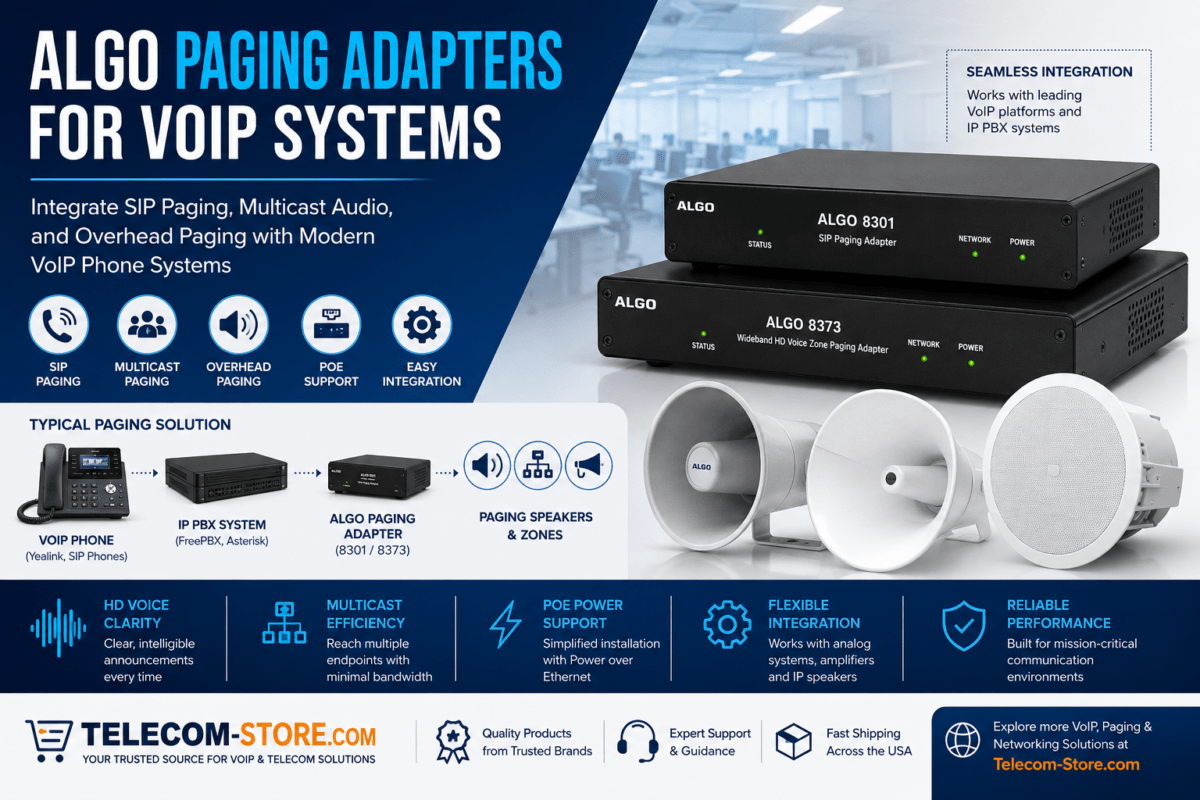
SIP paging speakers connect over Ethernet, register with your IP PBX or hosted SIP service, and receive audio pages from any compatible VoIP phone, paging console, or software client. When someone starts a page, your PBX routes the announcement or alert to the right speaker zones. Most SIP speakers support PoE (power-over-Ethernet), so you only need a network cable run for each device.
When to Choose SIP Paging Over Analog
If your facility already has VoIP phones and structured cabling, SIP speakers make paging much easier to manage and expand. You can create paging groups for warehouses, admin offices, and outdoor zones—then centrally configure who receives which messages. By contrast, analog paging requires complex wiring, custom amplifiers, and can’t support IP-based remote management.
Speaker Types and Selecting the Right Model
SIP Ceiling Speakers
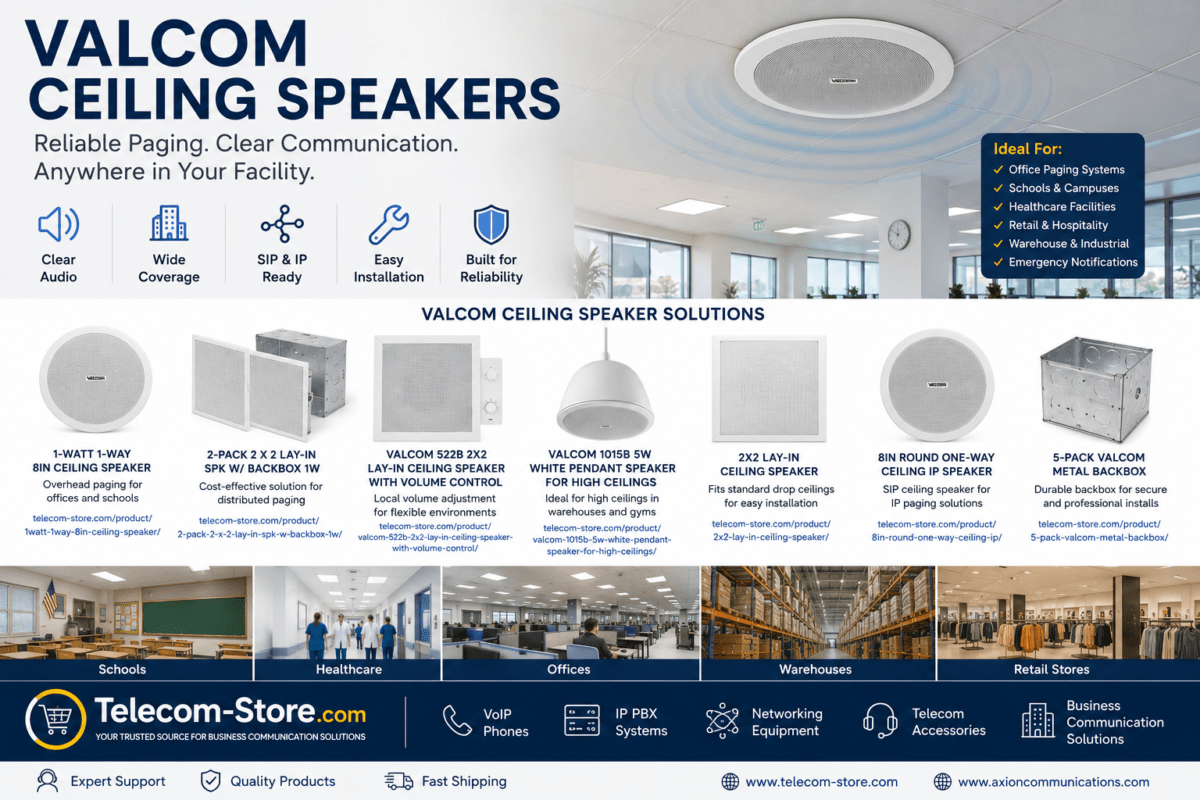
These blend into office ceilings or classrooms and provide broad coverage. Best for spaces where old analog overhead speakers were used or where a clean aesthetic is desired.
SIP Wall and Surface-Mount Speakers
Pick wall and surface speakers for warehouses, production floors, corridors, or anywhere you can’t use a traditional ceiling mount. Surface models attach directly to drywall, cinderblock, or other solid surfaces.
SIP Horn Speakers for Outdoors
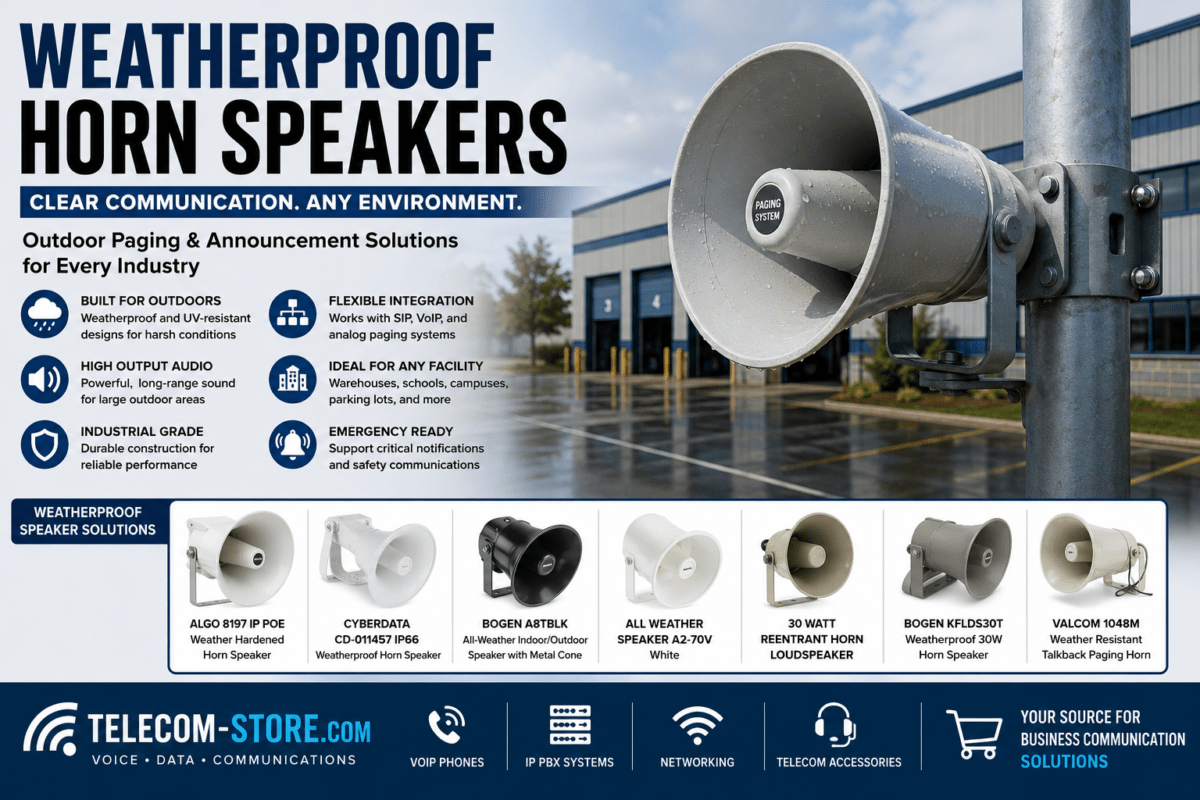
Outdoor, high-noise, or large open areas call for horn speakers. Look for models with weatherproof ratings if they’ll be exposed. These provide long-range sound projection—good for parking lots, sports fields, or shipping docks.
Talkback SIP Speakers
Some SIP speakers offer built-in microphones and two-way (talkback) audio. These are helpful for intercoms at secure entrances, guard shacks, or plant floors where staff need to respond quickly.
SIP Multicast Speakers
For covering many zones simultaneously and reducing PBX/SIP server load, multicast-compatible SIP speakers let you send one broadcast to every target at once—ideal for schools, hospitals, and sprawling facilities.
VoIP & IP PBX Integration Tips
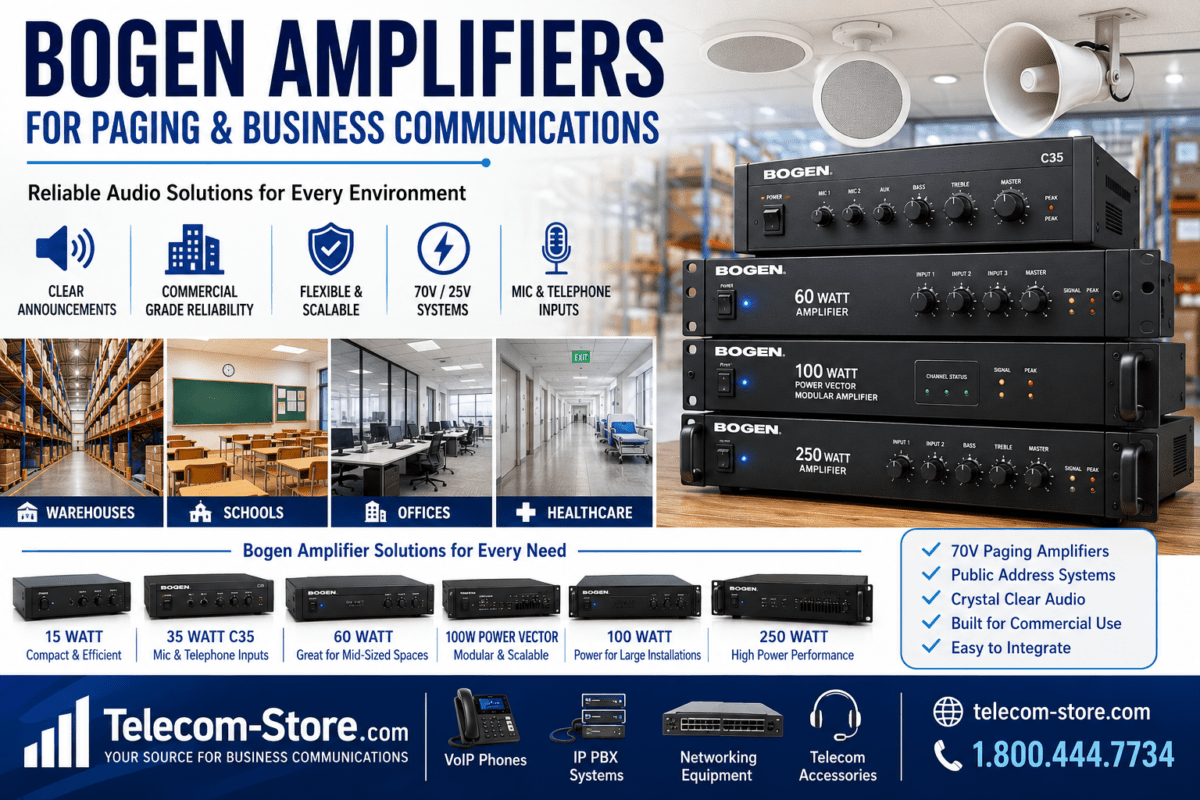
Before purchasing, confirm SIP speaker compatibility with your VoIP system or IP PBX. Leading brands work with most standard platforms, but check support for necessary features like multicast, paging zones, and talkback. If you’re using Power over Ethernet, be sure your switch provides enough available PoE budget for all speakers. You can find business-grade PoE switches here.
Need a dedicated paging server? Full IP PBX systems are available if you want to manage paging, phones, and call routing on one platform.
Common Mistakes and What to Check Before Buying
- Underestimating how many speaker zones are needed for clear announcements in loud or partitioned environments
- Not confirming if the network has PoE where you plan each speaker
- Assuming all SIP speakers support multicast or talkback out-of-the-box—always verify with your supplier
- Not validating integration with your specific hosted VoIP, Teams, or Zoom platform
- Ignoring weather/dust protection when ordering for outdoor or industrial installations
- Poor placement—location matters for coverage, clarity, and security
Best Practices for Deploying SIP Paging Speakers
- Map out all locations and noise zones before installation.
- Use ceiling speakers for general office coverage, wall/surface speakers for focused areas.
- Deploy horn speakers for outdoor paging—ensure weather rating matches environment.
- If you need paging and VoIP phones together, consider models from the same vendor family.
- Test a pilot zone first, especially if your network switches or cabling are old or at capacity.
Frequently Asked Questions
- What makes SIP audio speakers different from analog paging speakers?
- SIP speakers connect directly to structured cabling and your network using SIP, so you skip the analog amplifiers and get web-based management. They’re easier to install, expand, and support VoIP features such as zones, multicasting, and API triggers.
- Can SIP paging speakers be integrated with my existing IP PBX?
- Yes—most models support common IP PBX platforms. Double-check your system supports SIP extensions and paging groups. Compatibility is strong with systems like Yeastar, 3CX, and Cisco.
- Do SIP speakers require Power over Ethernet?
- Most business models use PoE for simple installation. Some budget or specialty models may also include a separate power input. Verify power needs for your deployment scale.
- What types of SIP speakers are available?
- Ceiling, wall, surface-mount, horn (for outdoors), talkback-enabled, and multicast-capable—choose based on space and communication needs.
- Can I use SIP speakers for emergency notifications?
- Absolutely. They’re often chosen for this use—triggering emergency pages from your IP PBX, VoIP app, or connected alert system.
- How do I choose the right SIP paging speaker?
- Assess your building’s zones, coverage needs, noise levels, mounting surfaces, network cabling, and integration with VoIP or PBX. For advice, consult your supplier with a map of target areas.
Explore more options in Paging Systems or browse VoIP Phones for compatible desk phones and accessories.