Bogen Amplifiers in Modern Paging and PA Systems
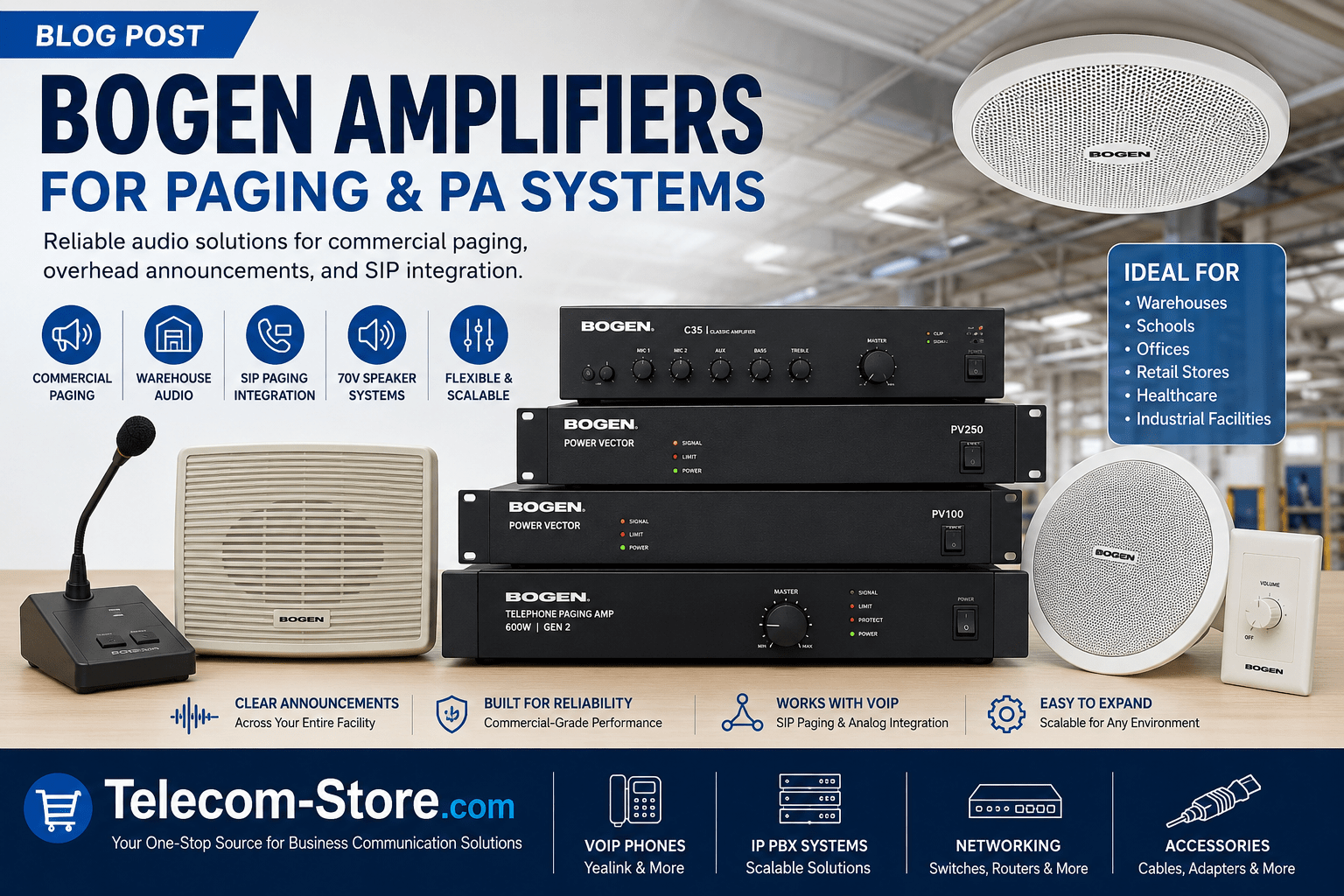
Looking for a reliable way to deliver live announcements, emergency notifications, and background music in your facility? Bogen amplifiers are trusted in thousands of business installations for a reason: they deliver reliable page coverage for everything from warehouses to office corridors, schools, and healthcare buildings—even if you’re upgrading from analog to VoIP-based communications.
If you are building a new paging system, adding SIP paging to an office, or integrating existing speakers with VoIP, understanding how Bogen amplifiers fit into your setup is essential. This expanded guide helps you compare model options, avoid common mistakes, and make sure your investment fits your current and future audio needs.
Where Are Bogen Amplifiers Used?
Bogen amplifiers continue to be the backbone for paging and PA in settings like:
- Warehouses and manufacturing floors
- Schools, campus environments, and gymnasiums
- Retail supermarkets and chain stores
- Healthcare facilities and office parks
- Corporate buildings and multi-tenant offices
While modern VoIP and SIP technology are advancing, many facilities still depend on reliable analog 70V paging backbones—often paired with newer SIP paging adapters or VoIP PBX systems. Bogen amplifiers bridge the gap between analog speaker wiring and network-based page triggers.
How Bogen Amplifiers Work with Commercial Speaker Systems
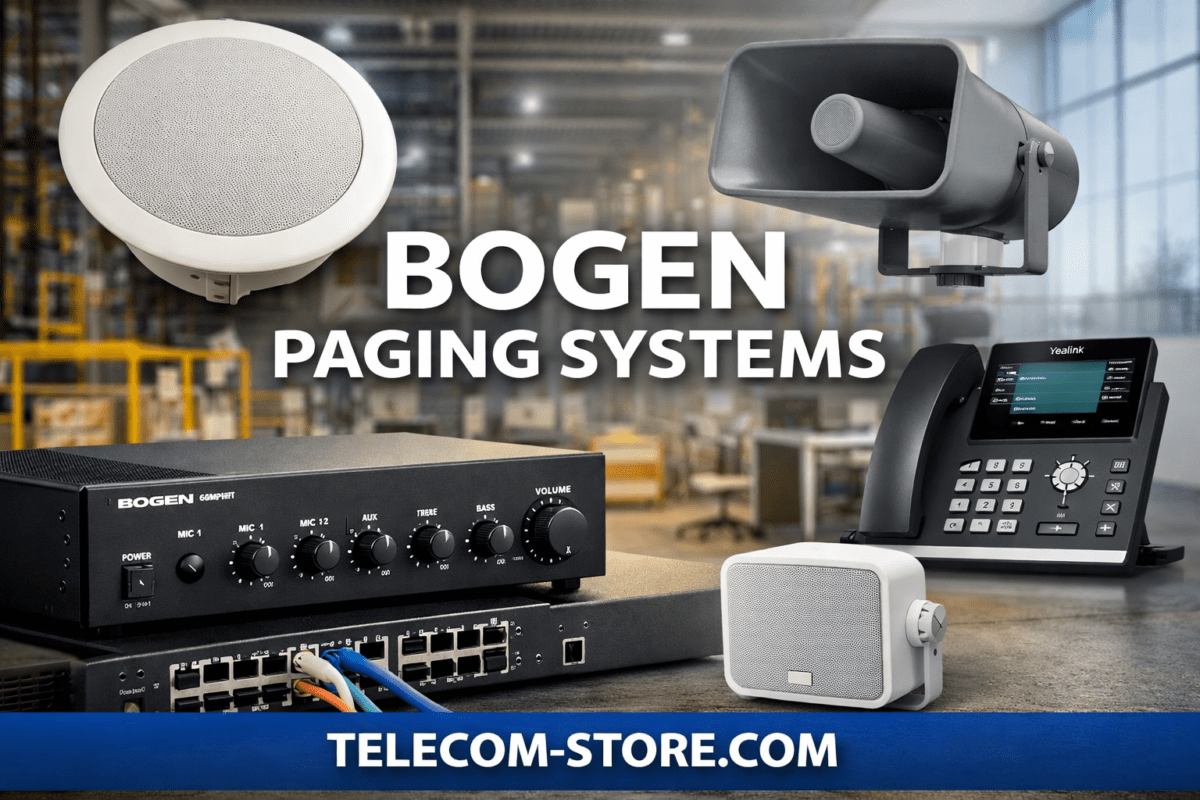
Bogen commercial amplifiers are engineered for daily paging, background music, and compliance with life safety requirements. Unlike home audio receivers, they are optimized for:
- Continuous commercial duty
- Supporting distributed speaker loads (70V or 25V)
- Large coverage areas—up to warehouses and spread-out campuses
- Multiple input sources: microphones, telephone/signal interfaces, SIP paging adapters
They are most frequently paired with:
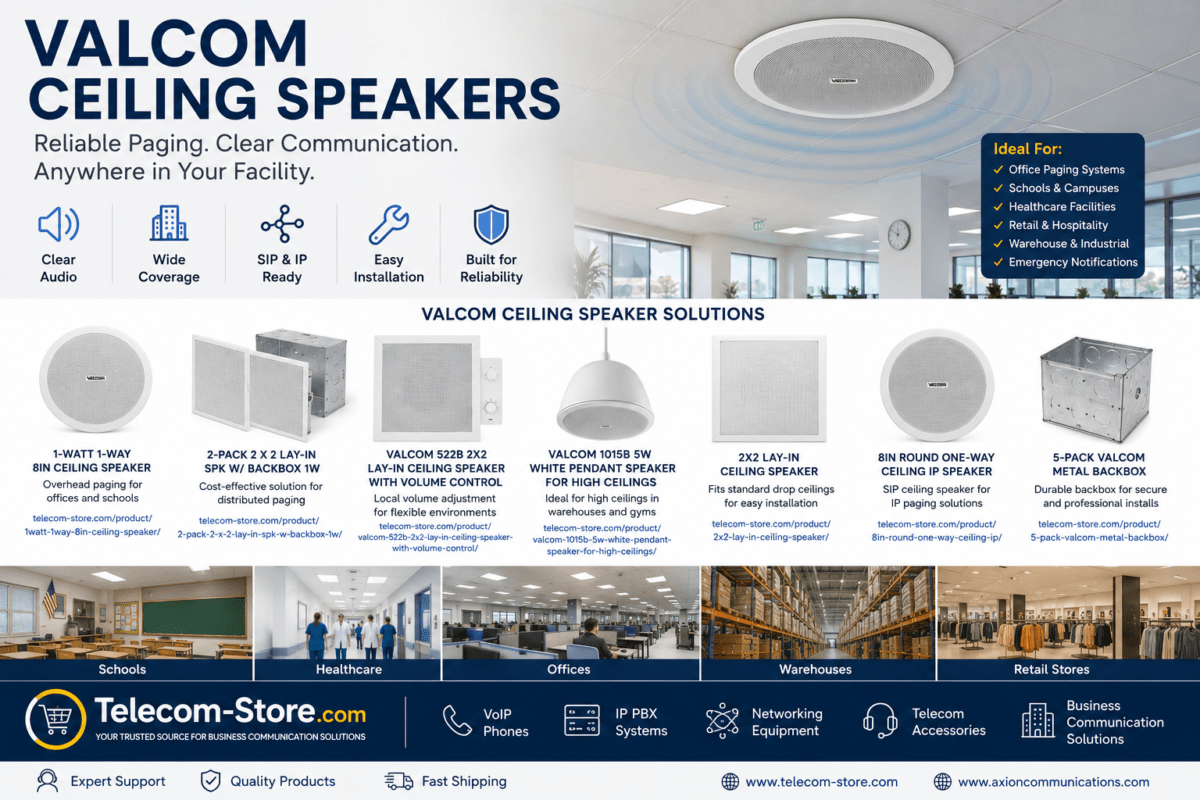
- Ceiling speakers for even, discreet coverage in offices and classrooms
- Horn speakers for loud, intelligible paging in noisy plant or warehouse areas
- Self-amplified wall baffles to create flexible page zones (see Bogen Self Amplified Wall Speaker)
Bogen for Warehouse and Industrial Paging
Factories and warehouses pose special challenges due to noise, ceiling height, and coverage area. Here, larger amplifiers like the Bogen 600W Telephone Paging Amp deliver power and headroom for long speaker cables and high speaker counts. Always consider:
- Ambient noise level (forklifts, conveyor belts, machinery)
- Distance to the furthest speaker run
- Durable, water-resistant speaker options if exposed
Pairing with horn speakers and distributed 70V lines is standard. Mistakes to avoid include under-powering your system or skipping volume controls in breakout zones.
70V Distributed Audio: The Commercial Standard
Most Bogen paging amplifiers support 70V speaker output. Why? 70V simplifies installation, letting you daisy-chain dozens of speakers on a single cable run, tap each speaker for its desired wattage, and balance output zone-by-zone. Perfect for retrofits and expansions. A practical compatible option is the Bogen CS1EZ 8” Ceiling Speaker.
When planning, be sure to:
- Set speaker taps correctly (don’t guess on wattage!)
- Tally total speaker load against amplifier output (add 15-20% margin)
- Place speakers according to room size and acoustic needs
For detailed commercial paging scenarios, browse more Paging Systems at Telecom-Store.com.
Analog Paging Meets VoIP and SIP Paging Integration
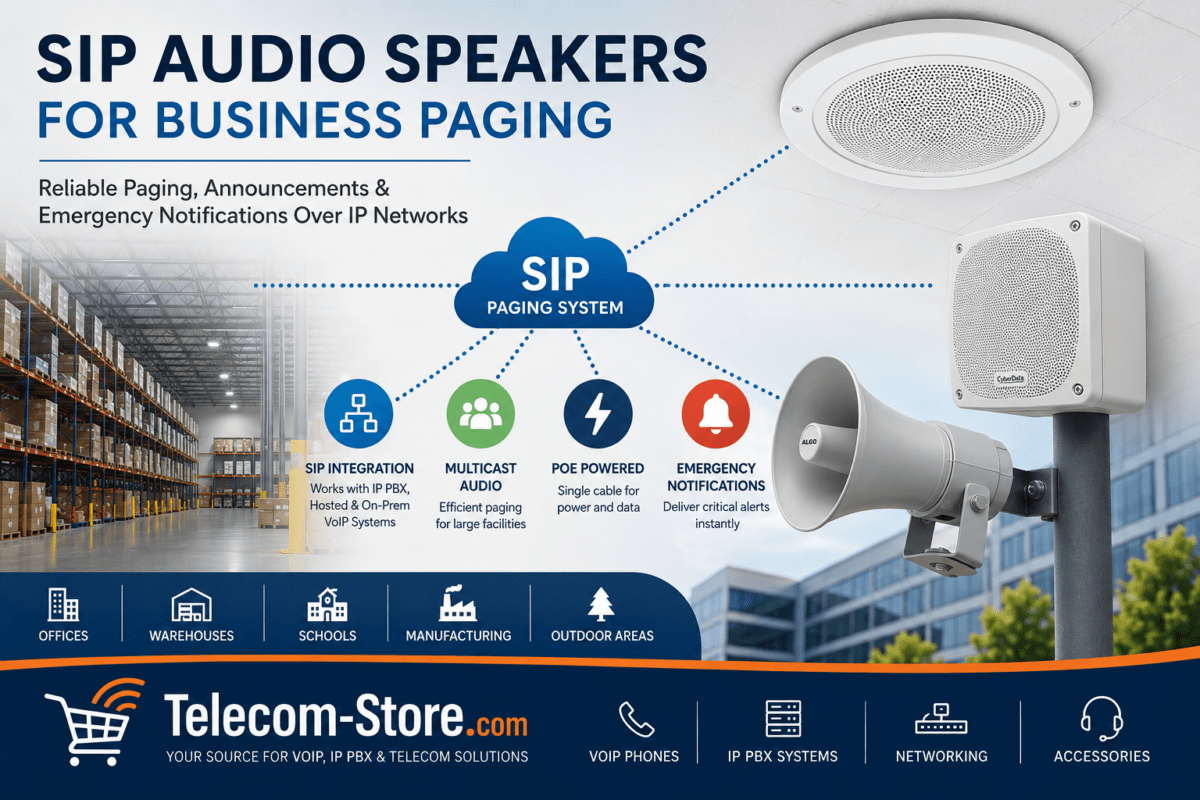
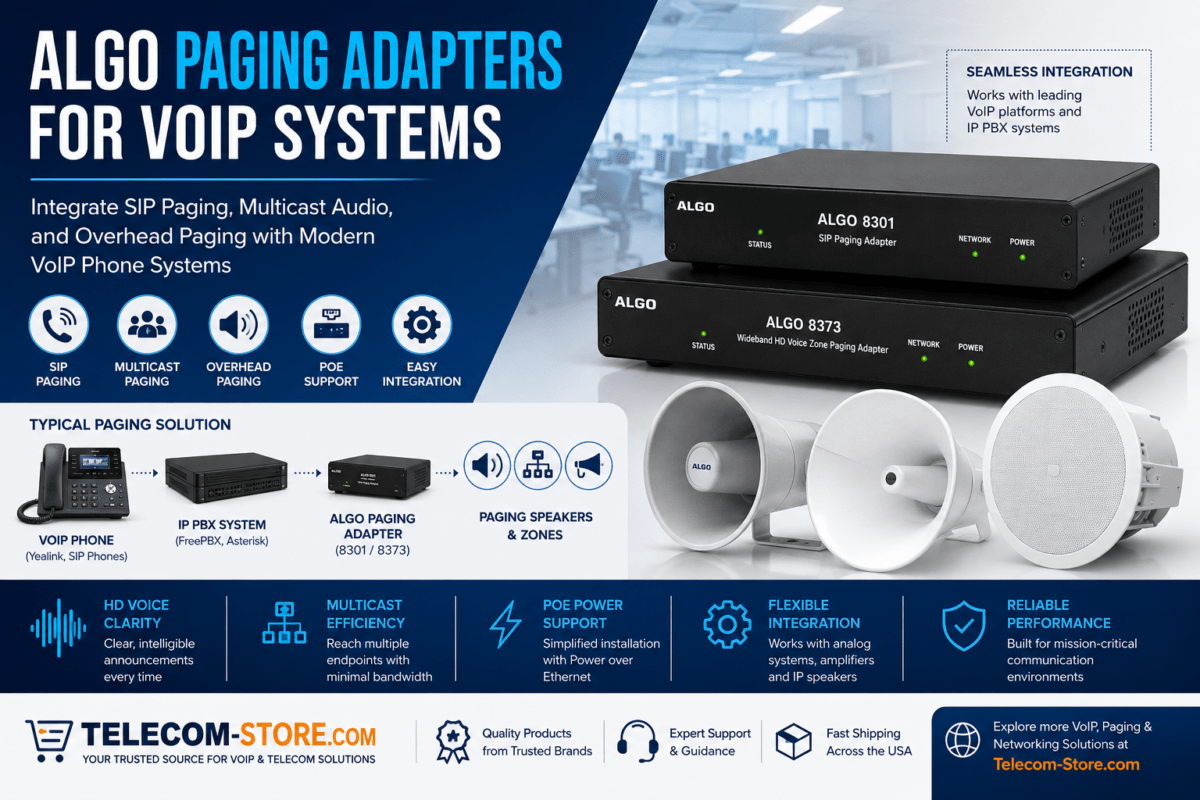
Connecting legacy analog paging speakers to a modern VoIP/IP PBX? You aren’t alone. Most enterprises now use a SIP paging adapter (like CyberData, Algo, or equivalent) to bridge new and old systems. Integration steps usually involve:
- SIP paging adapter connects to your IP PBX or hosted VoIP
- Adapter’s analog output feeds the Bogen amplifier’s line or page port
- Existing 70V speaker wiring is preserved and reused
This way, you get zone control and network paging from VoIP desk phones—or external call triggers—without replacing all speakers and cabling. Before ordering, confirm:
- Adapter output level matches Bogen line input specs
- Amplifier wattage matches speaker load and building size
- Network switches support PoE and multicast, if needed (PoE Switches)
Mixing analog and digital paging is where many ‘DIY’ installers struggle; don’t hesitate to consult experts if unsure.
Modular and Zone-Expandable Paging Amplifiers
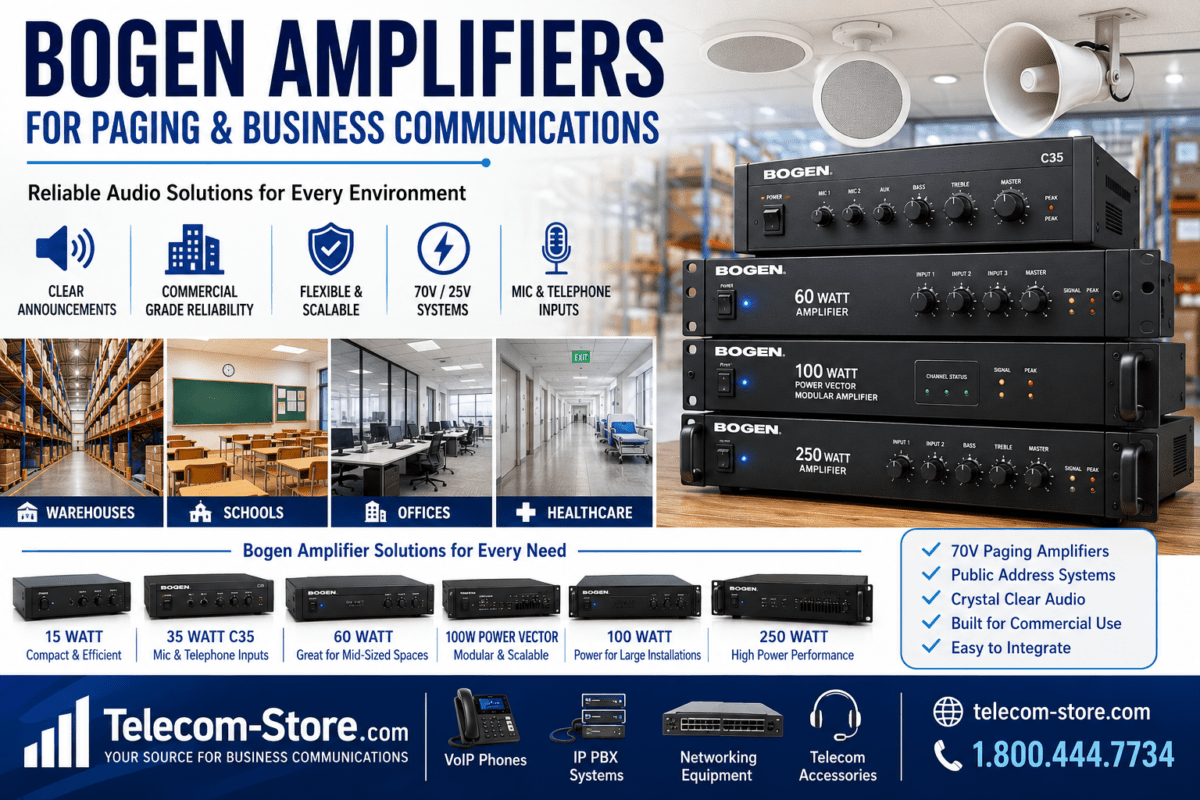
Larger organizations, schools, and enterprise offices often start small but soon need to expand to multiple paging zones or integrate background music. This is where Bogen’s modular Power Vector amplifiers excel. Models like the 250W Power Vector and 100W Vector Modular let you add input cards, zone modules, and even emergency override links to cover new areas as your needs grow. Make sure to:
- Plan for zone paging if your facility is divided by floor or department
- Use separate inputs (music, microphones, external line) as needed
- Calculate cumulative speaker load when expanding
If you anticipate much growth, buy a slightly larger amp upfront, or choose a modular chassis for expansion.
Low-Wattage and Office Paging Solutions
For front desks, small offices, or retail, a compact Bogen amplifier such as the Bogen 60W Wall-Mount is ideal. It’s easy to deploy and more than enough for 2-10 speakers in a limited zone. Remember to avoid:
- Oversizing (generates unnecessary heat and cost)
- Undersizing (sound is too quiet or amp clips at higher page levels)
Also, combine with local wall baffles or in-ceiling speakers for best coverage.
Wall Baffles and Paging Speaker Placement
Poor speaker placement is a common cause of unclear or uneven paging. Use baffles like the Bogen Self Amplified Wall Speaker in:
- Long hallways or corridors
- High-traffic entrances
- Industrial passageways or loading docks
Ceiling speakers are best for wider spaces or rooms. Plan a grid for even coverage—remember, acoustical shadows near corners or partitions are a frequent missed detail in DIY installations.
Local Volume Control and Attenuators
Not every zone should be the same volume. Installing local volume controls (commercial attenuators) like the Bogen 30W Attenuator in conference rooms, offices, or classrooms lets users set the right level for their needs. Best practices:
- Use attenuators rated for speaker/zone wattage
- Don’t overload attenuator circuits (check ratings)
- Label attenuators clearly to avoid accidental system-wide silence
Proper volume controls are rivaled only by speaker mix for maximizing user satisfaction in a busy facility.
SIP Paging, Networks, and Bogen Integration Tips
Today’s paging is as much about network as hardware. Bogen amplifiers work smoothly in hybrid cabling and IP environments so long as:
- Your PoE switches (see PoE Switches) and core network are reliable and support multicast if needed
- VLANs are set up so paging audio traffic doesn’t flood unrelated endpoints
- Hardware is on battery backup if paging is a part of emergency notification plans
If you’re not sure, consult an IT integrator or a business telecom provider like Axion Communications for network and paging planning.
Explore more options in IP PBX Systems or VoIP Phones to create a fully-integrated paging and communication environment.
Key Buyer Tips Before You Deploy
- Map out paging zones—how many rooms, halls, and open spaces need coverage?
- Calculate speaker load—sum required wattage including all speaker taps
- Size your amplifier—add a safety margin (15-20% above total load)
- Determine SIP/VoIP integration—do you need a SIP-to-analog adapter?
- Account for future expansion—modular chassis costs more upfront, but saves later
- Avoid mixed-voltage speakers—keep all zones on 70V or 25V, not both
Warehouses prioritize raw volume and horn durability; offices and retail seek low-profile, balanced coverage. In any environment, cable planning and local controls will make or break long-term page system satisfaction.
FAQ: Bogen Amplifiers for Paging Systems
What types of Bogen amplifiers are best for noisy warehouses?
High-wattage amplifiers, such as the Bogen 600W Telephone Paging Amp and Vector Modular series, are preferred for large, noisy warehouses. These models support multiple horn speakers for coverage over ambient factory noise.
Are Bogen amplifiers compatible with SIP paging adapters?
Yes. You can connect Bogen amplifiers to common SIP paging adapters, converting VoIP pages into analog audio for existing 70V speakers. This is the most popular way to upgrade older paging infrastructure.
How do I size a Bogen amplifier for my facility?
Calculate the total expected speaker load—count every speaker, note its tap setting (in watts), and add them together. Pick an amplifier with at least 15-20% headroom above this wattage to ensure clarity and handle future expansion.
Can Bogen amplifiers power both ceiling and horn speakers?
Yes. As long as all speakers are commercial-grade and tapped for 70V (or 25V, if matched), you can mix ceiling, wall, and horn speakers from a single Bogen amplifier—just sum their wattages for load calculation.
What’s a common mistake made during installation?
Mixing incompatible speaker voltages (25V/70V), underestimating required wattage, or forgetting to plan network/SIP integration. Review site zones, wiring, and system requirements in advance.
How do I add local volume control?
Install commercial attenuators like the Bogen 30W model at key room entry points or paging zones. They let users adjust volume locally without cutting the main amplifier output for the entire system.
Choose, Integrate, and Expand with Telecom-Store.com
Whether starting from scratch or adding modern SIP/VoIP integration to a legacy PA system, Bogen amplifiers deliver the backbone needed for clear, consistent paging. Explore more paging systems, IP PBX hardware, VoIP phones, and PoE switches at Telecom-Store.com—or get in touch for expert help planning your upgrade.