American Hunter Electronic Deer Feeders

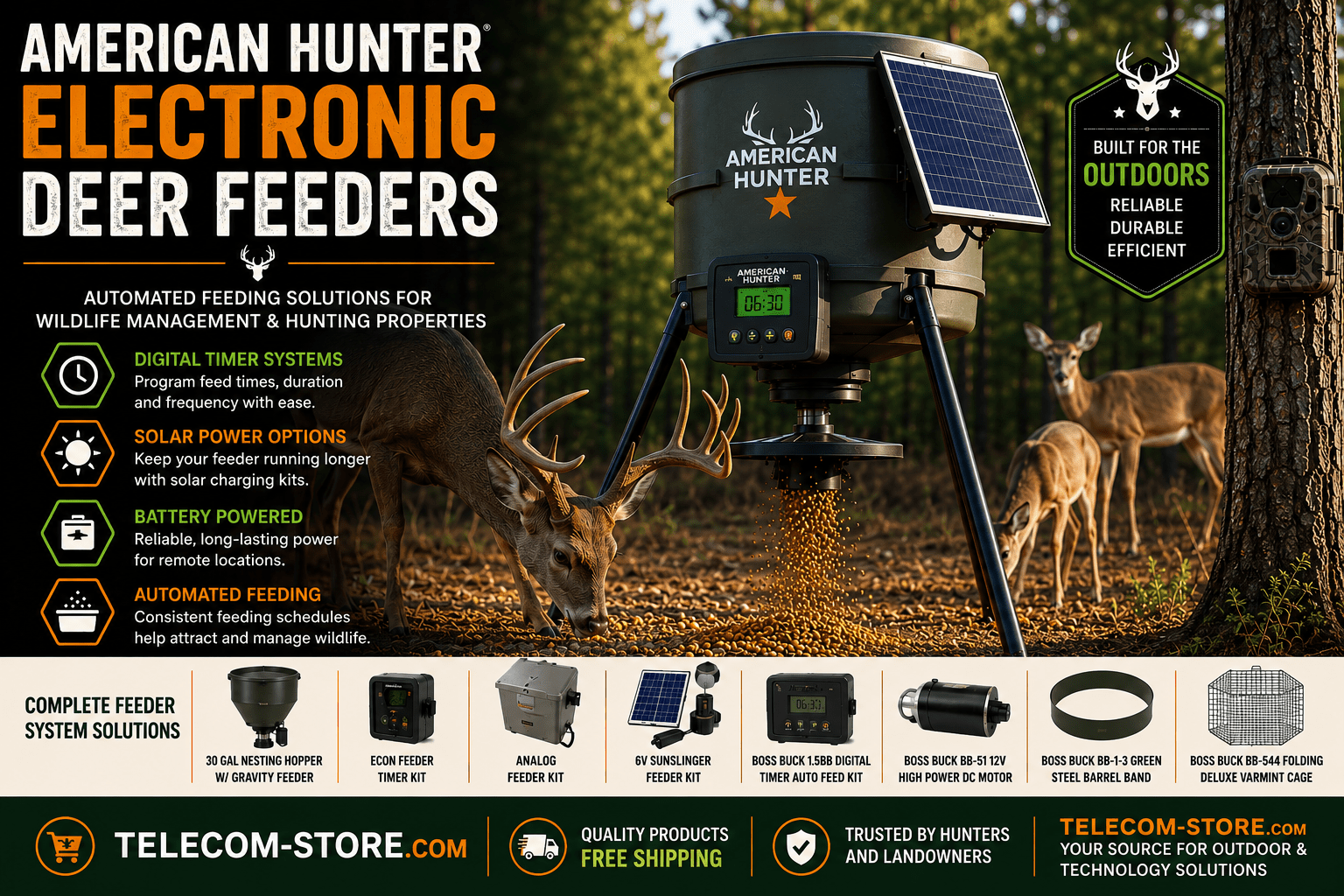
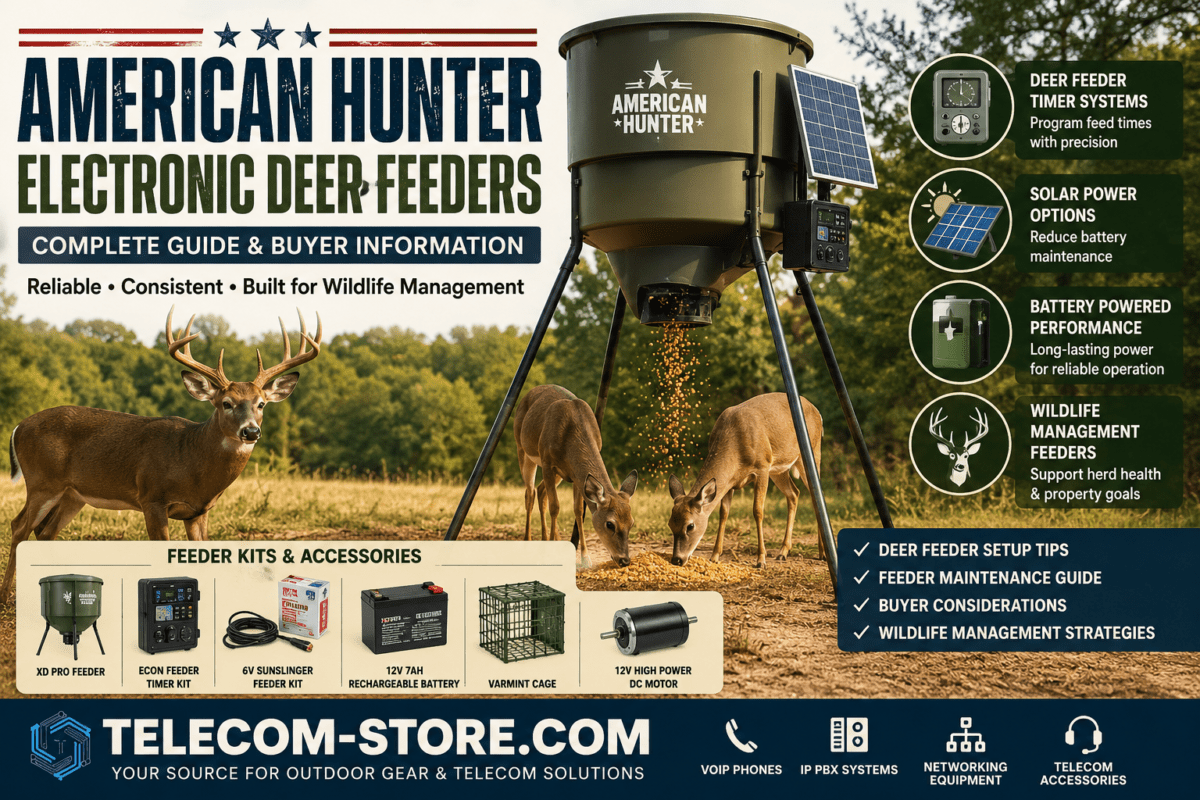
American Hunter electronic deer feeder with solar charging panel and digital timer dispensing feed to whitetail deer in a wooded hunting property. The image highlights automated feeding systems, solar power options, battery-powered operation, wildlife management solutions, and feeder accessories, with Telecom-Store.com branding promoting hunting property equipment and outdoor technology products.

American Hunter Electronic Deer Feeders

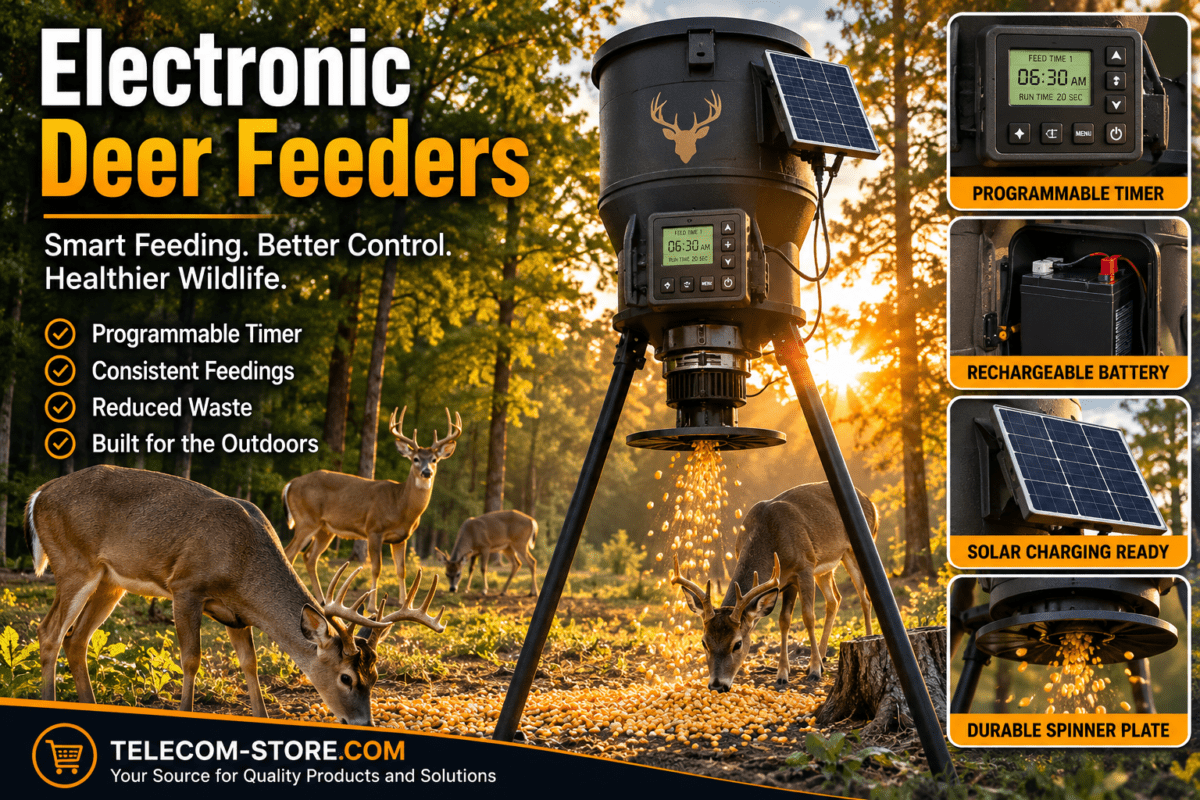
American Hunter electronic deer feeders have become a common tool for wildlife observation, hunting property management, and supplemental feeding programs. Whether used for attracting deer to camera locations, monitoring herd activity, or managing large hunting properties, electronic feeder systems provide a controlled method of distributing feed at scheduled intervals.

Modern feeder systems combine timer technology, battery power, solar charging options, and durable outdoor construction to help property owners automate feeding schedules while minimizing maintenance visits.

Property managers, hunters, and landowners searching for outdoor monitoring equipment, networking solutions, wildlife management products, and hunting property technology can explore products at: Telecom-Store.com

Understanding American Hunter Electronic Deer Feeders

American Hunter electronic deer feeders use automated timer systems and motor-driven spinner plates to distribute feed at predetermined times.

Unlike gravity feeders that continuously allow feed access, electronic feeders can control:

  • Feeding times
  • Feed duration
  • Feed quantity
  • Feeding frequency

This level of control helps property owners:

  • Monitor deer activity
  • Reduce feed waste
  • Improve trail camera opportunities
  • Manage feeding schedules efficiently

Many feeder systems are used alongside:

  • Trail cameras
  • Wildlife monitoring equipment
  • Outdoor WiFi systems
  • Remote hunting property technology

Electronic feeding systems are common on:

  • Hunting properties
  • Recreational land
  • Wildlife management areas
  • Ranches
  • Large acreage properties

Benefits of American Hunter Game Feeders

American Hunter game feeders offer several practical advantages compared to manual feeding methods.

Consistent Feeding Schedules

Automated timers help maintain predictable feeding times.

Wildlife often becomes accustomed to regular feeding schedules, making property monitoring more consistent.

Reduced Property Visits

Electronic feeders can reduce the number of trips required to manually distribute feed.

This may help:

  • Save time
  • Reduce fuel costs
  • Limit human disturbance

Improved Wildlife Observation

Scheduled feeding can improve opportunities for:

  • Trail camera monitoring
  • Wildlife surveys
  • Property management activities

Feed Efficiency

Controlled feed distribution often helps reduce waste compared to unrestricted feeding methods.

Deer Feeder Setup Basics

Proper deer feeder setup can influence long-term performance.

When selecting a location, consider:

  • Deer travel corridors
  • Nearby cover
  • Access for refilling
  • Drainage conditions
  • Visibility for cameras

Feeders should generally be installed on:

  • Stable ground
  • Well-drained locations
  • Areas accessible by vehicle or ATV

Avoid placing feeders where:

  • Water collects
  • Equipment cannot be serviced easily
  • Excessive vegetation interferes with feed distribution

Feeder Timers and Automation Systems

One of the most important components of an electronic deer feeder is the timer system.

An example is the Econ Feeder Timer Kit:

Timer systems typically allow users to program:

  • Feeding times
  • Feed duration
  • Number of daily feedings

These features help customize feeding schedules based on:

  • Wildlife activity
  • Seasonal conditions
  • Property goals

Many modern timer systems are designed to simplify programming while maintaining reliable outdoor performance.

Analog and Digital Deer Feeder Timer Systems

Not all timer systems operate the same way.

Some landowners prefer simple analog controls while others choose digital programming options.

The Analog Feeder Kit provides a straightforward solution:

Advantages of analog systems include:

  • Simple operation
  • Easy setup
  • Minimal programming requirements

Digital systems often provide:

  • Greater flexibility
  • Multiple feed schedules
  • Precise feeding control

One example is the Boss Buck 1.5BB Digital Timer Auto Feed Kit:

Digital timer systems are often preferred for larger properties requiring more detailed feeding schedules.

Battery Powered Deer Feeders

Most American Hunter electronic deer feeders rely on battery-powered operation.

Battery powered deer feeders provide:

  • Flexible installation
  • No utility power requirements
  • Reliable field operation

However, batteries require routine maintenance and monitoring.

Factors affecting battery life include:

  • Feeding frequency
  • Motor size
  • Weather conditions
  • Timer operation

Property owners should periodically inspect:

  • Battery voltage
  • Terminal condition
  • Wiring connections

to maintain consistent operation.

Solar Deer Feeders and Renewable Power

Many landowners choose solar deer feeders to reduce battery maintenance.

The 6V Sunslinger Feeder Kit provides a solar-assisted feeding solution:

Solar-powered systems can help:

  • Extend battery life
  • Reduce service visits
  • Improve long-term reliability

Solar charging performance depends on:

  • Sunlight exposure
  • Panel orientation
  • Seasonal conditions
  • Battery health

Properties with heavy tree cover may experience reduced charging performance.

Choosing the Right Feeder Hopper

The feeder hopper stores feed before distribution.

One option is the 30-Gallon Nesting Hopper with Gravity Feeder:

When selecting a feeder hopper, consider:

  • Feed capacity
  • Refill frequency
  • Wildlife population
  • Property access

Larger hoppers may reduce maintenance visits but often require additional support and transportation considerations.

Motors and Feeding Performance

The motor is responsible for spinning the feed plate and distributing feed.

One example is the Boss Buck BB-51 12V High Power DC Motor:

Motor performance can affect:

  • Feed distribution distance
  • Reliability
  • Feed consistency

Property owners should periodically inspect:

  • Motor operation
  • Wiring
  • Mounting hardware

to ensure dependable performance.

Feeder Accessories and Mounting Hardware

Many electronic deer feeders require supporting hardware and accessories.

The Boss Buck BB-1-3 Green Steel Barrel Band is designed for feeder installation:

Mounting hardware helps secure feeder components and improve long-term durability.

Proper installation may reduce:

  • Vibration
  • Component movement
  • Structural wear

Protecting Feeders from Wildlife Damage

Wildlife can sometimes damage feeder equipment.

Raccoons, squirrels, and other animals may interfere with motors, timers, and feed outlets.

One solution is the Boss Buck BB-544 Folding Deluxe Varmint Cage:

Protective cages can help:

  • Reduce feeder damage
  • Extend equipment life
  • Protect wiring
  • Limit feed theft

These accessories are commonly used on properties with heavy nuisance wildlife activity.

Combining Feeders with Property Technology

Modern hunting properties increasingly combine feeder systems with:

  • Trail cameras
  • Cellular cameras
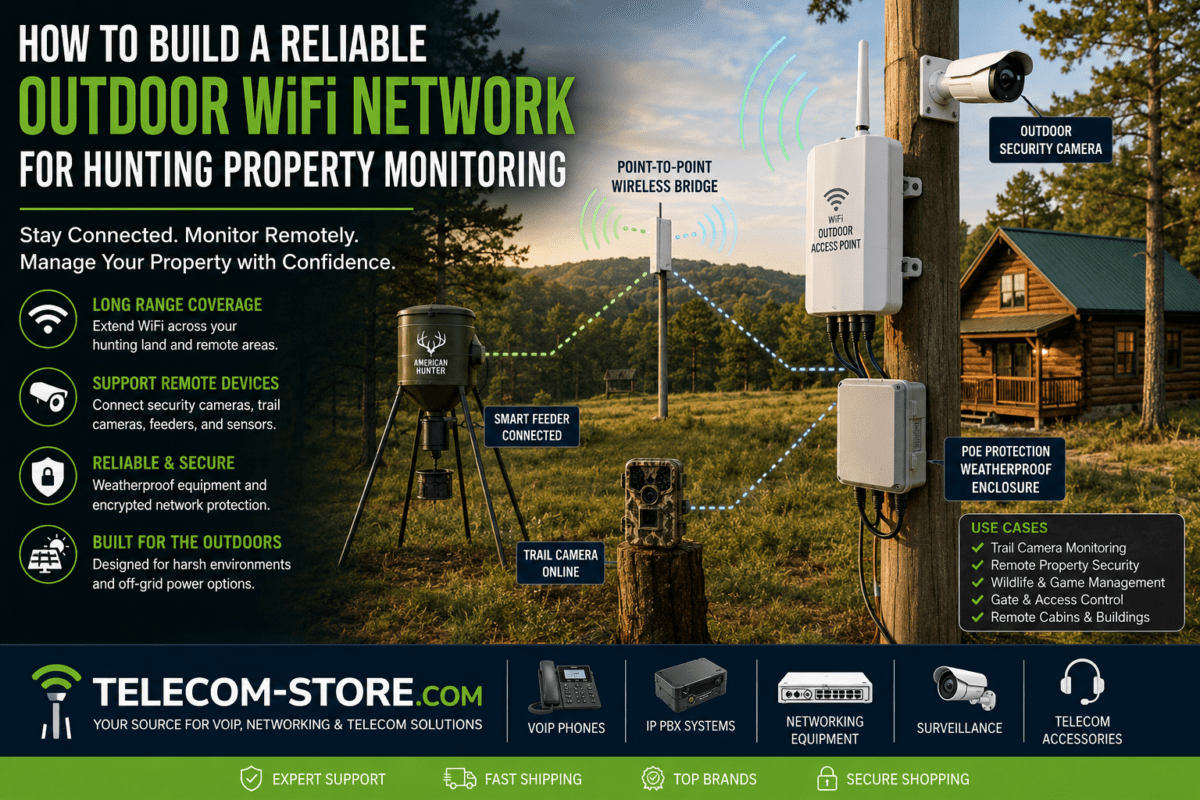
  • Outdoor WiFi networks
  • Remote monitoring systems

Many property owners use technology to:

  • Monitor feeder activity
  • Observe wildlife patterns
  • Reduce unnecessary property visits

Businesses and property owners may also work with communication providers such as: Axion Communications

for connectivity solutions supporting remote monitoring applications.

Buyer Considerations Before Purchasing

Before selecting an American Hunter electronic deer feeder, evaluate:

Property Size

Large properties may benefit from multiple feeding locations.

Power Requirements

Choose between:

  • Battery powered deer feeders
  • Solar deer feeders
  • Hybrid systems

Wildlife Activity

Higher deer populations often require larger feed capacity.

Maintenance Accessibility

Consider how easily the feeder can be:

  • Refilled
  • Inspected
  • Repaired

Environmental Conditions

Weather, terrain, and sunlight exposure can affect performance.

Common Limitations of Electronic Feeders

While automated feeders offer convenience, there are practical considerations.

Battery Maintenance

Batteries eventually require replacement.

Weather Exposure

Outdoor equipment is subject to:

  • Rain
  • Heat
  • Snow
  • UV exposure

Wildlife Interference

Animals may damage equipment if protection is not installed.

Feed Costs

Long-term feeding programs require ongoing feed purchases and maintenance planning.

Conclusion

American Hunter electronic deer feeders provide a practical solution for automated wildlife feeding, hunting property management, and observation programs. Timer systems, solar charging options, battery-powered operation, and feeder accessories allow property owners to customize systems based on their goals and environmental conditions.

Before purchasing a feeder system, consider:

  • Property size
  • Feeding objectives
  • Power requirements
  • Maintenance access
  • Wildlife activity levels

Proper planning and routine maintenance can help maximize feeder performance and long-term reliability.

FAQ Section

What are American Hunter electronic deer feeders?

American Hunter electronic deer feeders are automated feeding systems that use timers and motors to distribute feed at scheduled intervals for wildlife management and hunting properties.

How do deer feeder timer systems work?

Deer feeder timer systems activate a motor-driven spinner plate at programmed times, distributing feed for a preset duration to control feeding schedules and feed quantities.

Are solar deer feeders better than battery powered deer feeders?

Solar deer feeders can extend battery life and reduce maintenance visits, but performance depends on sunlight availability and proper panel placement.

How often should a deer feeder be filled?

Refill frequency depends on feed capacity, deer population, feeding schedules, and property activity. High-traffic feeders may require more frequent servicing.

What is the best location for deer feeder setup?

A good location offers stable ground, nearby cover, easy access for maintenance, and suitable visibility for wildlife observation and trail camera monitoring.

Can electronic deer feeders work year-round?

Yes. Most electronic deer feeders are designed for year-round outdoor use, although routine maintenance and battery inspections remain important.

How can I protect my feeder from raccoons and squirrels?

Protective cages and secure mounting hardware can help reduce wildlife damage and limit feed theft by nuisance animals.

What maintenance do electronic deer feeders require?

Regular maintenance includes checking batteries, inspecting wiring, cleaning feed systems, monitoring timers, and protecting components from wildlife damage.