Security and communication are becoming increasingly connected in today’s business environments. Video Door Phones allow organizations to verify visitors, control building access, and integrate entry systems with VoIP communications, helping improve both convenience and security. Whether installed at a small office, warehouse, healthcare facility, school, or multi-tenant building, modern IP-based video door phones provide a flexible solution for managing visitor access.
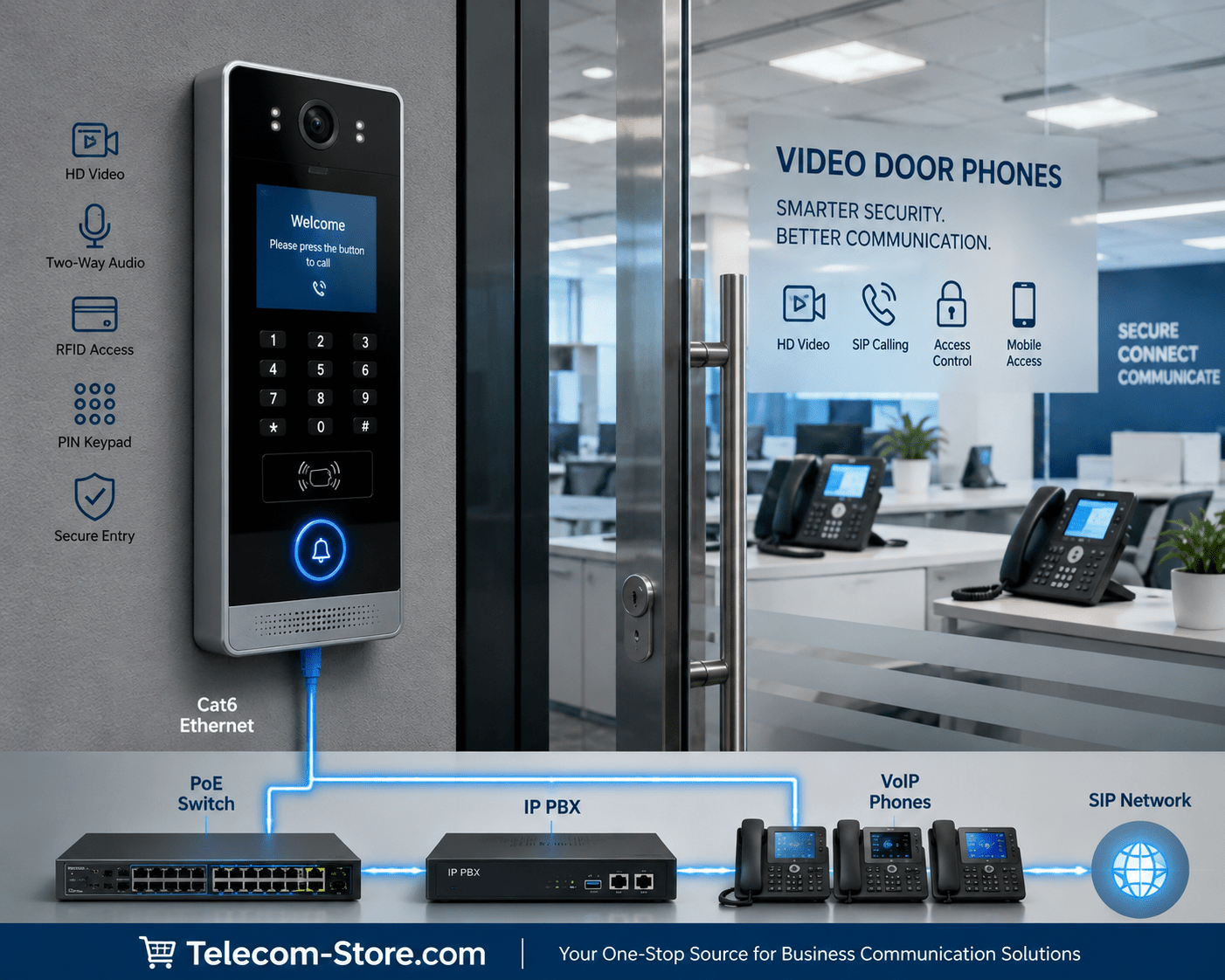
A video door phone combines a camera, microphone, speaker, and call button into a single network-connected device. Many models also include keypads, RFID readers, Bluetooth, facial recognition, or mobile app support. Connected through Ethernet and often powered using Power over Ethernet (PoE), these systems can communicate directly with SIP phones, IP PBX systems, mobile devices, or cloud communication platforms.
What Are Video Door Phones?
Video Door Phones are network-connected intercom devices that allow visitors to communicate with building occupants using both audio and live video. Unlike traditional analog intercoms, modern IP video door phones use standard Ethernet networking and SIP communication protocols, making them compatible with many business telephone systems.
Typical business video door phone systems include:
- HD or 2K video camera
- Two-way audio communication
- SIP compatibility
- Power over Ethernet (PoE)
- Door relay control
- RFID card reader
- PIN keypad
- Mobile application support
- Remote door unlock capability
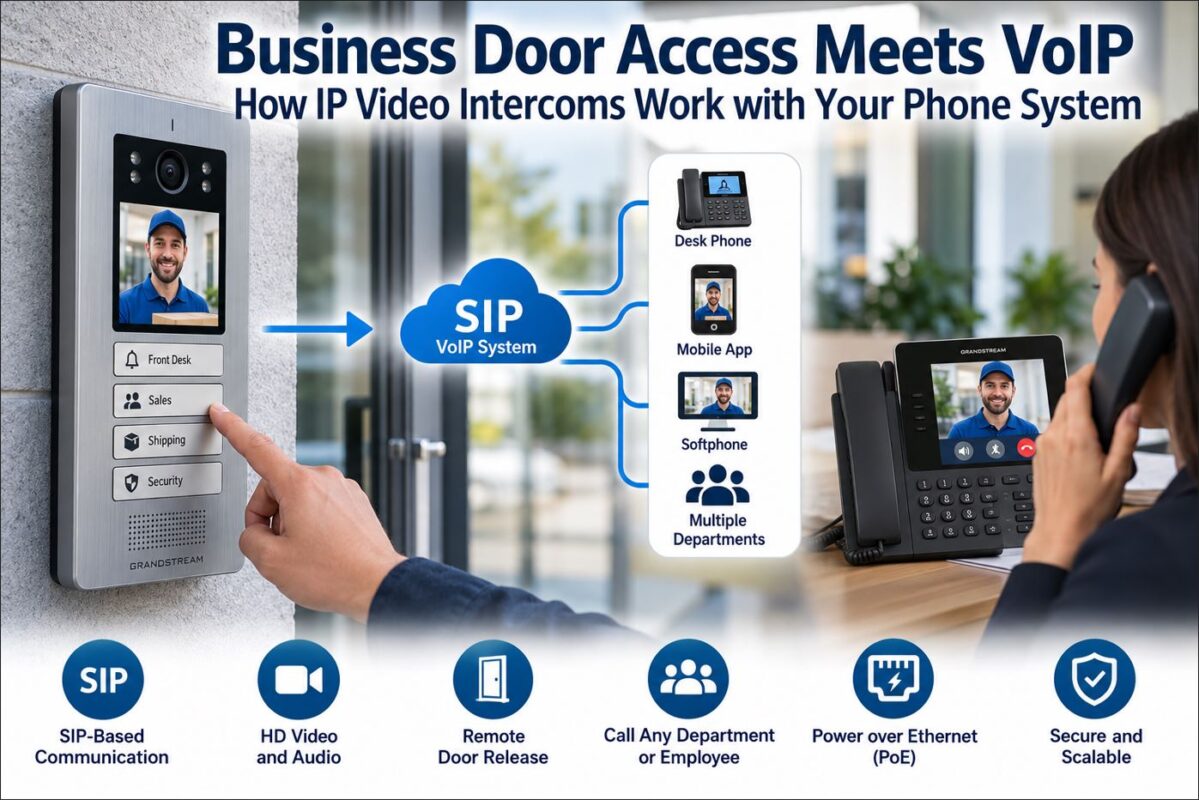
Many organizations integrate these devices with VoIP phones so receptionists or employees can answer door calls directly from their desk phones.
Why Businesses Use Video Door Phones
Video door phones improve visitor management while reducing the need for dedicated reception staff. Employees can see who is outside before unlocking a door, improving security without slowing visitor access.
Businesses also benefit from centralized management, remote administration, and integration with existing communication systems.
Improved Security
Unlike audio-only intercom systems, video door phones allow users to visually verify visitors before granting access. High-definition cameras provide clear images during both daytime and nighttime operation.
Remote Visitor Management
Many SIP video door phones support mobile applications, allowing authorized personnel to answer calls and unlock doors even when working remotely.
Popular Types of Video Door Phones
SIP Video Door Phones
SIP-compatible models communicate directly with IP PBX systems and VoIP phones. Businesses already using SIP communications often prefer these systems because they integrate with existing infrastructure.
For example, the CyberData Secure Outdoor Video Intercom is designed for professional VoIP deployments:
CyberData TLS Secure Outdoor Video Intercom
IP Video Door Systems
IP-based systems communicate over Ethernet networks and often include advanced management software, cloud connectivity, and centralized administration.
The Grandstream GDS3710 provides HD video, SIP compatibility, RFID access, and weather-resistant construction:
Grandstream GDS3710 Weatherproof IP Video Door System
AI-Enhanced Video Door Systems
Newer models include AI-assisted visitor recognition, enhanced image processing, and intelligent access features.
The Grandstream GDS3725 offers 2K Ultra HD video together with an integrated keypad and AI-assisted capabilities:
Grandstream GDS3725 2K Ultra HD Video Door System
Key Features to Consider
Power over Ethernet (PoE)
PoE allows both electrical power and network connectivity to travel through a single Ethernet cable. This reduces installation complexity while eliminating the need for a separate power outlet at the door station.
Video Resolution
Higher-resolution cameras improve visitor identification. Many business systems now offer Full HD or 2K video for improved image clarity.
Access Control Integration
Many business video door phones include built-in relay outputs that control electric strikes, magnetic locks, or gate operators. This allows users to unlock doors directly from a VoIP phone or management application.
Compatibility and Setup Requirements
One of the biggest advantages of modern Video Door Phones is their compatibility with standard IP networking. Most business-grade models support the SIP protocol, allowing them to communicate with IP PBX systems, VoIP phones, mobile applications, and cloud-based communication platforms. Before purchasing a system, buyers should verify compatibility with their existing telephone system and network infrastructure.
IP PBX Compatibility
SIP video door phones are designed to register as SIP extensions on many IP PBX platforms. This allows incoming door calls to ring desk phones, cordless handsets, softphones, or designated hunt groups. Businesses planning a new deployment can explore compatible IP PBX systems available from Telecom-Store.com.
VoIP Phone Integration
Most commercial video door systems work with SIP-compatible phones from Yealink, Poly, Cisco, Grandstream, and other manufacturers. Receptionists or employees can answer door calls from their desk phone, view video when supported, and unlock the entrance without leaving their workstation.
Browse compatible business phones:
Power over Ethernet Requirements
Most business video door phones support PoE, simplifying installation by requiring only a single Ethernet cable. Buyers should verify that their network switch supports the appropriate IEEE PoE standard and has enough available power budget for all connected devices.
Businesses planning new installations may also wish to compare PoE network switches and other networking equipment.
Common Limitations Buyers Should Know
Although Video Door Phones offer numerous benefits, buyers should understand a few practical considerations before selecting a system.
- Not every model includes an integrated keypad or RFID reader.
- Video features may require compatible SIP phones or software clients.
- Cloud-based features may require licensing or internet connectivity.
- Outdoor installations should use weather-rated devices.
- PoE switches must provide adequate power for connected equipment.
- Some advanced integrations require IP PBX programming or IT support.
How to Choose the Right Video Door Phone
For Small Offices
Small businesses often need a simple SIP video door phone connected to one or two VoIP phones. Compact PoE-powered systems provide an affordable solution while improving visitor management and security.
The Enhanced Compact IP Video Door System is well suited for offices with a single primary entrance.
For Growing Businesses
Growing organizations may benefit from systems featuring RFID credentials, PIN entry, remote administration, and integration with multiple SIP extensions. These features simplify access management while supporting future expansion.
For Warehouses and Commercial Facilities
Larger facilities often require weather-resistant hardware, higher-resolution cameras, multiple relay outputs, and centralized management software. Models such as the Grandstream GDS3725 provide features designed for demanding commercial environments.
Related Telecom Products
Video Door Phones are typically deployed as part of a complete business communications solution. Depending on your installation, you may also need:
- Network Switches
- Managed Network Switches
- PoE Switches
- IP PBX Systems
- Conference Phones
- Video Conferencing Systems
- Meeting Room Devices
Conclusion
Video Door Phones provide an effective way to improve visitor management, building security, and business communications. By combining HD video, SIP connectivity, Power over Ethernet, and access control capabilities, modern systems allow organizations to manage entrances more efficiently while integrating with existing VoIP infrastructure.
Whether you operate a small office, healthcare facility, warehouse, school, or commercial building, selecting a compatible SIP video door phone and supporting network infrastructure can help create a more secure and efficient workplace for years to come.
Frequently Asked Questions
What is a Video Door Phone?
A Video Door Phone is an IP-based intercom that combines a camera, microphone, speaker, and call button to allow visitors and employees to communicate before granting building access. Many business models also include RFID readers, PIN keypads, and remote door unlock capabilities.
Can Video Door Phones work with VoIP phone systems?
Yes. Most commercial Video Door Phones support the SIP protocol and can register with compatible IP PBX systems. Incoming calls can ring VoIP desk phones, cordless handsets, softphones, or mobile applications depending on the system configuration.
Do Video Door Phones require Power over Ethernet?
Many business models support PoE, allowing both network connectivity and electrical power to be delivered through a single Ethernet cable. Some models also offer optional external power supplies if PoE is unavailable.
Can I unlock a door from my desk phone?
Yes. Many SIP video door phones include relay outputs that allow authorized users to unlock electric strikes, magnetic locks, or gate operators directly from a compatible VoIP phone or management application.
Are Video Door Phones weather resistant?
Many commercial models are designed for outdoor installations and include weather-resistant housings. Always verify the environmental rating before selecting a device for exterior use.
What network equipment is required?
A typical installation requires Ethernet cabling, a compatible network switch, optional PoE support, and either a SIP-compatible IP PBX, cloud phone platform, or compatible VoIP phones to receive door calls.