
Choosing Weatherproof Horn Speakers for Reliable Outdoor Paging
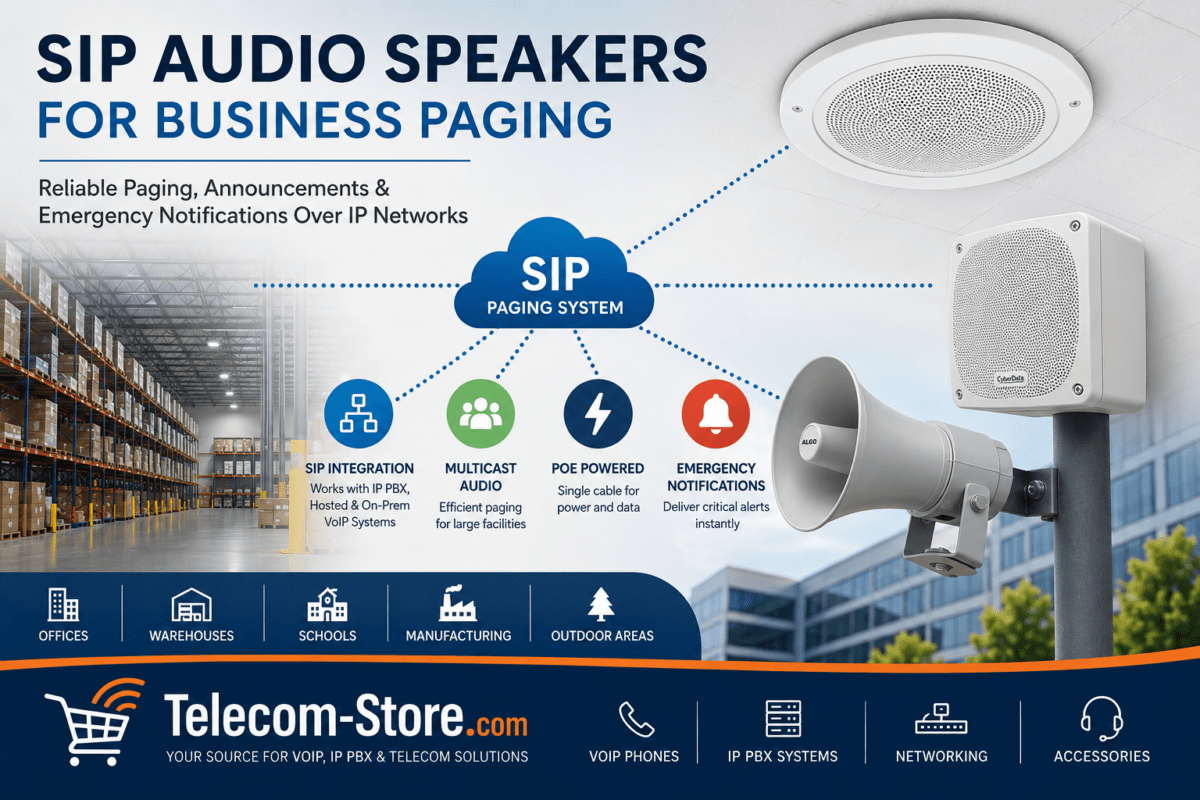
Looking for clear announcements and paging outdoors or in large noisy workplaces? Weatherproof horn speakers are designed to give you reliable, targeted audio in challenging conditions. These speakers work where ordinary models fail, helping you reach staff in warehouses, campuses, assembly lines, or busy loading docks—even in tough weather or loud environments.
Outdoor Paging Speaker Types Compared
| Speaker Type | Best for | Wiring & Power | Weather Rating | Example Model |
|---|---|---|---|---|
| IP/PoE Horn Speaker | Modern VoIP/SIP, IP PBX | Cat5/6 PoE | IP66/IP67 | Algo 8197 |
| Analog 70V Horn | Traditional PA/analog systems | 70V speaker wire | Weather-resistant | Bogen KFLDS30T |
| All-Weather Wall Speaker | Broad, even coverage | 70V / low-Z / network | Weather-resistant | Bogen A8TBLK |
| Marine/Talkback Speaker | Two-way, harsh/salty env. | Analog / hybrid | Marine/weatherproof | Valcom 1048M |
Do Weatherproof Horn Speakers Really Make a Difference?
For businesses managing warehouses, production plants, or large campuses, the answer is yes. Horn speakers made for outdoor use provide clear communication, delivering pages, safety alerts, or visitor instructions across open spaces and between buildings. Because these units are engineered with sealed housings, weather-resistant cones, and reliable mounts, they work in sun, rain, dust, or wind.
Instead of trying to make indoor ceiling speakers work, horn designs focus acoustic energy across longer distances. Modern versions support everything from old-school analog PA to full VoIP, SIP, and advanced networked UC platforms.
Where Should You Install Outdoor Horn Speakers?
- Warehouses, logistics centers, and loading docks
- School playgrounds, sports fields, and campus lots
- Transit stops, bus depots, parking structures
- Distribution yards, shipping terminals
- Outdoor work areas or construction sites
- Industrial, chemical, or energy plants
- Marine, shipyard, or harsh port environments
If your team is spread out or your building is exposed to heavy machine noise, paging horns are easier to hear than flat-panel or standard weather speakers. This makes them a must-have for critical communications, facility-wide alerts, and emergency announcements.
Key Benefits of Outdoor Paging Horns
- Cut through ambient noise: Horns naturally focus output, making voice pages and alerts intelligible near equipment, trucks, or yard traffic.
- Weather protection: Outdoor and IP-rated horns last for years in extreme cold, heat, rain, or swirling dust. Look for IP66/IP67 or marine ratings when needed.
- Wide and targeted coverage: One horn can often reach 100 yards or more—calculating sound coverage is essential to avoid “dead spots.”
- Flexible system use: Newer IP models integrate with SIP, multicast, and can be addressed directly from an IP PBX system or leading VoIP solution.
- Support for safety and emergency plans: OSHA and campus compliance often require reliable outdoor alerting. Paging speakers should be part of your organization’s business continuity and crisis communication plan.
IP Paging Horns – Modern Paging, Simple Wiring
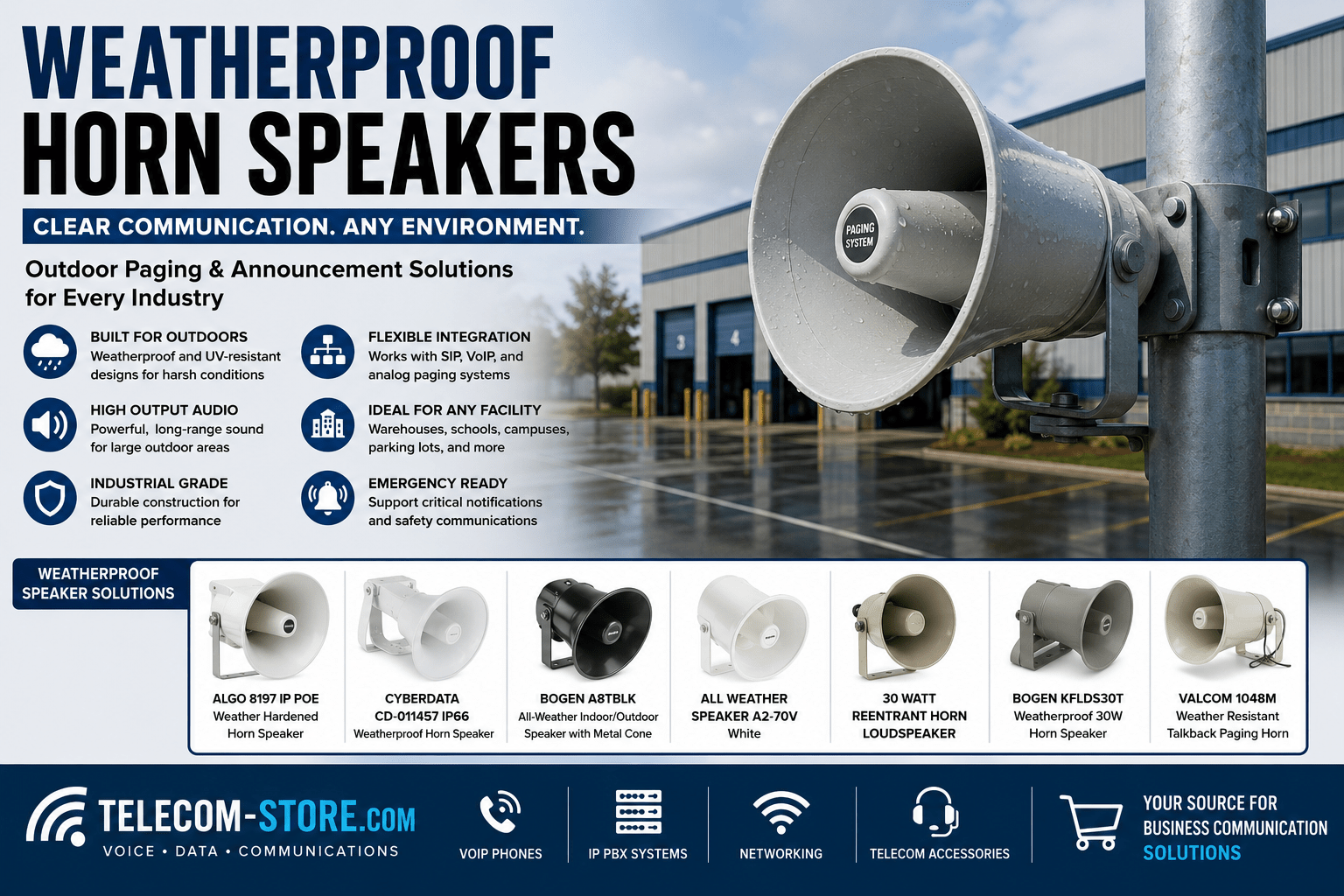
Facilities moving to IP phones, unified communications, or advanced automation should start with true IP paging horns. The Algo 8197 IP PoE Horn Speaker is popular for high-performance SIP and multicast installations—one Cat5/6 run supplies both power and data. Central configuration and remote monitoring are especially helpful for multi-building sites.
Another industry-standard: CyberData IP66 Weatherproof Horn Speaker. Its reliable enclosure shrugs off dust and heavy rain. Before ordering, check that your network includes Power over Ethernet (PoE) switches with enough ports and wattage for all outdoor locations. If you need a PoE upgrade, browse PoE network switches designed for commercial paging use.
Analog and 70V Paging Horns – Reliable for Existing Infrastructure
If your site has a 70V, 25V, or analog paging amp infrastructure, weatherproof horn upgrades are easy. The Bogen KFLDS30T Weatherproof 30W Horn and 30 Watt Reentrant Loudspeaker plug into most industrial paging amps. Remember to match speaker impedance and tap wattage to your amplifier. For best results, always run UV and outdoor-rated speaker cable, and seal all cable entries and mounts.
Distributed and Marine-Grade Speaker Options
Not every zone is best served by horns alone. For coverage at entryways and walkways—or where even audio and music are needed—use solutions like Bogen A8TBLK or A2-70V White All-Weather Speaker. These provide clear voice and background music, are available in multiple colors, and suit areas where listeners are closer together.
For extreme salt, fog, or chemical conditions, Valcom 1048M is made for marine docks, ports, or shipboard use. Unique to this class is built-in talkback—a feature that allows staff or visitors to reply to calls, ideal for loading gates or control stations.
How to Plan and Install Outdoor Paging Horns Effectively
- Walk the site: Survey layout and noise, especially during peak operation. A 2-minute area can sound very different at shift change.
- Set horn height and aim: 10–20 feet high is typical; avoid aiming at large flat walls, windows, or vehicles to reduce echo.
- Choose wiring wisely: For IP horns, run Cat5e/6 from reliable PoE switches; analog needs heavier-gauge, UV-rated cable for longer runs.
- Mix speaker types as needed: Use horns for distance, add all-weather surface speakers for shaded, covered, or high-traffic entrances.
- Label and document: Mark speaker runs, channel assignments, and have all zones mapped. This helps with future expansion or troubleshooting.
Buyer’s Checklist for Your Outdoor Paging Project
- Confirm your paging system type: IP/SIP or analog/70V?
- Map the outdoor area, note materials (concrete, metal, glass can reflect sound and affect clarity)
- Estimate sound coverage and select proper horn wattage—refer to manufacturer datasheets or ask for a site-specific quote.
- Plan cable runs and protect all outdoor connections from weather and tampering.
- Review your PoE switch or amp’s power budget—outdoor runs might need additional surge/grounding protection.
- Allow room for future growth or zone splits; avoid maxing out the system’s capacity from day one.
Always include facilities management and IT in planning. It’s common to miss hidden costs such as outdoor-rated cable spools, junction boxes, and extra mounting brackets unless you review every required accessory up front.
Pairing Horn Speakers with VoIP, IP PBX & Paging Controllers
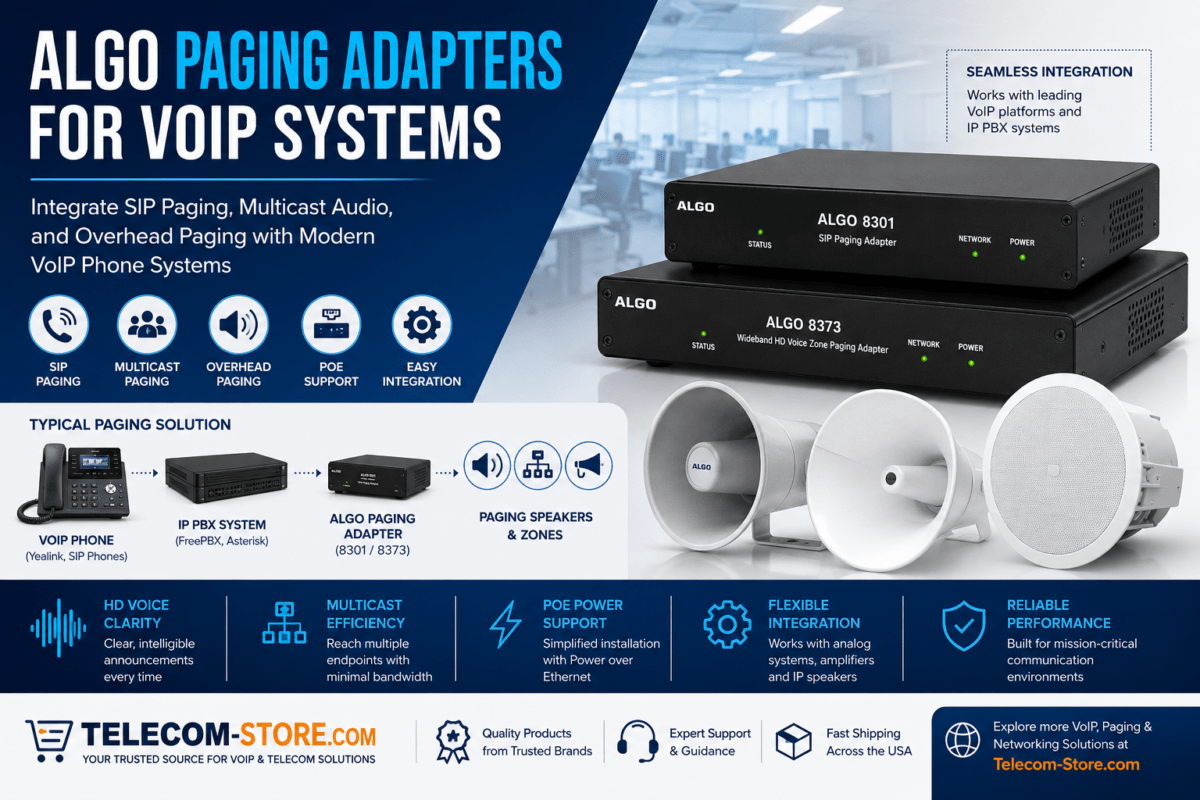
A great paging system is part of your overall communication network. Horns can be tied to VoIP desk phones, IP PBX systems, or a paging controller to streamline notifications. Brands like Yealink, Grandstream, and Poly make phones designed for alert integration. When emergencies matter, unified paging shortens response time and reduces confusion.
What Can Go Wrong? Watch Out for These Issues
- Wall reflections: Horns blasting into close structures muddy speech. Redirect, use baffles, or split into several smaller speakers.
- High ambient noise: Even 30W horns struggle near engines or air exhausts. Account for this when choosing power and quantity.
- Cable runs: Don’t run Cat5/6 or speaker wire with high-voltage lines—keep at least 12” separation or use shielded cable.
- IP config headaches: Assign proper VLANs and firewall ports. Many sites struggle with multicast paging if network design doesn’t match paging system needs.
Test small zones before bulk installation. Pilots catch workflow and acoustic surprises—and save expensive rework later.
Explore More Weatherproof Speaker Solutions
Browse all weatherproof speaker products or check our paging systems category for compatible amps, adapters, and accessories to build a complete system.
Biggest Buyer Mistakes and How to Avoid Them
- Not confirming compatibility with your PBX, network switch, or cabling setup
- Failing to survey peak noise levels—your paging should be tested at the loudest times
- Forgetting about system expansion—you want room to grow
- Choosing the wrong weather rating—IP66 for exposed locations, marine-grade near sea or chemicals
- Trying to cover too much with too few speakers—overlap coverage for fail-safe operation
FAQ: Weatherproof Horn Speakers for Outdoor Paging
Choose IP/PoE for modern VoIP, centralized control, or new builds. Analog 70V is best for traditional PA amps or retrofits. If you plan to upgrade to VoIP in the future, consider hybrid or SIP-compatible horns.
Can all weatherproof horn speakers handle extreme climates?
No—check the IP or weather rating. IP66/IP67 is ideal for rain, dust, snow; marine-grade for ports or chemical plants.
What power supply do outdoor IP horn speakers require?
Most use PoE (Power over Ethernet). Use a quality PoE network switch indoors or in a protected exterior box.
Is it possible to mix horn and wall-mounted speakers in one system?
Yes, this is typical in modern paging—mix horns for distance with wall or ceiling speakers for area fill.
What are the most common mistakes when planning outdoor paging?
Not assessing peak noise, mounting too low, underestimating speaker count, and missing compatibility or weather rating checks.
Expert Support for Your Paging Projects
Choosing the right weatherproof paging horns saves money, improves safety, and keeps your operation running smoothly. For product selection, system design, or support, contact Telecom-Store.com—our team is ready to help you match speaker models to your needs, recommend installation hardware, or consult with your IT staff. For complex builds or deployments, Axion Communications offers custom site surveys and system engineering services for voice, data, and emergency paging platforms.
Conclusion
Investing in quality weatherproof horn speakers ensures your employees stay informed outdoors—in the warehouse yard, on a busy dock, or across a school campus. Get the coverage and clarity your operation demands by selecting the right models, planning your layout, and paying attention to compatibility and setup details. Doing this up front means your outdoor paging system will remain reliable, clear, and expandable for years to come.