

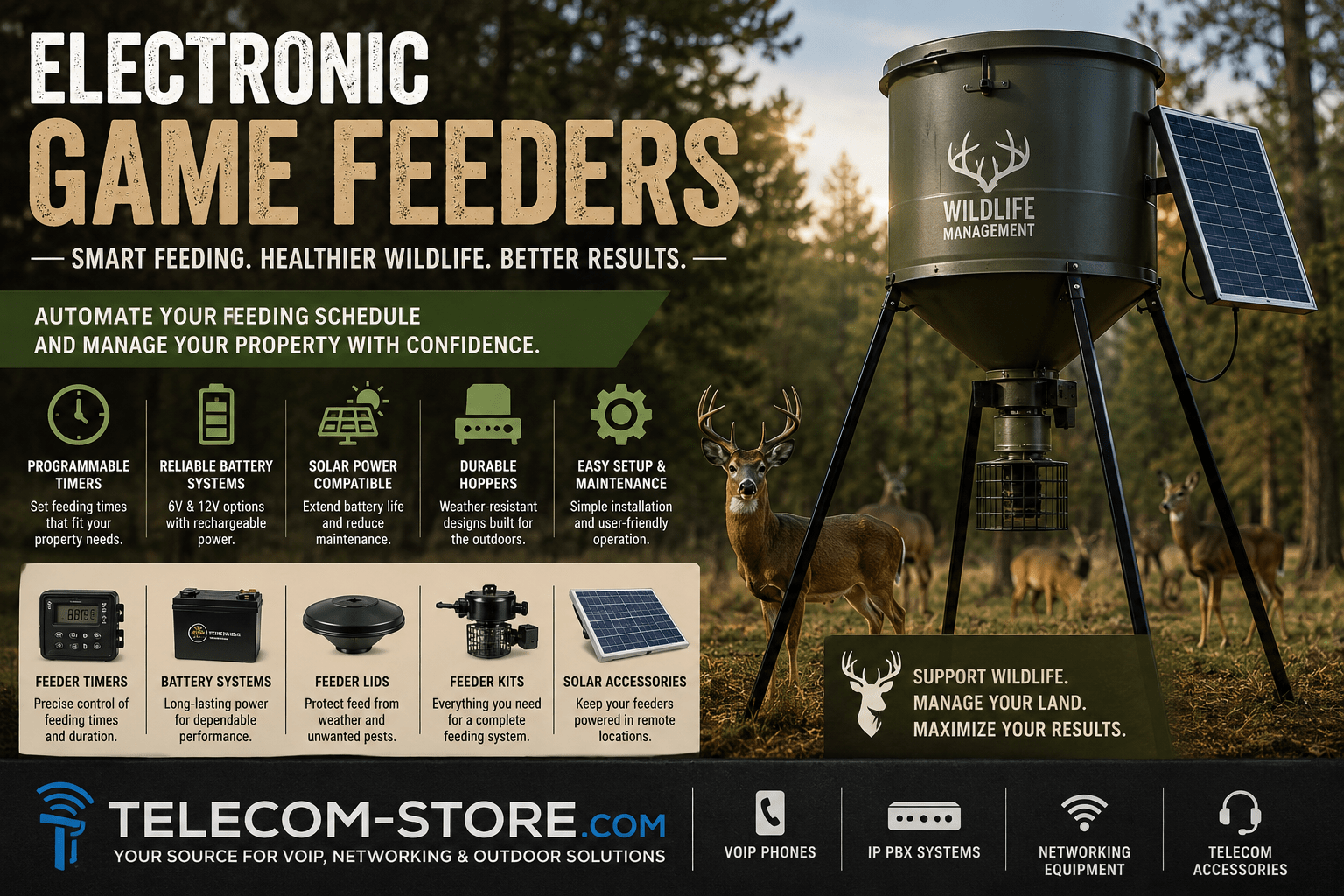
Electronic Game Feeders for Wildlife Management
Electronic game feeders have become increasingly common for wildlife management, hunting property maintenance, and supplemental feeding programs. Modern feeder systems allow property owners to distribute feed on programmable schedules while reducing manual labor and improving feeding consistency.
Whether managing a small hunting property or a larger rural tract, electronic game feeders can help support controlled feeding routines for deer and other wildlife species. Many systems now include programmable timers, rechargeable battery systems, solar charging options, and weather-resistant hopper designs.
Property owners interested in outdoor equipment, low-voltage electronics, and wildlife management accessories can browse products at:
Telecom-Store.com
How Electronic Game Feeders Work
Electronic game feeders use motorized feed dispersal systems controlled by programmable timers. At scheduled intervals, the feeder activates a spinner plate that distributes feed across a designated area.
Most automatic wildlife feeding systems include:
- Feed hopper
- Timer controller
- Motor assembly
- Spinner plate
- Battery system
- Mounting hardware
Some feeders use gravity-fed systems while others rely on automated timed dispersal.
One example of a gravity-style feeder includes:
Gravity feeders are often used for:
- Supplemental feeding
- Mineral distribution
- Low-maintenance feeding areas
- Areas without electrical access
Automatic feeders provide more control over feeding schedules and feed volume.
Benefits of Automatic Wildlife Feeding Systems
Electronic game feeders are commonly used for:
- Hunting property management
- Wildlife observation
- Supplemental feeding programs
- Feed scheduling consistency
- Reducing manual feeding labor
Properly managed feeding systems can help property owners maintain more consistent feeding patterns throughout the year.
Timed feeders may also help reduce wasted feed by controlling dispersal frequency and duration.
However, wildlife feeding regulations vary by state and season. Property owners should verify local hunting and feeding regulations before deployment.
Understanding Feeder Timers for Deer
Feeder timers are the primary control systems used in automatic wildlife feeding systems.
Modern timers allow users to configure:
- Feed times
- Feed duration
- Multiple daily schedules
- Motor speed
- Battery monitoring
One example is the Boss Buck digital timer auto feed kit:
Digital timer systems are often preferred because they provide:
- More precise programming
- Easier schedule adjustments
- Better battery efficiency
- Multiple feeding intervals
Some property owners still prefer analog systems because of their simplicity.
An example of an analog system includes:
Analog timers may be easier to operate for users seeking basic scheduled feeding functionality without digital configuration menus.
Battery Systems for Electronic Game Feeders
Game feeder battery systems play an important role in long-term feeder reliability.
Most electronic feeders rely on:
- 6-volt battery systems
- 12-volt battery systems
- Rechargeable sealed lead-acid batteries
- Solar charging accessories
One example of a rechargeable 12V battery system includes:
Smaller feeder systems may use compact 6V batteries such as:
Battery life depends on:
- Feed frequency
- Motor size
- Temperature conditions
- Solar charging availability
- Timer efficiency
- Wildlife activity levels
Cold weather can significantly reduce battery performance, especially during winter feeding periods.
Solar Charging and Power Management
Many modern electronic game feeders support solar charging systems to extend battery life.
Solar charging can help:
- Reduce manual battery replacement
- Maintain longer deployment cycles
- Support remote feeder locations
- Improve reliability during hunting season
However, solar charging effectiveness depends on:
- Sun exposure
- Tree cover
- Seasonal weather conditions
- Solar panel orientation
Heavy shade or dense timber can reduce charging efficiency.
Choosing the Right Feeder Hopper
The feeder hopper determines:
- Feed capacity
- Weather protection
- Refill frequency
- Wildlife accessibility
Larger hopper systems typically require fewer refill trips, which can reduce disturbance on hunting properties.
Proper lid protection is also important for preventing moisture contamination.
One example includes:
Weather-resistant lids can help reduce:
- Feed spoilage
- Moisture intrusion
- Insect contamination
- Rodent access
Proper feeder sealing is especially important in humid climates where moisture can quickly damage stored feed.
Deer Feeder Setup Considerations
Deer feeder setup depends heavily on property layout and wildlife movement patterns.
Important placement considerations include:
- Distance from bedding areas
- Prevailing wind direction
- Vehicle access
- Terrain elevation
- Drainage conditions
- Tree cover availability
Many property owners place feeders near:
- Transition corridors
- Food plots
- Edge habitat
- Water sources
However, over-concentrating feeding activity in one location may increase soil disturbance and wildlife pressure.
Wildlife Attractant Feeders and Feed Selection
Wildlife attractant feeders may distribute:
- Corn
- Protein pellets
- Mineral supplements
- Specialty attractants
Feed selection often depends on:
- Wildlife species
- Seasonal goals
- Local regulations
- Budget considerations
Protein-based feeding programs are commonly used for herd management and supplemental nutrition outside hunting season.
However, property owners should monitor feeding areas regularly for:
- Mold contamination
- Moisture buildup
- Wildlife overcrowding
- Feeder damage
Maintenance Requirements for Electronic Game Feeders
Routine maintenance is important for reliable feeder operation.
Property owners should regularly inspect:
- Battery voltage
- Motor condition
- Spinner plate operation
- Feed moisture levels
- Timer settings
- Mounting hardware
- Solar charging systems
Moisture intrusion is one of the most common causes of feeder failure.
Dust, insects, rodents, and weather exposure can also affect long-term feeder reliability.
Remote Property Monitoring and Outdoor Technology
Many hunting property owners now integrate outdoor electronics with wildlife management systems.
Remote technologies may include:
- Cellular trail cameras
- Solar charging systems
- Wireless monitoring
- Remote property networking
Businesses working with communication technology and outdoor connectivity systems may also use wireless infrastructure from providers such as:
Outdoor monitoring systems often rely on:
- Cellular connectivity
- Solar power
- Remote battery management
- Weather-resistant electronics
As rural technology expands, remote monitoring continues becoming more common on hunting properties.
Compatibility and Setup Considerations
Before purchasing electronic game feeders, property owners should evaluate:
Battery Compatibility
Some timers require:
- 6V systems
- 12V systems
- Specific connector types
Improper battery selection can reduce feeder performance or damage motors.
Feed Type Compatibility
Certain feeder systems handle:
- Corn more effectively
- Pellet feed better than whole grain
- Fine feed differently than large kernels
Spinner plate design affects feed distribution consistency.
Weather Conditions
Heavy rainfall, humidity, and freezing conditions can affect:
- Battery performance
- Feed spoilage
- Motor operation
- Solar charging efficiency
Proper weather protection becomes especially important for long-term deployments.
Common Limitations of Automatic Game Feeders
Although electronic game feeders offer convenience, there are practical limitations.
Wildlife Damage
Hogs, raccoons, bears, and livestock can damage feeder systems if they are not properly secured.
Battery Maintenance
Rechargeable batteries eventually require replacement and periodic inspection.
Moisture Problems
High humidity can cause:
- Feed clumping
- Mold growth
- Mechanical jams
Theft and Vandalism
Remote feeder locations occasionally experience theft or tampering.
Property owners sometimes use:
- Locking lids
- Steel feeder cages
- Trail camera monitoring
to improve security.
Conclusion
Electronic game feeders provide a practical method for managing supplemental feeding schedules, wildlife observation, and hunting property maintenance.
Modern systems combine programmable timers, rechargeable battery systems, gravity-fed hoppers, and weather-resistant designs to support a wide range of wildlife feeding applications.
Before selecting a feeder system, property owners should evaluate:
- Property size
- Wildlife activity
- Feed type requirements
- Battery maintenance
- Solar charging conditions
- Weather exposure
- Local wildlife regulations
Careful feeder placement and regular maintenance can improve long-term reliability while supporting more consistent feeding programs.
FAQ Section
How do electronic game feeders work?
Electronic game feeders use programmable timers connected to battery-powered motors that spin feed across a designated area. Most systems include a hopper, spinner plate, motor assembly, timer controller, and rechargeable battery system.
What is the best battery for an electronic deer feeder?
Most electronic deer feeders use either 6V or 12V rechargeable sealed lead-acid batteries. The correct battery depends on the feeder motor and timer system requirements. Higher-capacity batteries may provide longer run times between charging cycles.
How often should deer feeder timers run?
Feeder timers are commonly programmed for one to three feeding cycles per day depending on wildlife activity, feed availability, and hunting management goals. Feed duration settings affect how much feed is distributed during each cycle.
Are solar panels useful for automatic wildlife feeding systems?
Solar charging systems can help extend battery life and reduce maintenance requirements for automatic wildlife feeding systems. However, charging performance depends heavily on sun exposure and weather conditions.
What feed works best in electronic game feeders?
Corn and protein pellets are commonly used in electronic game feeders. Some feeder systems handle pellets more effectively than fine grain or mixed feed. Feed consistency and moisture resistance can affect spinner performance.
Where should electronic deer feeders be placed?
Electronic deer feeders are often placed near travel corridors, edge habitat, food plots, or water sources. Placement should also consider wind direction, drainage, vehicle access, and wildlife pressure.
How long do feeder batteries usually last?
Battery life varies depending on feed schedules, motor size, weather conditions, and solar charging availability. In many cases, rechargeable feeder batteries may last several weeks or months between charging cycles.
Can electronic game feeders be used year-round?
Yes. Many property owners use electronic game feeders throughout the year for supplemental feeding and wildlife observation. However, feeding regulations may vary depending on hunting season and local wildlife laws.