
What Is SIP and How It Powers VoIP Phone Systems

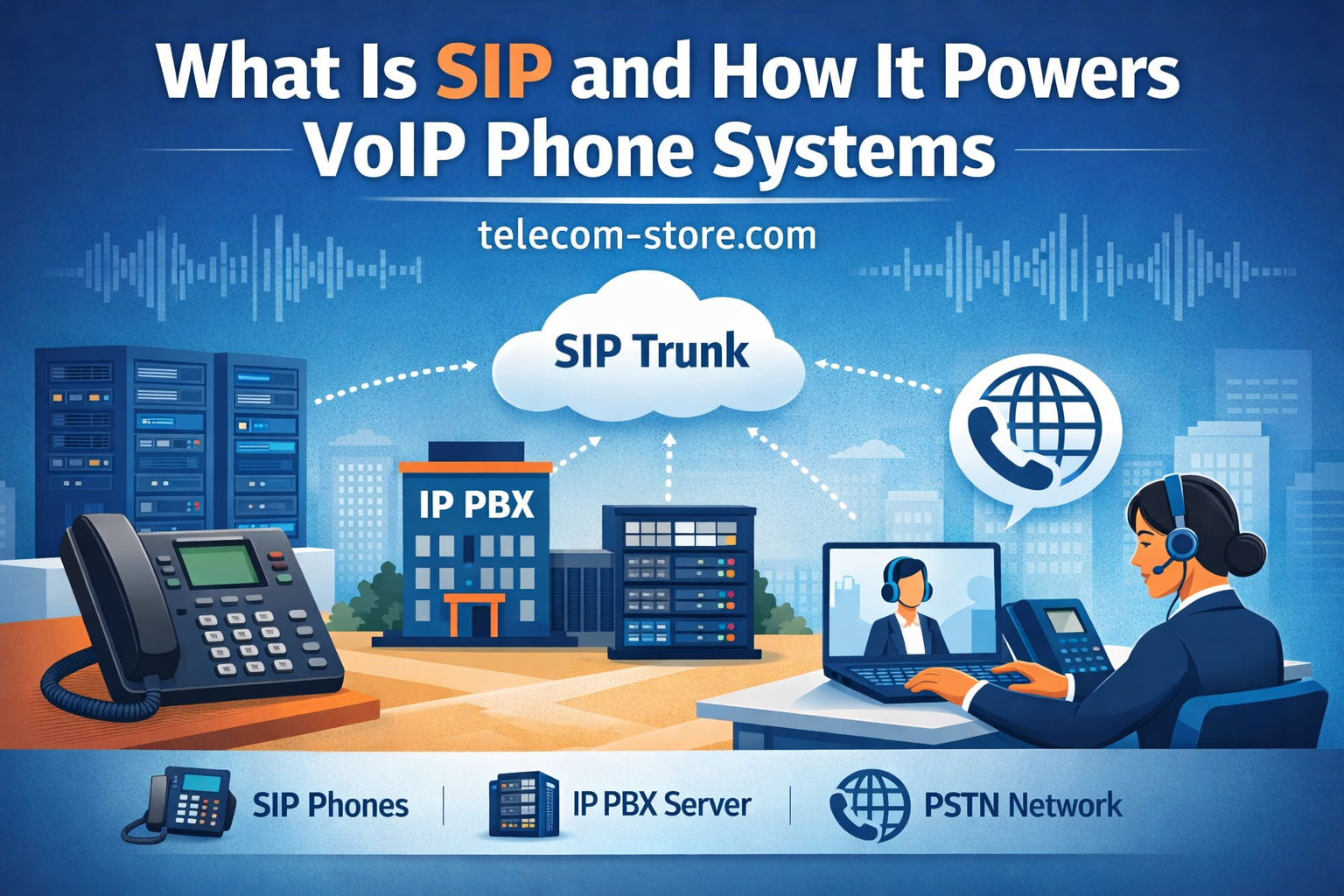
Modern business communication increasingly relies on internet-based technology. One of the core technologies behind Voice over IP (VoIP) systems is the Session Initiation Protocol, commonly known as SIP. SIP plays a central role in establishing, managing, and ending voice calls across internet networks.
Businesses that deploy VoIP phones and IP PBX systems typically rely on SIP to connect devices, route calls, and support advanced communication features. Understanding how SIP works can help organizations select compatible equipment and design reliable phone systems.
This article explains what SIP is, how it works with VoIP phones, and what businesses should consider when building a SIP-based communication system.
Businesses looking for compatible VoIP devices can explore available options at:
https://telecom-store.com/product-category/voip-phones/
For additional technical information about SIP standards, documentation is available through the Internet Engineering Task Force:
https://www.ietf.org/
Understanding SIP (Session Initiation Protocol)
The Session Initiation Protocol (SIP) is a signaling protocol used to initiate, manage, and terminate communication sessions over IP networks. These sessions typically include voice calls, video conferencing, and multimedia communication.
In a VoIP phone system, SIP handles the signaling required to connect two endpoints. The actual voice data is transmitted using other protocols, but SIP is responsible for coordinating the call setup.
Key functions of SIP include:
- Establishing a communication session
- Managing call routing
- Negotiating call parameters
- Ending communication sessions
Because SIP is a standardized protocol, devices from different manufacturers can communicate with each other when properly configured.
How SIP Works in a VoIP Phone System
In a VoIP environment, SIP allows devices such as VoIP desk phones, softphones, and IP PBX servers to communicate through the network.
When a user places a call using a SIP-enabled phone, the system typically follows this process:
- The SIP phone sends a request to the SIP server.
- The server identifies the destination device or external phone number.
- The system negotiates the communication parameters.
- Once the destination accepts the call, voice data begins flowing between the devices.
Although SIP coordinates the connection, the audio stream itself typically uses a separate protocol such as RTP (Real-time Transport Protocol).
SIP Components in a Business Phone System
A typical SIP-based communication system includes several components that work together to route calls.
SIP Phones
A SIP phone is a VoIP desk phone designed to communicate using the SIP protocol. These devices register with an IP PBX or hosted SIP server and allow users to place and receive calls over the network.
Businesses deploying SIP systems often use dedicated VoIP phones for reliability and call quality.
Examples of compatible devices can be viewed here:
https://telecom-store.com/product-category/voip-phones/
SIP Server or IP PBX
The SIP server, often part of an IP PBX, manages call routing and device registration. It keeps track of all SIP devices connected to the network and directs calls to the correct destination.
An IP PBX typically provides features such as:
- extension management
- voicemail
- call forwarding
- automated attendants
- call queues
SIP Trunk
A SIP trunk connects the internal phone system to external telephone networks. Instead of using traditional phone lines, SIP trunks allow calls to travel over the internet.
SIP trunks can support multiple simultaneous calls using a single internet connection, which often improves scalability for growing businesses.
Network Infrastructure
Because SIP operates over data networks, networking equipment plays an important role in maintaining call quality.
Typical network components include:
- routers
- network switches
- firewalls
- internet connections with adequate bandwidth
Proper configuration of these components helps ensure reliable communication.
SIP vs Traditional Phone Systems
Businesses evaluating communication technology often compare SIP-based VoIP systems with traditional telephone systems.
| Feature | Traditional Phone System | SIP-Based VoIP System |
|---|---|---|
| Connection Type | Analog phone lines | Internet-based |
| Infrastructure | Dedicated telephone wiring | Data network |
| Scalability | Limited expansion | Flexible expansion |
| Remote Work Support | Limited | Supported |
| Integration with Software | Minimal | Common |
SIP-based systems provide greater flexibility for organizations that rely on remote work, cloud applications, and unified communication tools.
Benefits of SIP for Business Communication
Organizations that deploy SIP-based phone systems often experience several operational advantages.
Flexible Deployment
SIP systems can operate across multiple locations using internet connections. This allows employees in different offices or remote environments to connect to the same phone system.
Scalable Communication
Businesses can add new extensions or additional call capacity without installing new physical phone lines.
Integration with Modern Software
Many SIP systems integrate with customer relationship management platforms, collaboration tools, and unified communication platforms.
Efficient Network Utilization
Voice communication can share the same network infrastructure used for other data services, reducing the need for separate systems.
Compatibility Considerations When Choosing SIP Equipment
Organizations planning to deploy a SIP phone system should evaluate compatibility between devices and infrastructure.
SIP Protocol Support
Not all communication devices support SIP. Businesses should confirm that VoIP phones, IP PBX systems, and software applications are SIP-compatible.
Network Requirements
SIP-based communication requires reliable network performance.
Businesses should consider:
- network bandwidth
- Quality of Service configuration
- network latency and packet loss
These factors directly affect call quality.
Device Provisioning
Many SIP phones support automated provisioning, allowing administrators to configure devices centrally.
This feature simplifies deployment when multiple phones are installed.
SIP Setup Requirements
Implementing a SIP-based phone system requires several technical components.
Internet Connectivity
A stable internet connection is required to support VoIP communication. Businesses should evaluate bandwidth capacity based on the number of simultaneous calls expected.
Network Configuration
Network administrators often configure routers and switches to prioritize voice traffic.
Quality of Service settings help ensure voice packets receive priority over other data traffic.
Firewall Configuration
Firewalls must be configured to allow SIP signaling and media traffic while maintaining network security.
Improper firewall configuration can result in call connection issues.
Limitations and Considerations
Although SIP provides many advantages for modern communication systems, organizations should be aware of potential limitations.
Dependence on Network Performance
SIP-based communication relies on network stability. Network outages or congestion can affect call quality.
Security Considerations
SIP systems connected to the internet should be secured with strong authentication and network monitoring to prevent unauthorized access.
Configuration Complexity
While SIP systems offer flexibility, configuration may require technical knowledge when deploying large or complex environments.
How SIP Supports Modern Communication Platforms
SIP technology enables many features that businesses expect from modern communication systems.
These include:
- remote work connectivity
- video conferencing
- unified communication platforms
- mobile device integration
By supporting multiple communication formats, SIP helps organizations build communication systems that adapt to changing work environments.
Businesses interested in building SIP-compatible communication systems can explore VoIP phones and accessories at:
https://telecom-store.com
Conclusion
The Session Initiation Protocol plays a central role in modern VoIP communication systems. By managing the signaling required to establish and maintain communication sessions, SIP enables businesses to deploy flexible and scalable phone systems.
Organizations that understand how SIP works can make informed decisions when selecting VoIP phones, IP PBX systems, and network infrastructure.
When deploying SIP-based systems, businesses should consider device compatibility, network requirements, and security measures. With proper planning and configuration, SIP technology can support reliable and efficient communication across offices, remote teams, and customer service environments.
FAQ Section
What does SIP stand for in VoIP systems?
SIP stands for Session Initiation Protocol. It is a signaling protocol used to establish, manage, and terminate communication sessions such as voice calls or video conferences over IP networks. In VoIP phone systems, SIP allows devices like desk phones and IP PBX servers to connect and communicate across the network.
How does SIP work with VoIP phones?
SIP-enabled VoIP phones register with a SIP server or IP PBX. When a user places a call, the phone sends a SIP request to the server. The server identifies the destination device and establishes the connection. Once the session is established, voice data is transmitted between devices using other protocols such as RTP.
What is a SIP trunk?
A SIP trunk is a service that connects a business phone system to external telephone networks through the internet. Instead of using traditional phone lines, SIP trunks allow multiple calls to be transmitted through a single internet connection, which can improve scalability and flexibility.
Do all VoIP phones support SIP?
Most modern VoIP phones support the SIP protocol, but not all devices are compatible with every SIP provider or IP PBX system. Businesses should confirm compatibility between phones, SIP servers, and network infrastructure before deployment.
What equipment is required for a SIP phone system?
A typical SIP-based phone system includes SIP-compatible VoIP phones, an IP PBX server or hosted SIP platform, networking equipment such as routers and switches, and a reliable internet connection.
Is SIP secure for business communication?
SIP communication can be secured using encryption, authentication, and firewall protection. Businesses should implement security measures such as strong passwords, network monitoring, and secure configuration to protect SIP-based systems from unauthorized access.
What is the difference between SIP and VoIP?
VoIP refers to the technology that transmits voice communication over internet protocol networks. SIP is a signaling protocol used within VoIP systems to establish and manage communication sessions between devices.