

Blog
Paging Systems and VoIP Phone Integration

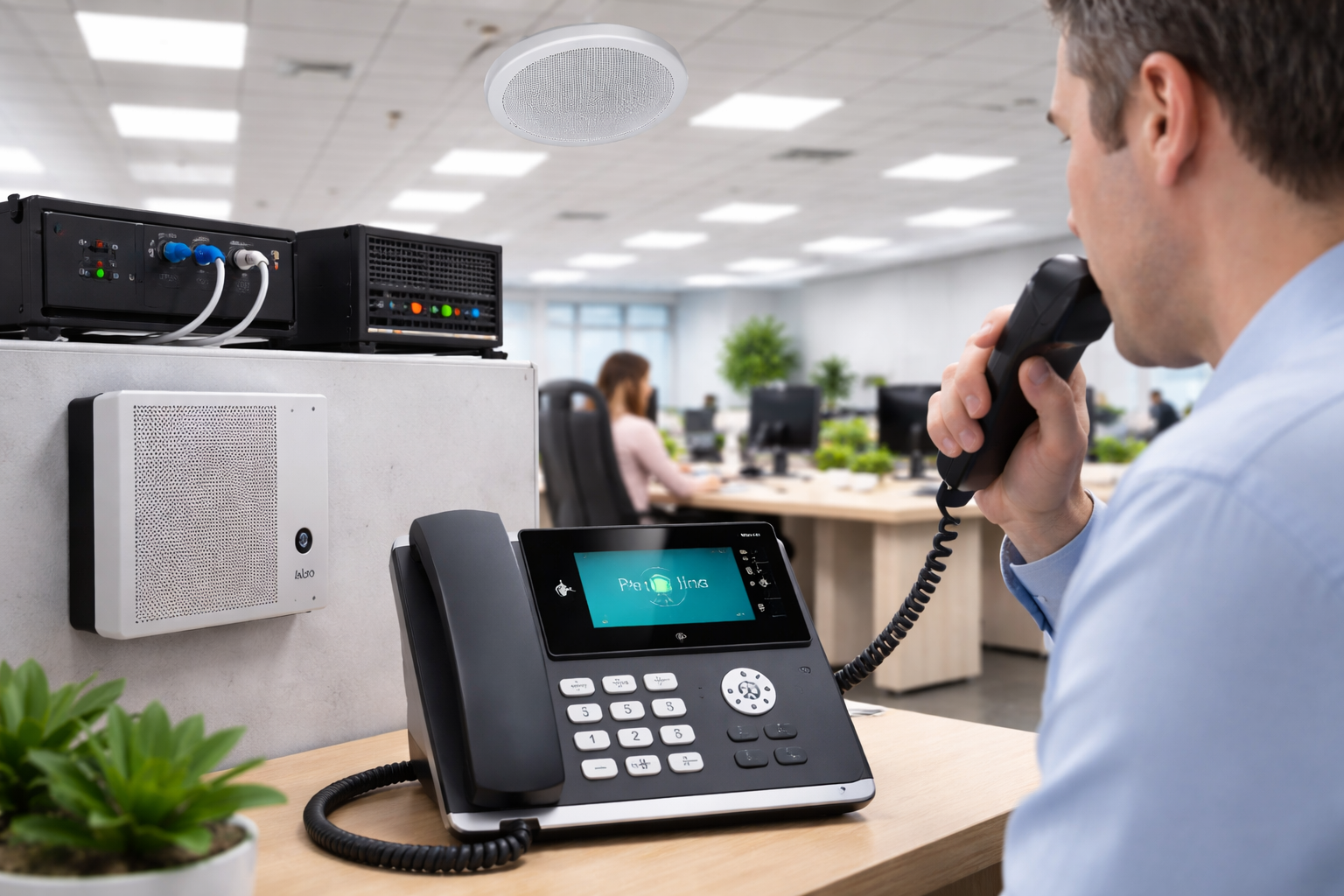
Paging systems continue to play an important role in many business environments. Facilities such as warehouses, retail stores, schools, and manufacturing plants often rely on paging announcements to communicate quickly across large areas. While traditional paging systems were connected to analog phone systems, modern deployments frequently integrate with VoIP phone networks.
A paging system integrated with VoIP allows users to broadcast announcements using their desk phones or other network devices. This approach simplifies communication and allows businesses to use their existing network infrastructure rather than installing a completely separate paging system.
This guide explains how paging systems work, how they integrate with VoIP phone systems, and what organizations should consider when implementing a paging solution.
Businesses deploying VoIP infrastructure and paging equipment may also work with telecom service providers or integrators such as https://www.axioncommunications.com/ to design and support their communications environment.
What Is a Paging System?
A paging system is designed to broadcast voice announcements through speakers located throughout a building or facility. These systems allow a person to speak into a phone or microphone and have their voice heard across multiple areas.
Paging systems are commonly used for:
- employee announcements
- customer service calls
- emergency alerts
- operational instructions
In traditional systems, paging audio was distributed through analog amplifiers and overhead speakers. Modern paging solutions often operate across IP networks and integrate with VoIP phone systems.
How Paging Systems Work
A paging system typically consists of several key components:
- paging controller or gateway
- amplifiers or IP speakers
- overhead ceiling speakers or horns
- integration with a phone system
When a user initiates a paging call from a VoIP phone, the phone system routes the call to a paging device. That device then distributes the audio signal to speakers installed throughout the facility.
Because many paging systems now operate over IP networks, they can integrate directly with SIP-based VoIP systems.
The Role of VoIP in Modern Paging
VoIP technology allows voice communication to travel over IP networks instead of traditional telephone lines.
When paging integrates with VoIP:
- A user dials a paging extension.
- The VoIP PBX routes the call to the paging device.
- The paging device broadcasts the announcement through speakers.
This approach allows employees to initiate announcements using standard desk phones such as:
These VoIP phones can trigger paging announcements through SIP extensions or multicast paging features.
Types of Paging Systems
Organizations can deploy several different types of paging systems depending on their infrastructure.
Analog Paging Systems
Analog paging systems connect to a phone system through a paging adapter or gateway.
These systems often include:
- paging amplifiers
- ceiling speakers
- zone controllers
Businesses with existing analog paging infrastructure can continue using it by connecting a VoIP paging gateway such as:
Algo 8301 IP Voice Paging Adapter & Bell
This device connects analog paging equipment to a VoIP system.
IP Paging Systems
IP paging systems operate directly on the network.
Instead of analog amplifiers, they use network-connected speakers and controllers.
Examples of IP paging equipment include:
Algo 8301 IP Voice Paging Adapter & Bell
IP speakers connect directly to the network using Ethernet and are often powered through Power over Ethernet (PoE).
Advantages of IP paging systems include:
- easier installation
- centralized network management
- improved integration with VoIP platforms
SIP Paging Gateways
SIP paging gateways register as extensions on the VoIP PBX.
When a user dials the extension, the gateway converts the audio stream and sends it to speakers or amplifiers.
An example paging controller used in VoIP systems is:
These gateways allow organizations to integrate paging without replacing existing speakers.
Multicast Paging in VoIP Systems
Some VoIP systems support multicast paging.
Multicast allows audio to be transmitted once and received by multiple devices simultaneously.
Benefits include:
- reduced network traffic
- real-time broadcast to multiple devices
- simplified configuration
Many business phones support multicast paging features.
Phones such as:
can send announcements to multicast-enabled speakers or other VoIP devices.
Network Considerations for Paging Systems
Because modern paging systems operate on IP networks, several network factors should be considered.
Network Bandwidth
Paging audio uses relatively little bandwidth, but proper network configuration helps maintain reliability.
Implementing Quality of Service (QoS) can prioritize voice traffic on the network.
Power over Ethernet
Many IP paging devices use PoE.
PoE switches allow network cables to provide both connectivity and electrical power to speakers.
This simplifies installation and reduces wiring requirements.
Network Segmentation
Larger organizations often place voice and paging devices on a dedicated voice VLAN.
This can improve network security and help manage traffic more effectively.
Paging System Use Cases
Paging systems are widely used across many industries.
Warehouses and Distribution Centers
Large warehouse facilities often rely on paging announcements for operational communication.
Announcements may include:
- order updates
- shift changes
- safety notifications
Paging allows managers to communicate with staff across large spaces.
Retail Stores
Retail stores use paging to contact employees or request assistance in specific departments.
Paging announcements can help coordinate staff quickly during busy periods.
Schools and Campuses
Educational institutions frequently use paging systems to deliver announcements across classrooms, hallways, and common areas.
Paging systems are also used for emergency notifications.
Healthcare Facilities
Hospitals and clinics use paging systems to coordinate staff communication and deliver alerts across departments.
Buyer Considerations Before Installing a Paging System
Organizations planning a paging deployment should evaluate several important factors.
VoIP Compatibility
Paging equipment must support SIP or integrate with the VoIP PBX.
Confirm compatibility before purchasing paging controllers or speakers.
Coverage Area
Speaker placement determines how clearly announcements can be heard.
Large facilities may require multiple paging zones.
Zone paging allows announcements to be sent only to specific areas.
Installation Requirements
Paging systems may require:
- network cabling
- PoE switches
- paging gateways
- amplifiers
Understanding infrastructure requirements helps ensure a smooth installation.
Integration with Existing Systems
Organizations that already have analog speakers may prefer to install a SIP paging gateway rather than replacing the entire system.
Devices such as:
Algo 8301 IP Voice Paging Adapter &Bell
allow older systems to connect to modern VoIP networks.
Limitations of Paging Systems
While paging systems are useful for broadcasting announcements, they also have limitations.
Audio Clarity
Paging announcements are designed for broadcast communication rather than two-way conversations. Audio quality may not match the clarity of direct phone calls.
Noise Environments
Facilities with high noise levels may require additional speakers or specialized horn speakers to ensure announcements are audible.
Network Dependence
IP paging systems rely on network connectivity. If the network fails, paging functionality may be temporarily unavailable.
Organizations should consider backup communication procedures for critical situations.
Practical Conclusion
Paging systems remain a valuable communication tool for organizations that need to deliver announcements across large areas. When integrated with VoIP phone systems and IP networks, paging solutions can operate efficiently using existing network infrastructure.
Modern paging devices, IP speakers, and SIP gateways allow businesses to connect paging systems directly to their VoIP platforms. With proper planning and network configuration, paging systems can improve communication across many environments including retail stores, warehouses, schools, and healthcare facilities.
Organizations evaluating paging solutions should consider compatibility with their VoIP system, facility layout, and network design before deploying a paging system.
FAQ Section
How does a paging system work with a VoIP phone system?
A paging system integrates with a VoIP phone system by connecting a paging controller or IP speaker to the network. The device registers as a SIP extension on the VoIP PBX. When a user dials the paging extension from a VoIP phone, the system sends audio to the paging speakers, broadcasting the announcement throughout the building.
What equipment is needed to connect paging to a VoIP network?
Connecting paging to a VoIP network typically requires a SIP paging gateway or IP speaker. Additional equipment may include amplifiers, overhead speakers, and network switches with Power over Ethernet. The specific equipment depends on whether the system uses analog speakers or modern IP-based paging devices.
Can VoIP desk phones trigger paging announcements?
Yes. Many SIP-based VoIP desk phones can initiate paging announcements by dialing a paging extension or using multicast paging features. Phones such as Yealink SIP models can send announcements to compatible paging controllers or IP speakers connected to the network.
What is multicast paging in VoIP systems?
Multicast paging is a network method that allows a single audio stream to be transmitted to multiple devices simultaneously. This technique reduces network bandwidth usage and enables real-time announcements to be broadcast across VoIP phones and IP paging speakers configured to receive multicast audio.
Are IP paging systems better than analog paging systems?
IP paging systems integrate more easily with modern VoIP networks and typically require fewer interface devices. However, analog paging systems may still be suitable for facilities that already have amplifiers and speaker wiring installed. SIP paging gateways can connect legacy analog systems to VoIP platforms.
Do paging systems require special network configuration?
Paging systems usually work on standard IP networks. However, implementing Quality of Service (QoS) can prioritize voice traffic and improve reliability. Many organizations also deploy PoE switches to power network speakers and use voice VLANs to separate communication devices from general network traffic.