Blog
PBX vs Cloud Phone Systems for Business Communication

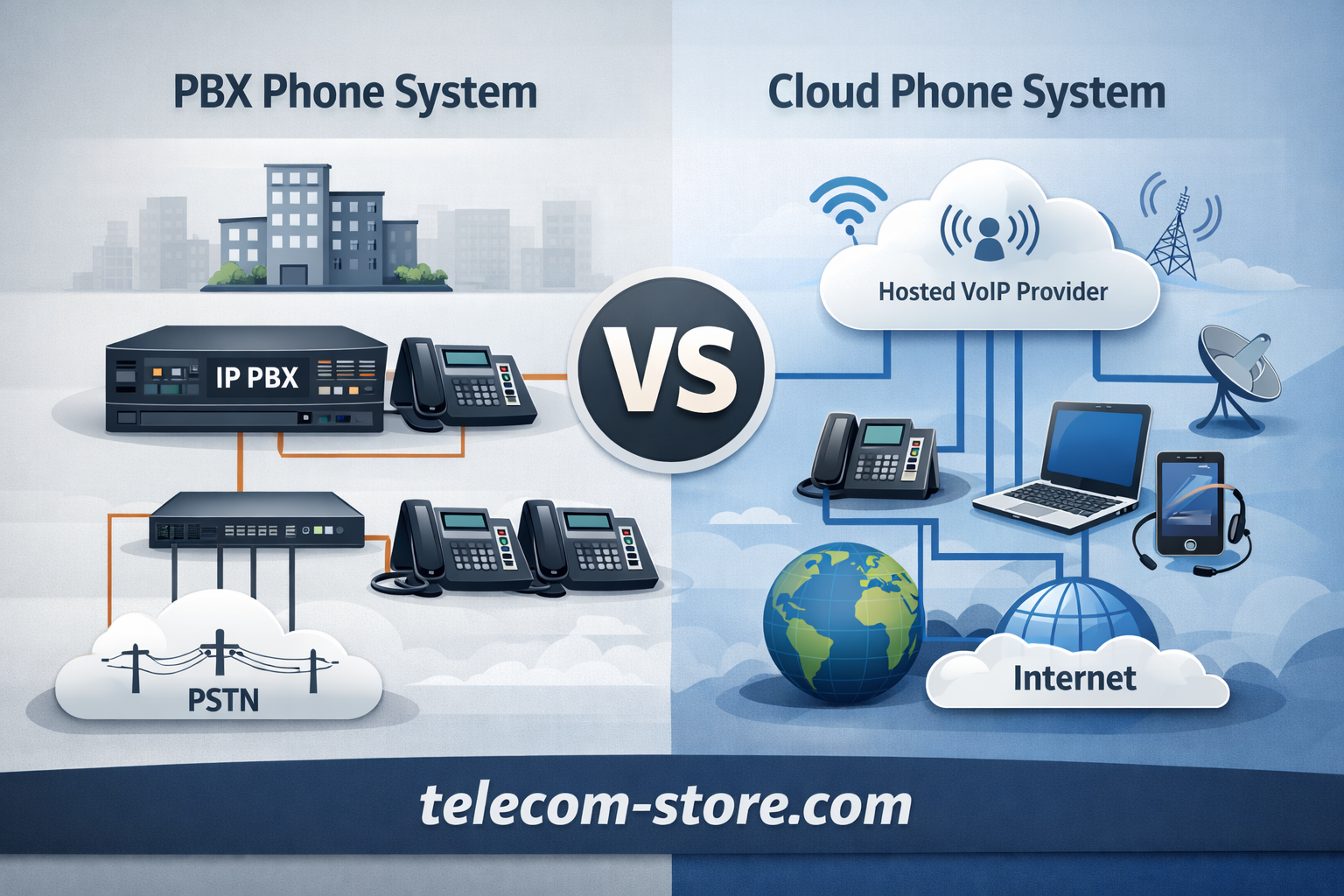
Businesses rely on reliable phone systems to manage internal communication and customer interactions. Two common options organizations evaluate today are PBX phone systems and cloud phone systems. Both approaches support VoIP technology and modern communication features, but they differ in how the infrastructure is deployed and maintained.
Understanding the differences between PBX and cloud phone systems helps businesses choose communication tools that support their operations, scalability needs, and technical resources.
Many organizations implement these systems using SIP-compatible VoIP desk phones such as the Yealink T54W, available here:
https://telecom-store.com/product/yea-sip-t54w/
Communication providers and telecom infrastructure partners such as
https://www.axioncommunications.com/
often help businesses deploy and manage these communication platforms.
Understanding PBX Phone Systems
What Is a PBX Phone System?
A Private Branch Exchange (PBX) is a private telephone network used within an organization. Employees communicate internally through extension dialing while the PBX routes external calls to the public telephone network or VoIP providers.
Historically, PBX systems relied on analog circuits and dedicated switching hardware. Modern implementations often use IP PBX systems, which operate over internet protocol networks and support VoIP communication.
Typical PBX features include:
- extension dialing
- call transfer and forwarding
- voicemail
- automated attendants
- call queues
- conference calling
These features allow businesses to manage communication through a centralized platform.
How IP PBX Systems Work
An IP PBX routes calls over a data network rather than traditional phone wiring. VoIP desk phones connect to the PBX server through Ethernet connections and register using SIP signaling protocols.
A typical PBX environment includes:
- SIP-compatible VoIP desk phones
- an IP PBX server or appliance
- network switches and routers
- internet connectivity for external calls
For example, many businesses deploy the Yealink T57W executive VoIP phone with IP PBX systems because it supports SIP connectivity and enterprise features:
https://telecom-store.com/product/yea-sip-t57w/
Understanding Cloud Phone Systems
What Is a Cloud Phone System?
A cloud phone system, also known as a hosted phone system, runs on servers located in a provider’s data center rather than hardware installed in the office.
Instead of maintaining their own PBX server, businesses connect their phones to the provider’s platform through the internet.
Employees can access the phone system using:
- VoIP desk phones
- mobile applications
- computer softphones
- web-based call dashboards
Cloud communication services are commonly deployed alongside SIP desk phones such as the Yealink T46U, which supports hosted VoIP environments:
https://telecom-store.com/product/yea-sip-t46u/
PBX vs Cloud Phone Systems: Key Differences
Businesses comparing communication systems often evaluate infrastructure, maintenance, and scalability.
| Feature | PBX Phone System | Cloud Phone System |
|---|---|---|
| System Location | On-site hardware | Hosted in provider data centers |
| Maintenance | Managed internally | Managed by provider |
| Hardware Ownership | Business-owned equipment | Minimal on-site hardware |
| Scalability | May require new hardware | Easily scalable |
| Remote Access | Requires configuration | Built-in support |
| Internet Dependency | Optional for internal calls | Required |
Both solutions support VoIP communication, but their infrastructure models differ.
Advantages of PBX Phone Systems
Greater Administrative Control
Businesses that deploy their own PBX systems maintain control over call routing policies, security settings, and system configuration.
Organizations with in-house IT staff often prefer this level of customization.
Custom Communication Workflows
PBX systems allow organizations to implement complex call routing logic and integration with internal business systems.
This flexibility benefits organizations with specialized communication requirements.
Infrastructure Ownership
Because PBX hardware is installed locally, businesses maintain direct ownership of their communication infrastructure.
This can provide long-term stability for organizations that prefer controlling their internal systems.
Advantages of Cloud Phone Systems
Reduced Hardware Requirements
Cloud phone systems eliminate the need for an on-site PBX server. Businesses typically only need VoIP phones and internet connectivity.
Devices such as the Yealink T33G entry-level VoIP phone are often used in hosted phone system deployments:
https://telecom-store.com/product/yea-sip-t33g/
Simplified Maintenance
Cloud platforms handle software updates, security patches, and system upgrades automatically.
This reduces the administrative workload for internal IT teams.
Flexible Remote Communication
Cloud systems allow employees to connect from remote locations using VoIP desk phones or mobile applications.
This capability supports hybrid work environments and distributed teams.
Network Requirements for VoIP Systems
Both PBX and cloud phone systems rely on reliable network infrastructure.
Important network considerations include:
- routers with Quality of Service (QoS) support
- managed network switches
- sufficient internet bandwidth
- properly configured firewalls
Quality of Service ensures voice traffic receives priority over other network data, which helps maintain consistent call quality.
VoIP desk phones such as the Yealink T54W are designed to operate within business networks that prioritize voice traffic:
https://telecom-store.com/product/yea-sip-t54w/
Compatibility Considerations
VoIP Phone Compatibility
VoIP phones must support SIP signaling protocols to connect with PBX servers or hosted VoIP providers.
Many businesses choose enterprise desk phones such as the Yealink T57W because they support both hosted VoIP platforms and on-premise PBX systems:
https://telecom-store.com/product/yea-sip-t57w/
Network Infrastructure
Routers and switches should support QoS configuration to ensure voice packets are prioritized over other network traffic.
Without proper network configuration, VoIP communication can experience latency, jitter, or packet loss.
Internet Reliability
Cloud phone systems rely heavily on internet connectivity. Businesses should verify that their connection supports the expected number of simultaneous calls.
Limitations of Each System
PBX System Limitations
PBX systems require:
- server installation
- hardware maintenance
- ongoing configuration management
Organizations without dedicated IT staff may find these systems more complex to maintain.
Cloud Phone System Limitations
Cloud phone systems depend on:
- reliable internet connectivity
- provider infrastructure
- subscription-based service models
Businesses should review provider reliability and service-level agreements before deploying a hosted platform.
Choosing the Right Phone System
The best communication system depends on several factors.
Businesses should evaluate:
- available IT resources
- scalability requirements
- remote workforce needs
- communication reliability
- long-term infrastructure strategy
Organizations with internal IT expertise may prefer PBX systems for greater control, while companies seeking simplified management may benefit from cloud phone systems.
Conclusion
PBX and cloud phone systems both support modern VoIP communication, but they differ in how infrastructure is deployed and managed.
PBX systems provide greater control over internal communication infrastructure, while cloud phone systems simplify deployment and maintenance.
By evaluating network readiness, device compatibility, and communication requirements, businesses can determine which phone system best supports their operational goals.
Many organizations implement these systems using enterprise VoIP desk phones such as the Yealink models available at: Telecom-Store.com/Yealink
FAQ Section
What is the difference between PBX and cloud phone systems?
A PBX phone system is typically installed on-site and managed by the business. A cloud phone system runs on servers hosted by a service provider and is accessed through the internet.
Do cloud phone systems require VoIP desk phones?
Most cloud phone systems use SIP-compatible VoIP desk phones. Businesses may also connect through mobile apps or computer softphones depending on the provider.
Can Yealink phones work with both PBX and cloud systems?
Yes. Many Yealink VoIP phones support SIP protocols and can connect to both IP PBX systems and hosted cloud communication platforms.
Is a cloud phone system easier to maintain?
Cloud systems often require less internal maintenance because the service provider handles software updates, system monitoring, and infrastructure upgrades.
What network speed is required for VoIP calls?
A typical VoIP call requires approximately 100 kbps of bandwidth in each direction. Businesses should ensure sufficient bandwidth for multiple simultaneous calls.
Are PBX phone systems still used today?
Yes. Many organizations still deploy IP PBX systems because they provide customization, control, and integration with internal business applications.
Can remote employees use PBX systems?
Yes, but additional configuration such as VPN connectivity or remote provisioning may be required.
What features do modern business phone systems include?
Modern phone systems typically include voicemail, automated attendants, call forwarding, call queues, conference calling, and integration with collaboration tools.